Mike Mauer
"All my life I've had one dream: to achieve my many goals." - Homer Jay Simpson
About Me
👋 Hey there! I’m a marketer, technologist and event promoter/producer with nearly 20 years in live entertainment. I’ve spent my career helping events grow — first through marketing, audience development and revenue strategy, and increasingly by improving how those businesses operate through technology, data and AI enablement.
Today, much of my work sits at the intersection of business and technology: helping small teams do more through better processes, smarter systems, strategic oversight and thoughtful adoption of emerging technology.
Along the way, I’ve been involved in multiple exits (both as a founder & investor), have had my work featured in Billboard, Pollstar, numerous podcasts and speaking engagements.
I’m still a marketer at heart, but I’m especially interested in what comes next: how AI, automation, better software and smarter capital allocation will reshape the way live events businesses are built, operated and scaled.
Brands and events I’ve worked with include Tortuga Music Festival, Warped Tour, OKC Zoo Amphitheatre, White Oak Music Hall, BUKU Music + Art Project, Hogs for the Cause, Enchant Christmas, BeachLife, Gridlife, Pemberton Music Festival and many, many others.
WHERE TO FIND ME
VP, Technology | Gate 52
Festival Producer & Marketing | Hogs for the Cause
Founder | Sparrow
Investor | WRSTBND (Exited), Bono AI, Imprinted Studio, FASE, Stage Care, AskMGMT
Social
About Mike Mauer
I am Mike Mauer, a marketing, data, and technology leader focused on helping live events grow revenue through smarter strategy, better systems, and measurable execution. For 17 plus years, I have worked across festivals, venues, and event tech, blending performance marketing with analytics, pricing, ticketing, and operational tech to drive scalable results.
Today I serve as VP of Marketing, Data and Technology at Gate 52, supporting growth across 2,500 plus live events each year in 85 plus venues. My work spans AI and automation, ERP and forecasting, CRM, analytics, SEO, and building marketing technology stacks that help teams do more with less.
I am also the founder of Sparrow, a toolkit used by more than 25,000 events to sell more tickets and improve their marketing plans. Sparrow was acquired by SaveLive, now Gate 52. I have been fortunate to be part of multiple exits and have advised and invested in event technology, including WRSTBND, which was acquired by AXS.
My background includes leading marketing for major festivals and venues across North America, with brands such as Tortuga Music Festival, Warped Tour, White Oak Music Hall, BUKU Music plus Art Project, Enchant Christmas, BeachLife, and more. I have been featured in Billboard and Pollstar and was recognized as a Most Data Driven Marketer.
I earned my bachelors degree from the University of Connecticut. I am passionate about the intersection of events, marketing, and technology, especially pricing strategy, acquisition, and building systems that turn data into decisions.
Message Me
How can I help you?
Subscribe for Updates
Subscribe to my newsletter to get updates on my latest content.
Blog
How To Price Your Event
Intro
It’s hard to understate the importance of developing a rock-solid event pricing strategy. Between the vast maze of challenges you need to navigate during the event planning process, your pricing is the first and most important. Why? It’s simple: before you are able to deliver a stellar experience, you need to actually get people through the doors.
That said, it’s always a surprise to me how little producers and event planners spend thinking about their event pricing. Even the most veteran producers tend to hang their entire strategy on a ‘gut feeling’, historicals, or simply what it would take for them to recoup their losses. While there’s a lot to be said about each of those points, it’s not the whole pie. Usually, it’s not even a slice of the pie.
The reason for this is that the interplay between ticket sales and your price point is wildly complicated. Everything you do or say as a producer; everything the fan thinks about; everything the market responds to; just everything is reflected in how many tickets people buy at what price point. It’s the ultimate metric of performance and it singularly determines the success or failure of your event: fail, and you’re not coming back. Succeed, and you’ll make it rain.
I was inspired to write an in-depth guide as the planning season for next year’s festivals started winding up. I was having similar conversations with 4 different festival organizers about how to best develop a pricing strategy for their event. Each of them required a different approach that combined a lot of different areas, but all ultimately boiled down to one thing: What is the fan willing to pay?
Simple question, but an incredibly complex answer.
There are many different paths to go down to start uncovering the answer to that question that it’s challenging to even know where to start. In this guide, I hope to give a peek into what you should be looking at when planning your event ticketing strategy.
So…where do we start? Well…
The wrong way to price an event
Before we jump into what you should be doing, it’s worth discussing what you shouldn’t be doing. Many producers rely solely on a concept called Cost-Plus pricing as the start and end of determining your event ticket pricing. It’s a simple method, intuitive, and can be worked through fairly quickly, so I certainly understand the temptation.
At its core, a cost-plus strategy makes sense: You figure out your total cost of the event, add a profit margin, and divide by the number of expected attendees. If your overall event budget is $5 million, you add a 20% profit margin to find your gross potential: $6 million. Let’s say you expect 25,000 people to show up — just divide those two numbers to get your average ticket price: $300 per ticket. It’s easy, works well and now you can move onto the next thing.
The problem with cost-plus pricing is how much it ignores in the equation. Does your artist lineup justify that cost? What are other festivals pricing themselves at? What is the total cost once a fan buys hotel rooms, flights, etc? How much do fans trust you to deliver a stellar experience? Most importantly, will fans even pay that price?
Cost-plus pricing breaks down fairly quickly because it ignores the single biggest part of putting on an event — the fan. The assumptions you need to take for cost-plus pricing to work seem innocuous at first, but in actuality are massively important. The price sensitivities of your target market are, in many ways, the only thing that matters. Of course, there are other factors at play in producing a successful event but, for them to even be a consideration, you need to get people through the door.
The reality is that nailing the price of your event is much more difficult, nuanced, and involved than simply “covering your expenses”. It starts with truly understanding the experience you are providing, and how fans value that experience.
The right way to price an event
Value-Based Pricing
If cost-plus pricing looks inward at expenses, value-based pricing sits on the entirely opposite end of the spectrum by focusing outward. Instead of asking “What do I need to charge to cover my expenses?” you really should be asking “How can I build my expenses around what people are willing to pay?” With value-based pricing, you create a budget for your event based on what the market can bear. This puts you in a better position right from the start — instead of relying on your fanbase to carry the weight of paying for your entire festival, you’re instead building your entire costs around the people who you will make or break your event — the fans.
Of course, this line of thinking opens up a lot of questions: How do you know what the sweet spot is? What is considered the right price by the majority of fans? How do you best balance scale (how many tickets you sell) with value (the price you sell them at)? Those questions are all hard to answer, but taking the time to unpack them will ultimately lead to a vastly more successful festival.
To take the first step into understanding value-based pricing, we need to understand why fans buy tickets in the first place.
Perceived Value
Perceived Value is a concept that is at the very crux of selling a ticket to an event. The idea is simple — a person chooses to buy a ticket if they believe the value they will receive is worth the cost.
In an excellent primer on value-based pricing, Eventbrite defines Perceived Value as “…what the customer thinks they will get out of your event. Here it is perception, as much as reality, that drives the transaction.”
What this all means is that there are three fundamental goals in building a successful pricing strategy:
Your event marketing efforts should focus on maintaining or raising the perceived value
Your ticket should be priced at or below the perceived value
Your festival’s cost-per-fan (overall budget divided by number of attendees) should be below your ticket price. This is your profit margin.
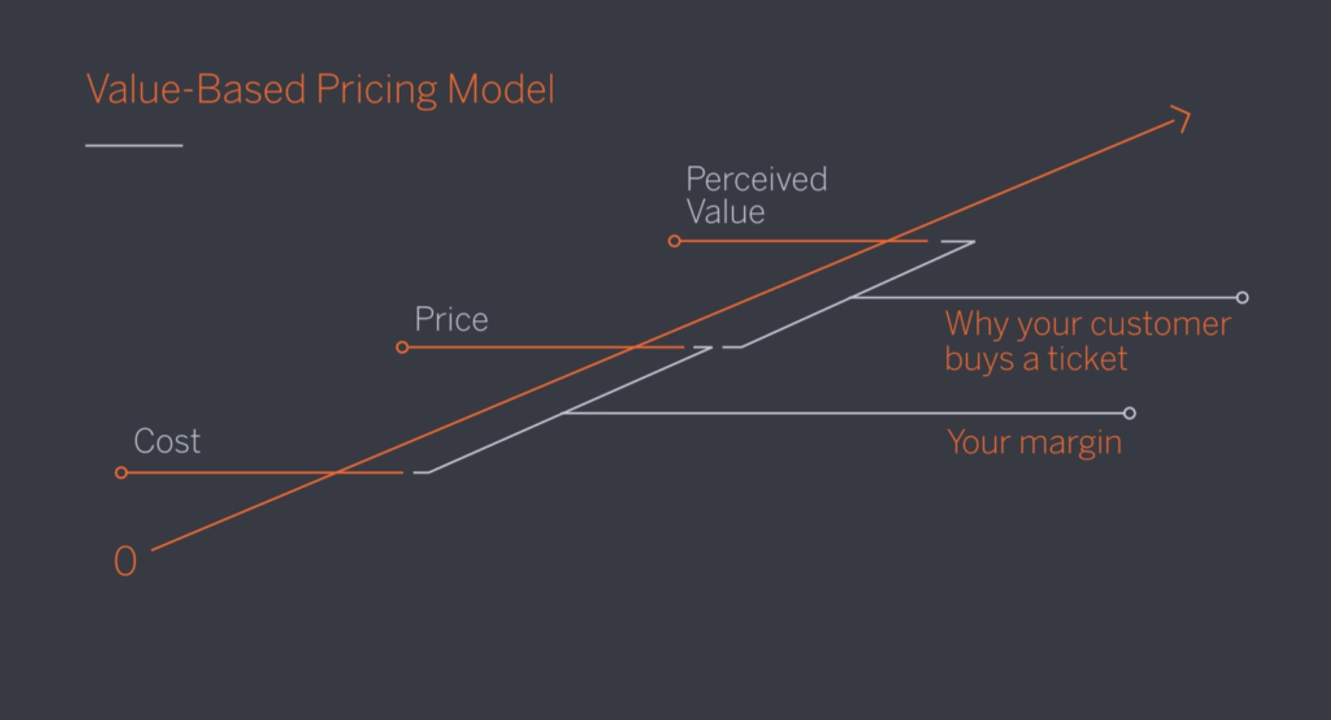
Source: “Your Value-Based Pricing Strategy: How to Price Your Event” by Eventbrite
To illustrate this, let’s look at an example of how one of the most successful festivals around uses each concept to consistently sell out their festival before they even announce their lineup: Coachella.
Few festivals have been as successful marketing themselves as Coachella has. Between mega lineups, celebrity endorsements, and constantly being referenced in pop culture, the festival has truly become a rite-of-passage to attend. While in reality there are plenty of festivals out there that offer a comparable experience on site, the fact that “attending Coachella” is a bucket list item for so many people leads to massive perceived value (even before the lineup drops). Think about it — if it’s truly a “must-attend” event, then why not splurge on it? Hell, people are lucky to just buy a ticket before it sells out.
Since the festival has done such a good job marketing a high perceived value, they have no issue charging $429 for one General Admission ticket. That pricing model would be a non-starter for almost any other festival out there, but Coachella fans consistently demonstrate they think it’s worth it. Conversely, if Coachella charged $1,500 for a General Admission ticket, it’s easy to see how they might not be the cultural icon they are today.
Because the $429 ticket cost is clearly below its perceived value, Coachella has no issue selling tickets. Last year, the festival generated $114.6 million in gross revenue. By keeping their production budget well below that, they make money hand-over-fist. If the festival costs $70 million over the two weekends to produce (I have no inside knowledge here…just guessing), that’s $44.6 million in pure profit that they take home every year.
To reiterate — successful value-based pricing means you price your event’s ticket at or below its perceived value. So, how do you figure out ‘perceived value’?
In part 2 of the series, I discuss the key data points to look at to uncover your event’s perceived value: Festival comparables, your artist lineup (for music fests), surveys, the total cost to fans, and who is buying what ticket.
How To Price An Event Part 2

Intro
This is the second part of a three-part series on building a pricing strategy. In this part, I’ll be diving into the details of how to determine your event’s perceived value. If you need a primer before jumping into the deep end, head on over to How to Price An Event: Part 1 to learn about cost-plus pricing versus value-based pricing.
I left off in the last section talking about the crux of value-based pricing: perceived value. Nail this part during the event planning process and you set yourself up for massive success.
Determining the Perceived Value
If perceived value is defined as how the customer values your event, then how do we determine that? Every individual fan will have a different notion of what a fair price is to them, so where do you start? Fortunately, you can look to a few places to get a good idea of what your pricing sweet spot is. While they are just pieces of the bigger pie individually, when taken as a whole they form the foundation of your event pricing strategy.
Comparable events
Looking at the structure of similar events is a great place to start to understand how to price yours — after all, if they are successful then they’ve already done the dirty work of establishing a perceived value! So jump onto their website and head on over to their ticketing page.
Typically, when I pull together a list of festival comps to help with my event ticket pricing, I look at a few things —
Location
Dates
Who the core demographic is (make sure it matches yours!)
How many artists are playing (for music fests)
How many people attend
The breakout of GA/VIP/Super VIP/etc prices
The tiers of tickets (Early Bird/Advance/Regular/etc)
How many years the festival has been around (more on this later)
How many days the event is, and
The price per day
Pull together a spreadsheet with all that information with 3-4 similar festivals and you’ll start to get a good idea of the general price of your event should be around. It makes intuitive sense — if you are giving the same offerings and experience as a competing festival that charges a $300 ticket, then you should be around that same price point.
This is a very valuable exercise, but be cautious when going through it! After all, you don’t actually know how financially solvent these events were. They may have brought a ton of people through the gates, but lost a lot of money after all was said and done.
You also don’t know how the differences from your event will affect perceived value. A successful event has SO MANY things it needs to get right to work, so you really have to understand how you’re different. For example, an outdoor summer festival in New York would be a total flop in November. That’s an obvious example, but less obvious is a fest getting an artist that blows up overnight and becomes a major draw. That type of success is much harder to replicate regardless of cost structure.
The other big thing to take into account is the event comps lifecycle and brand equity. To put it simply — the more established the festival brand is, the higher the perceived value. This affects price points significantly since eventually, a fan will buy tickets simply because they trust the brand!
The more established the festival brand is, the higher the perceived value.
For example, a carbon-copy of Coachella that pops up overnight simply can’t charge $429 because it’s not Coachella. No matter how similar it is, a new event doesn’t have the brand equity behind it that allows your competitors to charge a premium.
If you are careful to understand these caveats, pulling event comps is a great place to start in determining your price model and build a few base assumptions. From here, you can layer on other data points to flesh it out.
The Artist Lineup (For Music Festivals)
If you are producing a music festival you need to understand what each artist is worth in hard-ticket sales. Your core offering revolves around building a lineup that enough people see value in. This is especially the case with new festivals — your lineup is going to be the #1 thing people judge you on. Sure you can deliver a great experience on-site, but the lineup is what’s going to get people through the gates in the first place.

Your lineup is among the most important parts of your festival. When in doubt — Book Missy Elliott. Always.
It’s important not to place a premium on that brand and experience before a majority of people have had a chance to experience it! Eventually, as you build brand equity, you can focus less on the lineup, but if you’re not averaging at least a 33% retention rate on your audience year-over-year, it’s an indication that it is still your lineup that is largely setting the perceived value.
So what do you have to consider when putting together your lineup? This is the time to fire up your Pollstar Pro account and start looking at the stats:
Average ticket price
The range of ticket prices
The average attendance
The frequency of playing in the market
Etc.
It’s worth taking the time and effort to do this since it’s so important to truly understand what your main acts are valued at.
When chatting about this with Chris Donohue at See Tickets a few months ago, he elaborated on the concept:
“Headling artists average price per ticket and performance frequency in market impacts consumer purchasing behavior more than most promoters understand. This is more than radius clauses. Every headlining and main support should be assessed by this metric before consideration. In other words, if a headling artist plays in Los Angeles every year on an average ticket price of $65, when they headline a festival, an LA consumer simply will not pay $250 just to see said artist perform a short set with less production.”
What this means is that your lineup as a whole needs to bring a significant amount of value to the fan. This is particularly difficult since there’s an inverse relationship with the strength of a lineup versus quantity. What I mean by this is that someone can buy a ticket to an event only once. You have to be very careful when booking bands with similar fanbases — it will increase the strength of the lineup and allow you to increase prices, but will also decrease your overall attendance.
For example, if you are booking both Slightly Stoopid and Rebelution for a festival, you are essentially targeting the same fanbase. That means you can certainly charge more since its a stronger lineup, but your attendance might suffer as a result — a fan of both bands might be more willing to pay more, but they can only buy the ticket once.
Conversely, if you book Slightly Stoopid and Snoop Dogg, you might reach a wider audience but have sufficiently less strength to charge a premium since you’re splitting your audience.
Because someone can only buy a ticket once time, you have to account for your headliners being actually worth fewer hard-tickets than a typical concert. Chris explains,
“Five artists worth ten thousand tickets each won’t sell fifty thousand tickets. It’s quite the opposite and there is strong data to suggest headliner cannibalism devalues worth substantially. For instance, U2 is consistently a top billing touring artist in the world yet when they played Bonnaroo, the event and band sold less tickets than a single U2 stadium show. U2’s value was diminished 15%+ which means they were paid the most to perform yet drew the least when it comes to a cost-benefit analysis and fan interest. Also, five similar artists, sharing one fan can never equal more than one ticket sold so when you add cannibalism (one person interested in watching five bands), five ten thousand plus headliners are almost always worth a combined decline in sales versus a growth multiple in sum of its parts. ”*
Many promoters simply miss this aspect when putting together a lineup and often times the event suffers because of it. Particularly when you are talking about new festivals, your lineup is one of the biggest contributors to the perceived value and, subsequently, what you can charge for it.
Your Own Ticketing Data
If you’ve been around for more than a year, an excellent place to look is your past data. This may seem obvious at first, but is a profoundly important data point in your pricing strategy.
When looking at your ticket counts from previous years, it’s important to understand that you are not just looking at absolute values (e.g. the number of tickets sold), but the percentage of overall total tickets sold per day. What I mean by this is that it matters less how many tickets you ultimately sold, but when they sold.
To illustrate this clearly, let’s assume you sold out of your event’s tickets within the first month of being on sale. That’s amazing news, so give yourself a pat on the back…you nailed it!
But from a pricing strategy perspective…you actually didn’t nail it at all.
Why? Remember from part 1, your greatest potential profit comes from pricing your tickets at the perceived value. If you sell out quick, that actually means that your event tickets are priced far lower than the perceived value. You left money on the table! Simply put, you could have raised your ticket price, still sold out (albeit slower) and grossed more money.
You don’t want to sell out quick. You want to sell out slow.
A perfectly priced event is one that sells out just as the doors open. If you achieve this, you’ve perfectly balanced sales volume with the ticket price and maximized your earnings. You don’t want to sell out quick, you want to sell out slow.
This is a concept dubbed “slow ticketing.” In a great Billboard article covering how Taylor Swift’s team utilized this concept, Dave Brooks writes:
Higher prices, more consumer choice and no instant sellouts are on the horizon for high demand artists.
One day after Taylor Swift tickets went on sale to the general public and a week after pre-sales , hundreds of tickets for every stop on her Reputation stadium tour were still available on Ticketmaster. While some view the lack of sellout dates as a sign of softness in demand, Ticketmaster officials say they have effectively shifted ticket sales back to the primary market, captured more revenue for the artist and are changing the customer experience for fans.
So what does this mean for your event’s pricing model?
When discussing this with one festival promoter who sold in years past, my first question was “How fast did you sell out?” A sellout a few weeks before the event meant that — when taken with all other factors discussed in this article — he could stand to raise his prices.
On the other end of the spectrum, slow sales in previous years suggest you might not have a ton of flexibility on price. It’d be wiser to keep prices the same and focus your efforts on raising the perceived value through a better lineup, better amenities, etc.
Another area that can be enlightening is looking at the velocity sold at each tier. Meaning, if your advance tier flew off the shelves but your regular pricing was slow, it suggested your perceived value is actually somewhere in the middle. These types of insights help tremendously in shaping your ticket costs, so take the time to truly understand this. Yes, that means firing up Excel and dusting off your Pivot Table skills!
Fan Surveys
In a similar vein as your past ticketing data, looking at your past survey data is a simple and effective way to determine how people value your festival. There are few better sources of information than simply asking the people who are ultimately buying the ticket.
For festivals that have been around more than one year, this is simple: I advocate every event have a survey sent to ticket buyers. It’s your biggest opportunity to truly get deep, detailed feedback from the people who actually attended the event. While your survey should cover all major areas (operations, sponsorship, production, etc), there are ways to use it to determine your price elasticity.
You want to uncover what people truly value. When asking about their favorite artists, pay attention to trends that come from it — Are people more interested in the headliners? The undercard? What genres are trending? What do people not care about?
Similarly, understand the value in your on-site experience. Questions like “Why did you choose to attend the event?” can be enlightening. One survey I recently did, the vast majority responded along the lines of “Two days of food and music for a great price!” While I was glad that people had a high perceived value of the event, the message to me was clear: I could increase prices a little without necessarily worrying about losing sales volume.
When constructing your survey, you have to be careful to position your questions in a specific way. If asked directly “Would you pay more for the event?” a consumer will almost always go with “No.” This is bad data since when you ask an opinion directly about pricing people tend to disproportionally go for the cheaper option. It’s a consciously skewed answer to avoid a potential future price increase. Instead of asking whether they would pay more, try to ask questions that give you insight into what that person truly values: The lineup, the food & drink, the experience, etc.
Total Final Cost
One area frequently not looked at when developing a pricing model is understanding what each fan holistically pays at the end of the event. For a city festival, you have travel, hotels, ride shares, etc to pay for before you even get through the doors! Camping festivals have their own set of expenses, with supplies, tents, food, etc taking a big bite out of fan’s overall budgets. That, plus the money you have to spend money on food and drink on-site, a $250 event ticket can easily become upwards of $1,000 when all is said and done.
It is very important you get a handle on true expenses early during the planning process as it has a big effect on your ticket sales. It’s a great question to ask on your post-festival survey, or even a small pre-festival questionnaire. Additionally, take the time to research and write down all the additional costs that a fan has to pay to get to your festival before you finalize your pricing model.
Fan segments, or who is buying what ticket?
One of the trickiest parts of understanding your event’s value is that each individual person has a different idea of what is considered valuable to them. A college student can just care about the lineup, while someone older is willing to pay a little extra for additional comforts. You can take advantage of this by developing pricing for each of these segment.
In 2013, Neilson did a study looking into why people spent a certain amount on an artist over the course of a year. While the study largely revolved around recorded music, their conclusion was simple and powerful: Fans weren’t spending more on bands largely because they weren’t given an option to do so. You could only spend $9.99 to buy an album regardless of whether you were a casual fan or a superfan. When given the option, these superfans (that made up 14% of all music buyers) contributed 34% of all spending on music! By simply giving those people the option to purchase higher price points via added bundles (merch, exclusive downloads, etc), fans were willing to increase spending on music over the course of the year by two-fold!
This is the same exact concept for events. Instead of assuming value, you can give your attendees various ticketing options and add-ons to customize their experience. You typically see this in festivals broken out as General Admission, VIP, Super VIP, etc. Indeed, this isn’t a particularly new strategy, but a wildly effective one.
Let’s start with the value-seekers: General Admission buyers. They are the most price-sensitive of all fans and the most likely to care about the direct value exchange: The quality and quantity of artists versus the ticket price (for music festivals, at least). Since this is the largest group of people attending your event, this again underscores the importance of placing your artist lineup at the forefront.
Regardless of the size of your event, there are always people who would be willing to pay more for additional amenities. Those are the “VIPs” of your event and, when done right, can be a significant source of revenue. I’ve done festivals were VIPs accounted for 5% of overall sales, but a whopping 25% of all revenue!
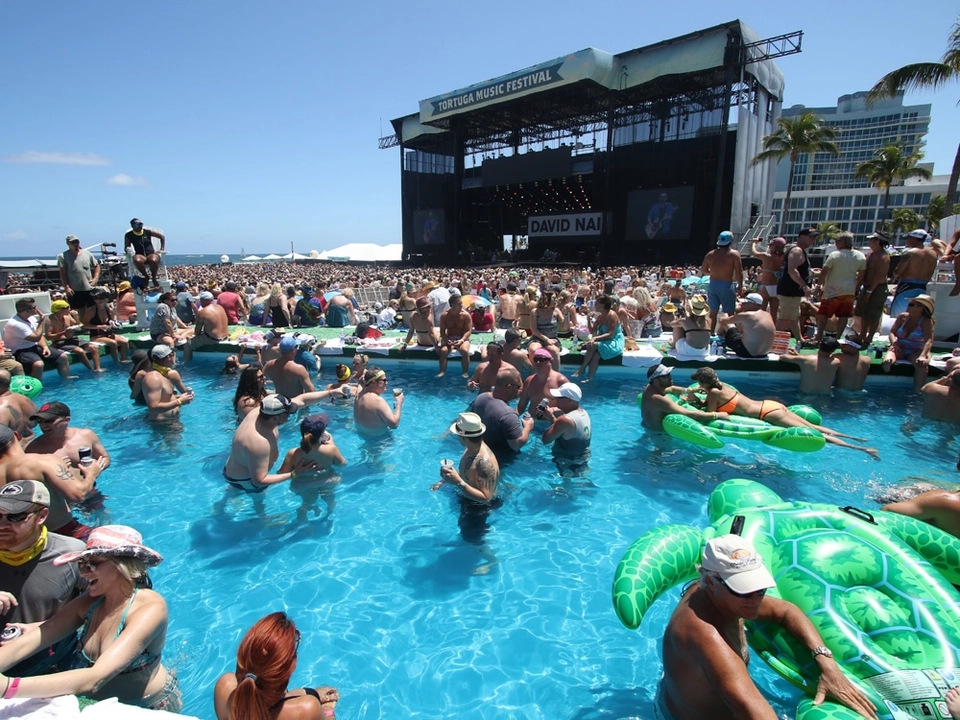
Lap of luxury. The VIP pool at Tortuga Music Festival.
What are VIPs typically willing to pay for? Typically, VIPs look to 3 areas: comfort, access, and convenience. Let’s break them apart one by one:
VIPs want comfort. They place a high value on their experience and will pay for it. Deck out your VIP area with lounge furniture, free snacks, beautiful decor, bean bags, whatever. Tortuga Music Festival has an incredibly successful VIP program largely due to the amazing amenities giving VIPs the ultimate comforts — Open bar, premium food, elevated views of the stage, and even a pool on the Super VIP deck that they can sit in while watching the show! Because of that, Tortuga can charge $1,000 per 3-Day VIP ticket and $1,500 for a 3-Day Super VIP ticket.
VIPs also want access to areas that other people can’t get to. For a VIP buyer, that usually means a VIP-only section that is near the front of the stage, allowing you superior site lines of the show. For Super VIP, consider allowing them an even more exclusive area that no one else can access, perhaps on the side of the stage. Buku Music + Art Project in New Orleans cleverly gives their VIP tickets access to exclusive performances. By giving unique access to something that General Admission doesn’t have, and their VIP program is incredibly successful (and seen as a great value) as a result.
Finally, VIP buyers want convenience. They will gladly pay to not be packed like sardines amongst everyone else; They want a VIP-only entrance to the festival that allows them to walk right in; They want the convenience of short lines at the bars, food, and bathrooms. You can charge a premium for those conveniences.
The good news about this? They really don’t add any significant expenses to the total cost of the event. Carving out a VIP section effects the budget minimally, but the potential for additional revenue is significant.
This is why it’s incredibly important you truly understand not just your core buyer, but all the different types of buyers you will have.
Tieing it all Together – Raising Your Value
Oh yes, there’s even MORE to talk about here. In the final part of the series, I dive into how you can affect perceived value. There’s a vast amount of strategies available that can justify a higher value, and therefore a larger ticket price. I pull out the four most important ones in Part 3.
Intro
This is the second part of a three-part series on building a pricing strategy. In this part, I’ll dive into the details of how to determine your event’s perceived value.
If you need a primer before jumping into the deep end, head on over to How to Price An Event: Part 1 to learn about cost-plus pricing versus value-based pricing.
I left off in the last section talking about the crux of value-based pricing: perceived value. Nail this part during the event planning process and you set yourself up for massive success.
Determining the Perceived Value
If perceived value is defined as how the customer values your event, then how do we determine that? Every individual fan will have a different notion of what a fair price is to them—so where do you start?
Fortunately, you can look to a few places to get a good idea of what your pricing sweet spot is. While they are just pieces of the bigger pie individually, when taken as a whole they form the foundation of your event pricing strategy.
Comparable events
Looking at the structure of similar events is a great place to start to understand how to price yours—after all, if they are successful then they’ve already done the dirty work of establishing a perceived value. Jump onto their website and head to their ticketing page.
Typically, when I pull together a list of festival comps to help with my event ticket pricing, I look at:
Location
Dates
Core demographic (make sure it matches yours!)
How many artists are playing (for music fests)
How many people attend
The breakdown of GA/VIP/Super VIP/etc. prices
Ticket tiers (Early Bird/Advance/Regular/etc.)
How many years the festival has been around (more on this later)
How many days the event is
Price per day
Pull together a spreadsheet with all that information for 3–4 similar festivals and you’ll start to get a good idea of what the general price of your event should be. It makes intuitive sense: if you’re giving the same offerings and experience as a competing festival that charges a $300 ticket, you should be around that same price point.
This is a very valuable exercise, but be cautious. You don’t actually know how financially solvent these events were. They may have brought a ton of people through the gates but still lost a lot of money after all was said and done.
You also don’t know how the differences from your event will affect perceived value. A successful event has so many things it needs to get right to work, so you really have to understand how you’re different. For example, an outdoor summer festival in New York would be a total flop in November. That’s an obvious example, but less obvious is a fest getting an artist that blows up overnight and becomes a major draw. That type of success is much harder to replicate regardless of cost structure.
The other big thing to take into account is the event comps lifecycle and brand equity. To put it simply: the more established the festival brand is, the higher the perceived value. This affects price points significantly since, eventually, a fan will buy tickets simply because they trust the brand.
The more established the festival brand is, the higher the perceived value.
For example, a carbon-copy of Coachella that pops up overnight simply can’t charge $429 because it’s not Coachella. No matter how similar it is, a new event doesn’t have the brand equity behind it that allows your competitors to charge a premium.
If you’re careful to understand these caveats, pulling event comps is a great place to start in determining your price model and building a few base assumptions. From here, you can layer on other data points to flesh it out.
The artist lineup (for music festivals)
If you’re producing a music festival, you need to understand what each artist is worth in hard-ticket sales. Your core offering revolves around building a lineup that enough people see value in. This is especially the case with new festivals—your lineup is going to be the #1 thing people judge you on. Sure, you can deliver a great experience on-site, but the lineup is what’s going to get people through the gates in the first place.
It’s important not to place a premium on brand and experience before a majority of people have had a chance to experience it. Eventually, as you build brand equity, you can focus less on the lineup, but if you’re not averaging at least a 33% retention rate on your audience year-over-year, it’s an indication that it is still your lineup that is largely setting the perceived value.
So what do you have to consider when putting together your lineup? This is the time to fire up your Pollstar Pro account and start looking at stats like:
Average ticket price
Range of ticket prices
Average attendance
Frequency of playing in the market
Etc.
It’s worth taking the time and effort to do this since it’s so important to truly understand what your main acts are valued at.
When chatting about this with Chris Donohue at See Tickets a few months ago, he elaborated on the concept:
“Headling artists average price per ticket and performance frequency in market impacts consumer purchasing behavior more than most promoters understand. This is more than radius clauses. Every headlining and main support should be assessed by this metric before consideration. In other words, if a headling artist plays in Los Angeles every year on an average ticket price of $65, when they headline a festival, an LA consumer simply will not pay $250 just to see said artist perform a short set with less production.”
What this means is that your lineup as a whole needs to bring a significant amount of value to the fan. This is particularly difficult since there’s an inverse relationship with the strength of a lineup versus quantity.
Someone can buy a ticket to an event only once. You have to be very careful when booking bands with similar fanbases—it will increase the strength of the lineup and allow you to increase prices, but will also decrease your overall attendance.
For example, if you’re booking both Slightly Stoopid and Rebelution for a festival, you’re essentially targeting the same fanbase. That means you can certainly charge more since it’s a stronger lineup, but your attendance might suffer as a result—a fan of both bands might be more willing to pay more, but they can only buy the ticket once.
Conversely, if you book Slightly Stoopid and Snoop Dogg, you might reach a wider audience but have sufficiently less strength to charge a premium since you’re splitting your audience.
Because someone can only buy a ticket one time, you have to account for your headliners being actually worth fewer hard-tickets than a typical concert. Chris explains:
“Five artists worth ten thousand tickets each won’t sell fifty thousand tickets. It’s quite the opposite and there is strong data to suggest headliner cannibalism devalues worth substantially. For instance, U2 is consistently a top billing touring artist in the world yet when they played Bonnaroo, the event and band sold less tickets than a single U2 stadium show. U2’s value was diminished 15%+ which means they were paid the most to perform yet drew the least when it comes to a cost-benefit analysis and fan interest. Also, five similar artists, sharing one fan can never equal more than one ticket sold so when you add cannibalism (one person interested in watching five bands), five ten thousand plus headliners are almost always worth a combined decline in sales versus a growth multiple in sum of its parts.”
Many promoters miss this aspect when putting together a lineup, and often the event suffers because of it. Particularly when you’re talking about new festivals, your lineup is one of the biggest contributors to perceived value and, subsequently, what you can charge for it.
Your own ticketing data
If you’ve been around for more than a year, an excellent place to look is your past data. This may seem obvious at first, but it’s a profoundly important data point in your pricing strategy.
When looking at your ticket counts from previous years, it’s important to understand that you’re not just looking at absolute values (e.g., the number of tickets sold), but the percentage of overall total tickets sold per day. It matters less how many tickets you ultimately sold, but when they sold.
To illustrate: let’s assume you sold out of your event’s tickets within the first month of being on sale. That’s amazing news—pat yourself on the back.
But from a pricing strategy perspective, you actually didn’t nail it.
Why? Remember from part 1: your greatest potential profit comes from pricing your tickets at the perceived value. If you sell out quickly, that means your tickets are priced far lower than perceived value. You left money on the table.
You don’t want to sell out quick. You want to sell out slow.
A perfectly priced event is one that sells out just as the doors open. If you achieve this, you’ve perfectly balanced sales volume with the ticket price and maximized your earnings.
This is a concept dubbed “slow ticketing.” In a Billboard article covering how Taylor Swift’s team utilized this concept, Dave Brooks writes:
Higher prices, more consumer choice and no instant sellouts are on the horizon for high demand artists.
One day after Taylor Swift tickets went on sale to the general public and a week after pre-sales, hundreds of tickets for every stop on her Reputation stadium tour were still available on Ticketmaster. While some view the lack of sellout dates as a sign of softness in demand, Ticketmaster officials say they have effectively shifted ticket sales back to the primary market, captured more revenue for the artist and are changing the customer experience for fans.
So what does this mean for your event’s pricing model?
When discussing this with one festival promoter who sold out in years past, my first question was: “How fast did you sell out?” A sellout a few weeks before the event meant that—when taken with all other factors discussed in this article—he could stand to raise prices.
On the other end of the spectrum, slow sales in previous years suggest you might not have a ton of flexibility on price. It’d be wiser to keep prices the same and focus on raising the perceived value through a better lineup, better amenities, etc.
Another area that can be enlightening is looking at the velocity sold at each tier. Meaning: if your advance tier flew off the shelves but your regular pricing was slow, it suggests your perceived value is somewhere in the middle.
These types of insights help tremendously in shaping your ticket costs, so take the time to truly understand this. Yes, that means firing up Excel and dusting off your Pivot Table skills.
Fan surveys
In a similar vein as your past ticketing data, looking at your past survey data is a simple and effective way to determine how people value your festival. There are few better sources of information than simply asking the people who are ultimately buying the ticket.
For festivals that have been around more than one year, this is simple: I advocate every event have a survey sent to ticket buyers. It’s your biggest opportunity to get deep, detailed feedback from the people who actually attended. While your survey should cover all major areas (operations, sponsorship, production, etc.), there are ways to use it to determine price elasticity.
You want to uncover what people truly value. When asking about their favorite artists, pay attention to trends:
Are people more interested in the headliners?
The undercard?
What genres are trending?
What do people not care about?
Similarly, understand the value in your on-site experience. Questions like “Why did you choose to attend the event?” can be enlightening. One survey I recently did, the vast majority responded along the lines of “Two days of food and music for a great price!” While I was glad that people had a high perceived value of the event, the message to me was clear: I could increase prices a little without necessarily worrying about losing sales volume.
When constructing your survey, you have to be careful to position your questions in a specific way. If asked directly, “Would you pay more for the event?” a consumer will almost always go with “No.” That’s bad data: when you ask an opinion directly about pricing, people tend to disproportionately go for the cheaper option (a consciously skewed answer to avoid a potential future price increase).
Instead of asking whether they would pay more, ask questions that give you insight into what that person truly values: the lineup, the food & drink, the experience, etc.
Total final cost
One area frequently overlooked when developing a pricing model is understanding what each fan holistically pays at the end of the event.
For a city festival, you have travel, hotels, rideshares, etc., to pay for before you even get through the doors. Camping festivals have their own set of expenses with supplies, tents, food, etc., taking a big bite out of fans’ overall budgets. On top of that, they spend money on food and drink on-site. A $250 event ticket can easily become upwards of $1,000 when all is said and done.
It’s important to get a handle on true expenses early during the planning process, as it has a big effect on ticket sales. It’s a great question to ask on your post-festival survey (or even a small pre-festival questionnaire). Additionally, take the time to research and write down all the additional costs a fan has to pay to get to your festival before you finalize your pricing model.
Fan segments (or who is buying what ticket?)
One of the trickiest parts of understanding your event’s value is that each person has a different idea of what is valuable to them. A college student may just care about the lineup, while someone older is willing to pay extra for additional comforts. You can take advantage of this by developing pricing for each of these segments.
In 2013, Nielsen did a study looking into why people spent a certain amount on an artist over the course of a year. While the study largely revolved around recorded music, their conclusion was simple and powerful: fans weren’t spending more on bands largely because they weren’t given an option to do so.
You could only spend $9.99 to buy an album regardless of whether you were a casual fan or a superfan. When given the option, those superfans (14% of all music buyers) contributed 34% of all spending on music. By giving those people the option to purchase higher price points via bundles (merch, exclusive downloads, etc.), fans were willing to increase spending on music over the course of the year by two-fold.
This is the same concept for events. Instead of assuming value, you can give attendees various ticketing options and add-ons to customize their experience. You typically see this in festivals broken out as General Admission, VIP, Super VIP, etc. This isn’t a particularly new strategy, but it’s wildly effective.
Let’s start with value-seekers: General Admission buyers. They are the most price-sensitive of all fans and the most likely to care about the direct value exchange: the quality and quantity of artists versus the ticket price (for music festivals, at least). Since this is the largest group of people attending your event, this underscores the importance of placing your artist lineup at the forefront.
Regardless of the size of your event, there are always people who would be willing to pay more for additional amenities. Those are the “VIPs” of your event and, when done right, can be a significant source of revenue. I’ve done festivals where VIPs accounted for 5% of overall sales, but 25% of all revenue.
What are VIPs typically willing to pay for? Typically, VIPs look to three areas: comfort, access, and convenience.
VIPs want comfort. They place a high value on their experience and will pay for it. Deck out your VIP area with lounge furniture, free snacks, beautiful decor, bean bags—whatever. Tortuga Music Festival has an incredibly successful VIP program largely due to amazing amenities—open bar, premium food, elevated views of the stage, and even a pool on the Super VIP deck. Because of that, Tortuga can charge $1,000 per 3-day VIP ticket and $1,500 for a 3-day Super VIP ticket.
VIPs want access to areas other people can’t get to. For a VIP buyer, that usually means a VIP-only section near the front of the stage, allowing superior sightlines. For Super VIP, consider an even more exclusive area—perhaps on the side of the stage. Buku Music + Art Project in New Orleans cleverly gives VIP ticket holders access to exclusive performances. By giving unique access to something General Admission doesn’t have, their VIP program is seen as a great value.
VIP buyers want convenience. They will gladly pay to not be packed like sardines among everyone else. They want a VIP-only entrance that lets them walk right in. They want short lines at the bars, food, and bathrooms. You can charge a premium for those conveniences.
The good news: these typically don’t add significant expenses to the total cost of the event. Carving out a VIP section affects the budget minimally, but the potential for additional revenue is significant.
This is why it’s incredibly important to understand not just your core buyer, but all the different types of buyers you will have.
Tying it all together: Raising your value
Oh yes—there’s even more to talk about here. In the final part of the series, I dive into how you can affect perceived value.
There’s a vast amount of strategies available that can justify a higher value, and therefore a larger ticket price. I pull out the four most important ones in Part 3.
How To Price An Event Part 3 Raising Your Value
Intro
This is the third and final part of my series on how to build a successful pricing model for your event. In Part 1, I discussed the goals of a solid value-based ticketing strategy and why it’s so crucial to your event. Part 2 dove into the details—namely, how to actually determine the central data point for your entire strategy: What is your event’s actual perceived value? If you haven’t read the previous two articles, I highly recommend you do so before reading on.
Before we jump into this final piece of the pie, let’s revisit our 3 core goals:
Goals of a Value-Based Pricing Model
Your ticket should be priced at or below the perceived value
Your festival’s cost-per-fan (overall budget divided by number of attendees) should be below your ticket price. This is your profit margin.
Your promotional efforts should focus on maintaining or raising the perceived value
Now that you’ve determined your event’s perceived value, tackling both points 1 and 2 is relatively straightforward: make your average ticket prices at or below market value, and build an event budget with a cost-per-fan below that price point.
Point 3 is what we’ll be diving into in this article: What can we do to raise the perceived value of the event? Turns out, the answer is a lot.
While touching on every possible tactic related to pricing psychology and marketing would be exhausting, I want to outline the key areas that relate to festivals and large-scale events. By using these techniques, you can position your event in a more favorable light that will increase your perceived value.
Anchoring
A key concept to event pricing is that pricing is one-way: you can only go up.
Lowering your price after you’ve raised it profoundly hurts your perceived value. Urgency increases as your festival approaches (more on that later), so your pricing should never decrease. You risk devaluing the entire event.
It also punishes your early buyers. If a fan gave you their trust by buying tickets and the price then drops, that trust is shattered. They will certainly wait to buy next year (if they even decide to come back). This is exactly why I almost always discourage discounting your tickets during your main marketing push. You ideally want to focus your efforts on the opposite—how can you reward early buyers?
Related Reading: Discounted Tickets. Just Say No. »
The good news is that you can take advantage of this concept through anchoring.
Anchoring is a well-studied cognitive bias that is central to consumer psychology: People consistently over-rely on the first (and most easily accessible) information we’re given.
You see this every day in retail. A pair of jeans with a tag that proclaims “$99.95 60% Off! Get them for just $40” seems like a great deal. Mixed with a bit of urgency (“Sale expires today!”) and those jeans start flying off the shelves. In reality, the $100 retail price is completely arbitrary and simply serves as an anchor to make the discount seem like a great value.
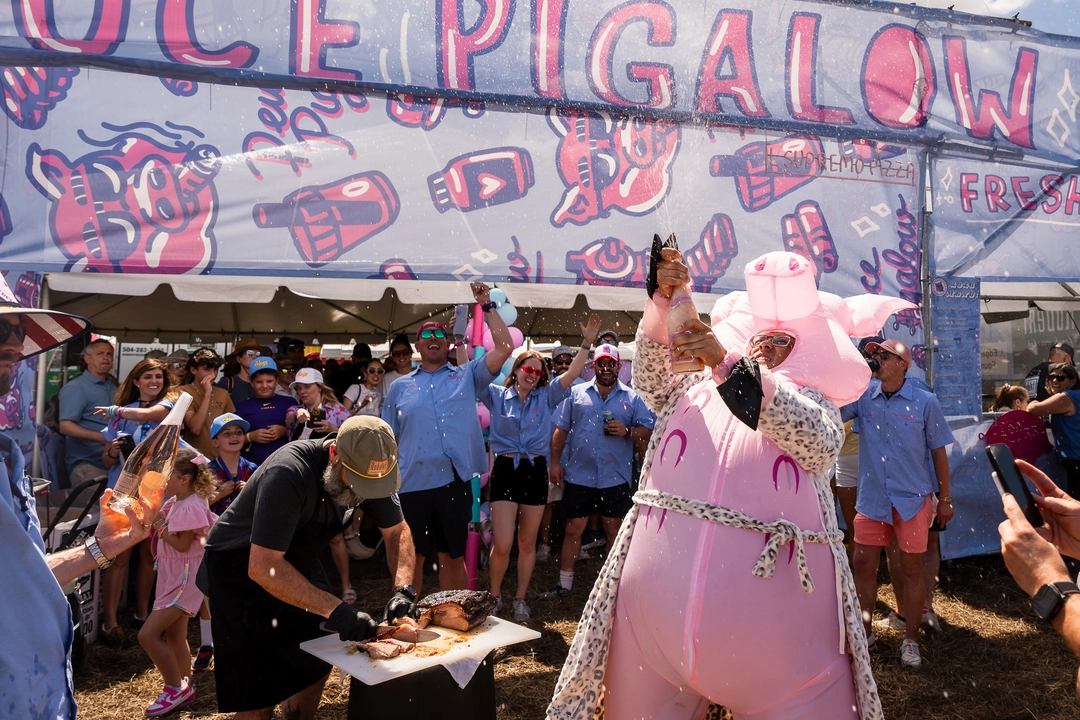
Anchors away at Tortuga Music Festival.
Anchoring is incredibly effective for festivals as well. Remember: you can only go up in price, so how do you do it? This is where the concept of ticket tiers comes in.
Many events already tier their prices, and for good reason. It anchors the price, allowing a reference point for your cheaper tier. For example, if your regular ticket price is $300, an ‘Early Bird’ price of $199 seems like a steal. By anchoring your “regular” ticket at $300, you are suggesting that your festival is valued at that price, and then immediately offering a limited discount.
For festivals that have been around for a while, I always recommend developing price tiers. Early Bird buyers, who are willing to buy before the lineup is even public (for music festivals), are your brand loyalists. They know it’ll be a great event regardless of the details and are just happy to get discounted tickets. This is an excellent segment of fans to study, as they are essentially your early adopters.
When you can’t anticipate demand (new festivals, for example) and need flexibility, consider using graduated pricing. At its core, this is simply avoiding words like “Early Bird”, “Advance”, “Regular” and instead opting for something more generic like “Tier 1”, “Tier 2”, “Tier 3”, etc.
This gives you a lot of wiggle room, allowing you to start at a lower price point and release price increases/tiers as you start getting feedback from the market. You can keep going up in price until you have a better handle on what your event’s perceived value is.
The downside is that you don’t have a “regular” price to anchor to, which limits how much this strategy affects the perceived value. However, even with graduated pricing, you can do it successfully: Ultra, for example, displays the current and next tier. While this doesn’t have the same effect as displaying the highest price (as you would by showing “regular prices”), they are still anchoring the current price to the next tier.
If you’re worried about giving people such a steep discount through tiering, don’t. Getting people to buy early is worth it: it allows you to generate quick cash flow (after all, you’ve got deposits to pay), rewards the fans who bought early, and can even lower production costs (since you’re able to project overall attendance better). Plus, these are all fans you won’t have to spend ad dollars on later.
In fact, consider the early bird discount an acquisition cost—similar to how you view advertising expenses during the main marketing campaign.
Urgency and Scarcity
Out of every technique in your toolbelt, it’s hard to underestimate the importance of two concepts that should run core to every marketing decision you make: urgency and scarcity. I can’t think of many aspects that have a more direct effect on your festival’s perceived value than these.
Urgency is the belief that there is a closing window of opportunity to get tickets. It is one of the most effective ways to get fans to actually take action and buy. It’s about creating as many “shit or get off the pot” moments as you can. This is why ticket sales increase dramatically the weeks leading up to the event—people feel the most amount of urgency to buy at that point.
So, how do you capitalize on urgency before the event? You create it. As the next pricing tier approaches, the urgency increases to buy the current price point. Put simply, you should be marketing the hell out of that. Every fan should know when prices are about to increase and feel the pressure to buy before the price goes up.
Sound the alarms: Buku playing up the urgency before a tier increase.
Scarcity has a similarly profound effect on raising perceived value. Tickets that are rare are automatically more valuable. In fact, this is exactly the bet that’s made on the secondary markets. Scalpers regularly are able to sell tickets to sold-out shows for significantly higher than face value due to their scarcity.
The perception of scarcity can be just as powerful as the reality. If the fan thinks there’s a limited amount of tickets that can sell out at any moment, the value of that ticket naturally rises and compels them to buy.
You can take advantage of this: As you bump up to the next pricing tier, don’t take the past tiers off your website. Instead, leave them up, but put a large “SOLD OUT” across them (and be sure to message it proudly across all your channels).
If a fan visits your ticketing page and sees all previous tiers sold out, that telegraphs the scarcity of the current price tier and increases the perceived value of your event.
Foot-In-The-Door
My wife and I were recently in Las Vegas and stumbled upon a wacky photo studio that dressed you up in old-timey western clothing. We were a few drinks in and it seemed like a great value—the sign said $40 for a 30-minute photo session. So we dolled ourselves up as a cowboy and saloon girl, grabbed prop pistols and money bags, and went at it.
Wicky Wicky Wild Wild West (told you they were awesome pics!)
When it finally came time to pay, they dropped the bomb: You only get a single printed photo for the $40! We just spent a half hour taking dozens of amazing photos and clearly couldn’t settle on just one. They even showed us all our photos and had us choose our favorites before giving us the final price.
At the end of the day, we chose 3 printed photos for $80. While it was more than I wanted to pay, it beautifully illustrated two related pricing concepts that are very applicable to events.
The first is that you value the things you own more than the things you don’t. Put another way: losses count more than gains. We had dozens of photos already taken, reviewed, edited, and selected. They were already ‘ours’ in my mind, so how could we choose only one? The pain of leaving all those photos behind was a powerful motivator to pay more.
You value things you own more than things you don’t. Losses count more than gains.
This idea equally applies to festivals—since your perceived value of items you own is already naturally high, how do you position it so that your fans already have their tickets in hand? You can’t physically give your fans a wristband and then ask for money later, so what can you do?
This is where the foot-in-the-door technique comes into play: by giving them an easy way to commit early, the decision becomes whether to not go as opposed to whether to go.
This is a powerful influence on perceived value, and there are a few approaches you can take to use it.
For one, you can encourage the fan to act as if they are already attending. A common mistake I see is marketers sending informational e-mails (e.g. what to bring, where to park, info about lockers, etc.) just to your ticket buyers. Instead, try sending them to your whole e-mail list. These are powerful marketing messages and drive just as many sales as more traditional initiatives.
This is because you are forcing the fan to act as if they are already going. You want to support that type of thinking throughout your entire campaign: How can you get fans to shop around for hotels, rally their friends, plan their outfits, etc.?
The most direct way to use the foot-in-the-door technique to sell tickets is by offering payment plans. Payment plans aren’t just a way for people to split a ticket price into several smaller payments. The true genius behind them is that you are getting people to commit to going much earlier than they would have otherwise.
In their mind, just one $99 payment and the ticket is theirs (even if they have 2 other payments to make). By getting them to commit early, they are highly motivated to complete their payments. After all, they don’t want to give up something that, in their mind, they already own—the festival ticket.
Marketing: Your Strategy, Budget & Brand
While the lineup is the most powerful driver of sales for most music festivals (remember part 2 of the series?), that doesn’t mean you can neglect your marketing.
A savvy marketing strategy is almost entirely about raising the perceived value. Long-time promoter, festival producer, and brilliant marketer John Riccardi (who currently holds a music strategy post at Eventbrite) spelled it out to me the other day:
“It doesn’t matter what you are selling. You compete on price or you compete on value, and if you are really good, you do both. That is all of marketing.”
“You compete on price or you compete on value, and if you are really good, you do both. That is all of marketing.”
— John Riccardi
What that means is that a strong marketing strategy is one that raises the perceived value of the festival and justifies your ticket price. While how that’s done is beyond the scope of this article (it’s kind of the point of this entire blog), a marketing plan that covers each area of perceived value will have a drastic impact on your bottom line.
For example, take the concept of the overall cost to the fan that was covered in the last article. When you’re determining your perceived value, you should look at not just your festival’s ticket price, but the overall cost to the fan—hotels, flights, rideshares, food and drink, etc. That’s the true amount you’re asking a fan to pay for your festival.
So what do you do with that information? While you should use it to adjust your pricing strategy, you should also use it to adjust your marketing strategy. John elaborated on how you could position it:
“So having gathered [data on the total costs to the fan], you need to then do the same thing you did with your ticket pricing at the very start: Compare these points to competitive festivals. Does it cost $1,000 all-in per fan for someone to attend your event? What about the competition? Are you more expensive or less? A holistic approach is the only approach.”
Or, perhaps, you accept a high total cost to the fan and focus on the convenience it gets you:
“Consider Osheaga or Lollapalooza—You fly into a major airport, stay in a hotel right in the middle of town, and you hop on the metro and arrive right at the festival. So simple.”
Lollapalooza might be pricey, but it’s worth the convenience: You’re right downtown.
There’s a deep interplay between pricing and marketing. A sound marketing strategy that addresses perceived value can keep your ticket prices high and your profit margins healthy.
Similarly, your event’s brand equity has a monumentally important role in your value. While we’ve already touched on this several times in Parts 1 and 2, it is worth repeating: a brand is developed by the festival consistently delivering value year in and year out—a great lineup, a great experience, etc. every single year. Eventually, this builds brand equity and your fans reward you by shelling out more money than they would otherwise.
Related Reading: Q & A: Zen and the Art of Positioning »
Finally, it’s important to note that a larger marketing budget and a sound strategy can certainly warrant a larger ticket price.
In a technical sense, it allows the higher cost-per-acquisition (CPA) to be offset by the higher revenue-per-order, maintaining the same ROI. More generally, it allows you to invest more in efforts that raise the perceived value and make the fan more comfortable with the premium they are paying for the ticket.
All of this is, of course, easier said than done. The challenge is developing a sophisticated marketing and ticketing strategy while doing everything else you need to do to produce an event. However, it’s worth it.
Ultimately, taking the time to zero in on how to raise your perceived value pays dividends. There are significant economies of scale when it comes to festivals and, in most situations, it’s far more profitable for you to put in the effort to raise the perceived value rather than simply lowering your ticket price.
Conclusion
Pricing is such a vast and interesting topic that even 3 articles and nearly 8,000 words barely scratches the surface. Since every aspect of your event is reflected in your ticket sales, it’s impossible to understate how important it is.
A fully developed ticketing strategy requires a deep understanding of your event, competitors, the fans, the location, the industry, marketing, expenses, and nearly everything else that touches your festival.
While it’s massively important to do the proper due diligence to find your true value, I caution not to get stuck during the event planning process. You will inevitably come across contradictory and vague data that you will have difficulty making sense of. Once you gather all the information you need, you will eventually need to just do it and make a decision. What you will likely find is all the research you’ve done along the way has helped guide you more than you think.
When festival producers and event planners think of ticketing as merely another ‘box to check’, it always gives me pause. I would even go so far as to say that a lack of attention to pricing strategy is one of the main reasons you see so many festivals fail.
It’s truly the start—and one of the most important pieces—of producing an event. If you don’t take the time to build a stellar pricing model, your event won’t be coming back next year. However, if you do take the time and care, you’re already well on your way to building a profitable, successful business for many years to come.
Mastering The Media Mix

One crucial concept in an effective festival advertising strategy is nailing down a proper media mix.
Your media mix is the careful balance of advertising across ALL channels — social, TV, PPC, Radio, Print, etc
This is one of THE MOST IMPORTANT aspects to your festival’s campaign. Why?
Stickiness/penetration doesn’t just come from repetition. People ignore ads constantly, which means TONS of wasted dollars. You can drastically increase the stickiness of your ads by serving up the same message across multiple channels.
In other words: Rather than serving pouring money into Facebook ads only, your advertising is MUCH MORE effective if fans notice your festival on Facebook, then hear it on a radio, then see a flier, then get a display ad, etc. It’s that cross-channel messaging that really gets fans to take notice.
PLANNING & BUDGETING YOUR MEDIA MIX
Here are my steps to planning this properly:
STEP 1 – Outline your channels.
Write out every advertising channel you have at your disposal — FB/Insta/Twitter, Radio, PPC, TV, Out Of Home/Outdoor, Display, Print, Remarketing, Native, etc
STEP 2 – Outline your marketing funnel
I use the Pirate Metrics (AARRR…get it?)
Acquisition – How do people find out about your festival?
Activation – How do they become engaged and start learning more?
Retention – How do they become fans and start seriously planning their trip?
Revenue – What drives them to actually purchase?
Referral – What gets them talking about it to their friends?
STEP 3 – Attach each channel to each stage in the funnel
It’ll be specific to your festival, but an example:
Acquisition – TV, Radio, Display, FB/Insta interest and lookalike ads, non-branded PPC, Outdoor, Native
Activation – Radio, Outdoor, Remarketing (FB/Google), Branded PPC, Print, TV
Retention – Remarketing (FB/Google), Branded PPC, Radio, Print
Revenue – Branded PPC (e.g. searches for “Buying tickets to festival”), Remarketing (FB/Google), Twitter
Referral – n/a …no advertising to consumer post sale, so all organic channels.
STEP 4 – Budget for each step in the funnel.
How much to budget depends on your festival’s maturity (is it new, or is the brand established), scale (local/regional/national), and your overall marketing effort (e.g. how invested you are in organic channels).
I aim to put *at least* 60% of my budget into Retention and Revenue channels. This usually means digital gets a large chunk of the money (especially for EDM, hip hop, etc), but that’s not always the case — For example, last year we noticed that Country radio stations were driving real sales for Tortuga Music Festival, so putting over 50% of my budget into radio (and only 30% into digital) ended up selling the festival out.
While there’s no shortcut to finding your festival’s right media mix, it’s absolutely crucial that you take time to do it. As festival marketers, we need to truly be jacks of all trades — both digital AND traditional media — to really understand the big picture and achieve true efficiency in our ad strategy.
What channels do you use for advertising? How do you plan your media mix? Holler at me and let me know!
(Bonus Tip: Be sure to coordinate your campaign’s messaging across channels. Just announced your lineup? Mention it across PPC, print, in your TV ads, etc. Festival coming up? Include urgent messaging (“Under 2 weeks left!”) in your radio spots, FB ads, etc. Having a consistent message improves the effectiveness of your ads even more.)
Dynamic Pricing Isn't the Villain. The Scalper Pocketing Your Margin Is.
Dynamic pricing has a bad reputation in live events. I get it. Fans feel squeezed. Artists worry about their brand. Promoters get caught in the crossfire. But the problem was never dynamic pricing itself. The problem is how it's been implemented, communicated, and understood.
Fixed Pricing Is a Guess. Dynamic Pricing Is a Tool.
Ticket pricing is genuinely one of the hardest things a promoter has to get right. You're setting a number months in advance, based on incomplete information, for an event that hasn't happened yet. Fixed pricing forces you to commit to a single bet with no room to adjust as demand signals come in.
What usually happens when that bet goes wrong? Promoters overprice. Then, when sales stall, they walk the price back down. That move feels like a discount to fans, because it is one. And discounts train audiences to wait. Why buy in March if you can hold out and get the same ticket for less in July? You've essentially taught your audience that patience pays off, which is a terrible lesson when your cash flow depends on early commitment.
Early bird tiers and escalating price structures exist precisely because of this problem. Starting low and stepping up gives promoters flexibility while preserving the perception of value. Dynamic pricing, done right, is just a more sophisticated version of that same logic. It's pricing to market, which is what every other consumer industry already does.
Airlines don't apologize for charging more when seats fill up. Hotels don't explain themselves when rates spike on a holiday weekend. Nobody's staging a protest because a flight to Miami cost more in February than it did in November. Those industries normalized the concept a long time ago, and consumers adapted because the logic is simple enough: price reflects demand.
Concerts are harder. There's an emotional dimension to a live music experience that doesn't exist when you're booking a hotel room. The fan isn't just buying a product. They're buying access to an artist they genuinely love. That artist is protective of their relationship with fans and doesn't want to be seen as consumer-unfriendly. That's a real tension, and it's one of the reasons transparency matters so much when we talk about changing the perception around dynamic pricing.
Where the Margin Actually Goes
Here's the part of this conversation that I think gets glossed over constantly: dynamic pricing doesn't create the price gap between face value and what fans are willing to pay. That gap already exists. What dynamic pricing determines is who captures it.
Right now, in a fixed-price world, scalpers capture it. They buy early, hold inventory, and sell into peak demand at whatever the market will bear. The margin differential that exists between the original ticket price and what a fan ultimately pays goes to the reseller, not to the artist, not to the promoter, not to the venue. It goes to someone who took exactly zero risk on the event.
That's the reframe I keep coming back to. Dynamic pricing isn't about squeezing fans. It's about making sure the people who actually took the risk on putting the event together are the ones who benefit when demand is strong. Reducing the spread between primary and secondary pricing is one of the most underrated arguments for dynamic pricing, and it's barely part of the public conversation.
Transparency is how you bring fans along on this. If fans understand that the choice isn't between a cheap ticket and an expensive one, but between buying from the promoter at a fair market price or buying from a scalper at a marked-up price, the calculation changes. That's a communications challenge as much as a pricing challenge.
Where AI Changes Everything
Most dynamic pricing in live events today is still handled relatively manually. Someone is watching sales velocity, making judgment calls, and adjusting prices up or down based on gut feel and spreadsheet math. That's better than pure fixed pricing, but it leaves a lot of value and nuance on the table.
This is where big data, analytics, and AI come in, and I think this is the part of the conversation the industry isn't having nearly enough.
A well-built AI-driven pricing model can incorporate signals that go well beyond how many tickets are selling and how fast. It can account for behavioral incentives, historical patterns, audience segments, and the actual goals of the promoter, not just the immediate demand curve.
Consider one specific tension that a manual dynamic pricing approach handles poorly. When an on-sale opens and thousands of fans rush to buy, a pure supply-and-demand algorithm says raise the price. But that's not always the right call. Getting fans to commit early is one of the most valuable things a promoter can do. Early sales generate cash flow, reduce financial risk, and build the kind of social proof that drives additional sales. A dumb price spike at the moment of peak excitement can punish exactly the behavior you're trying to encourage.
A proper AI-driven model can account for that. It can be built to reward early commitment rather than just respond to volume. It can balance the promoter's revenue goals against the behavioral outcomes that actually serve the event long-term. That's a level of sophistication that manual pricing will never achieve.
The Takeaway
Dynamic pricing isn't going away, and it shouldn't. It's the right tool for an industry that has spent decades trying to solve a pricing problem with blunt instruments. The question isn't whether to use it. The question is whether we can implement it with enough transparency to bring fans along, and enough intelligence to make it work for everyone at the table.
The scalper's margin isn't inevitable. We just keep giving it away.
Why Ticketmasters Monopoly Was Inevitable And What Comes Next
The Real Reason Ticketmaster Dominates the Market: It Was Never About Tech
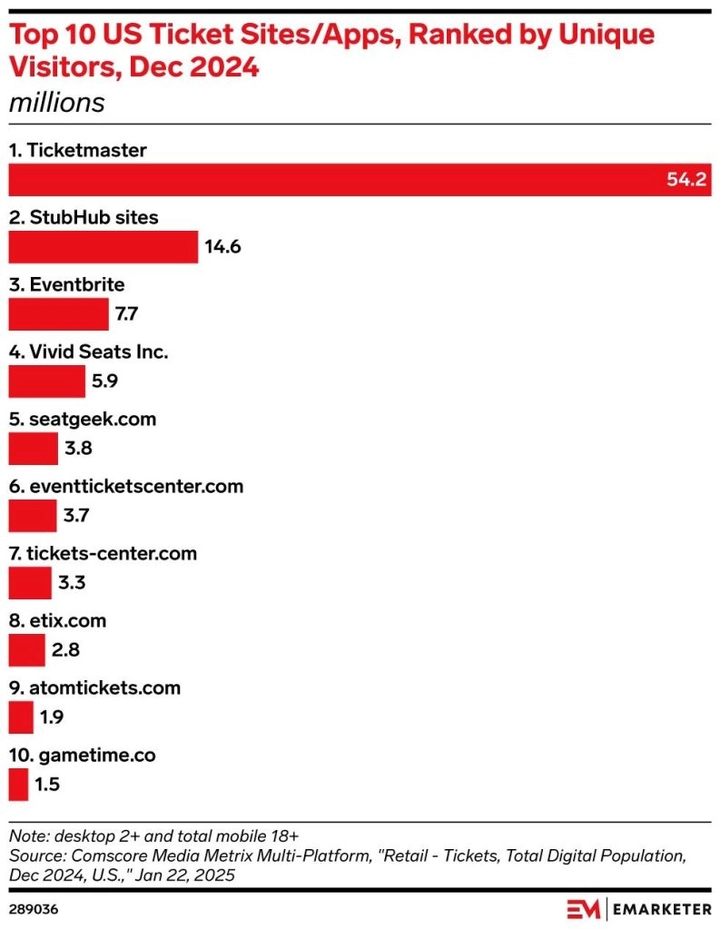
Ticketmaster’s dominance in the ticketing industry is undeniable. As the recent data shows, Ticketmaster isn’t just leading the market—it is the market, with over 54.2 million unique visitors, dwarfing its closest competitor, StubHub, which has a mere 14.6 million in comparison.
For years, fans have expressed their frustrations over high fees, lack of transparency, and an overall poor buying experience. Yet, despite this, Ticketmaster continues to reign supreme. Why? The answer is simple: Ticketing was never about tech—it was about business model innovation.
How Ticketmaster Built Its Dominance
Many assume that Ticketmaster’s power comes from having superior technology, but that couldn’t be further from the truth. The reality is that Ticketmaster’s real innovation wasn’t in tech at all—it was in understanding who the real customer was.
Most people assume ticketing companies should serve the fan. However, Ticketmaster recognized early on that the real power players in the industry weren’t the fans—they were the promoters and venues. The company didn’t focus on making the ticket-buying experience better for consumers; instead, it focused on solving financial pain points for promoters and locking in long-term contracts with venues.
Here’s how they did it:
1. Cash Advances for Promoters
Promoters are the backbone of the live event industry. They take on significant financial risks when putting on a show, often needing substantial capital upfront for artist guarantees, marketing, and logistics. Traditional loans and financing weren’t always readily available for smaller or mid-sized promoters.
Ticketmaster saw this as an opportunity. Instead of just handling ticketing, they started offering cash advances to promoters, essentially funding their events in exchange for long-term ticketing contracts. This meant promoters could secure the funding they needed to run events, but in return, they were locked into using Ticketmaster for years.
This financial support gave Ticketmaster a competitive moat that no other ticketing company could easily replicate.
2. Long-Term Venue Contracts
Ticketmaster didn’t just stop at helping promoters. They also secured long-term exclusive agreements with venues, ensuring that their system would be the only one used for ticketing in those spaces.
If a venue signs an exclusive contract with Ticketmaster, that means any event held at that venue must use Ticketmaster for ticket sales. Over time, this strategy effectively shut out competition and made it nearly impossible for new entrants to gain traction in the industry.
3. High Fees That Benefit Promoters
One of the biggest fan complaints about Ticketmaster is its high service fees. While it’s easy to assume these fees only serve to pad Ticketmaster’s profits, that’s not the whole story.
A little-known fact is that in many cases, a portion of those fees goes back to the promoter or the venue. This means that high fees aren’t just an inconvenience to fans—they’re actually an incentive for promoters and venues to stick with Ticketmaster.
The more money a venue or promoter can extract from fees, the more financially attractive it becomes to stay in business with Ticketmaster. And since fans don’t have a choice but to pay the fees if they want to attend an event, Ticketmaster continues to thrive.
4. Scale Begets Scale
Ticketmaster’s early moves to capture promoters and venues meant they were able to scale faster than competitors. More venues meant more ticket sales, which meant more promoters were drawn to them. Over time, this network effect snowballed, making it almost impossible for competitors to catch up.
Was Ticketmaster’s Success Inevitable?
In hindsight, Ticketmaster’s rise seems inevitable. Prior to Ticketmaster, ticketing companies were focused on the wrong customer—the fan. While fan-friendly policies are great in theory, they don’t necessarily solve the core financial challenges that promoters and venues face.
By shifting the focus to serving promoters and securing venue contracts, Ticketmaster created a business model that was not only lucrative but also self-reinforcing.
Even today, the impact of these early strategies is evident. Despite all the backlash, government scrutiny, and social media outrage, Ticketmaster’s grip on the market remains stronger than ever.
The Future: A Shift Toward Fan-Friendly Practices?
While Ticketmaster’s dominance isn’t likely to fade anytime soon, there are signs that the industry is beginning to shift toward more consumer-friendly practices.
Here are a few trends to watch:
1. Increased Regulation & Government Scrutiny
Governments and regulatory bodies have started to take a closer look at Ticketmaster’s dominance. The Department of Justice has launched an antitrust investigation into the company, and policymakers are considering legislation to limit ticketing monopolies.
While these efforts have historically been slow-moving, continued pressure could eventually lead to structural changes that introduce more competition into the market.
2. Transparent Pricing & Fee Reform
One of the most common complaints about Ticketmaster is hidden fees that only appear at checkout. In response to growing criticism, Ticketmaster has started rolling out all-in pricing, where ticket prices are displayed with fees included upfront.
While this doesn’t lower the actual cost, it at least makes pricing more transparent for consumers.
3. Blockchain & Decentralized Ticketing
New ticketing platforms are experimenting with blockchain technology to reduce fraud, eliminate bots, and introduce more transparent pricing models. Companies like SeatlabNFT and YellowHeart are pioneering the use of NFT-based tickets that allow for secure resale with controlled price caps.
While blockchain ticketing is still in its infancy, it poses a potential long-term threat to traditional ticketing models.
4. Artist-Led Ticketing Initiatives
Some major artists and festivals are taking matters into their own hands. For example, Pearl Jam, The Cure, and Taylor Swift have all fought against excessive ticket fees, advocating for more artist-controlled ticketing solutions.
If more artists push back and demand alternative ticketing options, it could start to shift power away from Ticketmaster and toward more artist-driven sales platforms.
Conclusion: Ticketmaster’s Business Model Remains King
The reality is that Ticketmaster’s dominance wasn’t built on superior technology—it was built on a brilliant business strategy that locked in promoters and venues through cash advances, long-term contracts, and high-fee incentives.
While consumer-friendly innovations are emerging, and regulatory pressures are mounting, it will take significant industry-wide changes to truly disrupt Ticketmaster’s stronghold.
That being said, the ticketing landscape is evolving. Fans, artists, and legislators are pushing for change, and new technologies like blockchain could introduce alternative models in the future.
Will we ever see a truly fan-first ticketing system at scale? Only time will tell. But one thing is certain: Ticketmaster’s business model set the gold standard for how to dominate an industry—not through tech, but through financial leverage and strategic partnerships.
Tariffs Trade Wars And Tours How Trump Era Policies Impact Live Music Business
The live music industry isn’t just shaped by artists and fans – it’s also swayed by politics and economics. In recent years, tariffs and other economic policies from the Trump administration have quietly altered the cost calculus for concerts, tours, and festivals. Think a trade war has nothing to do with your festival stage or tour budget? Think again. From rising production expenses to shifting consumer spending, the ripple effects are reaching promoters, venue operators, agents, and artists at every level. This post breaks down the key impacts – and how the industry is adapting – in a conversational yet pragmatic way. Let’s dive into the main areas affected and identify some survival strategies along the way.
The Tariff Ripple Effect: Higher Costs Backstage (and Onstage)
When the U.S. imposed steep tariffs on imported goods like steel, aluminum, and electronics, the shockwaves hit concert production hard. Live events rely on a global supply chain of gear and infrastructure, and suddenly many of those inputs got pricier. A 25% tariff on imported steel and 10% on aluminum (enacted under Trump in 2018) meant the raw materials for stages, trusses, and rigging shot up in price . From lighting rigs to speaker cabinets, steel and metal components are everywhere in a stage setup. Electronics weren’t spared either – tariffs on Chinese imports covered a lot of audio and lighting equipment parts. Everything from mixing consoles to LED walls faced increased levies, as one industry report noted . If a venue or promoter needed to buy new soundboards or lighting components, they were now paying a premium due to trade policy.
Stage structures and equipment depend on steel and electronics – materials that saw hefty import tariffs. Even a small jazz festival stage like this relies on metal trusses and imported gear, all of which became more expensive due to Trump-era tariffs . As production costs rise, those expenses eventually trickle into ticket prices or eat into promoters’ margins.
The immediate result of these tariffs was a jump in production costs. An American gear manufacturer gave a striking example: a boutique amp builder calculated that a 25% tariff on parts from Canada (like transformers, aluminum chassis, wood) would increase his manufacturing cost by $300 – which translates to about $1,050 higher retail price for the consumer after markups . In other words, a small cost increase multiplies by the time it reaches the end user. Apply that kind of math to an arena’s worth of gear and you see the problem. The National Association of Music Merchants (NAMM) warned that tariffs would indeed raise instrument and equipment prices across the board, hurting both manufacturers and musicians . ForThe live music industry isn’t just shaped by artists and fans—it’s also swayed by politics and economics. In recent years, tariffs and other economic policies from the Trump administration have quietly altered the cost calculus for concerts, tours, and festivals.
Think a trade war has nothing to do with your festival stage or tour budget? Think again. From rising production expenses to shifting consumer spending, the ripple effects are reaching promoters, venue operators, agents, and artists at every level.
This post breaks down the key impacts—and how the industry is adapting—in a conversational yet pragmatic way. Let’s dive into the main areas affected and identify some survival strategies along the way.
The tariff ripple effect: higher costs backstage (and onstage)
When the U.S. imposed steep tariffs on imported goods like steel, aluminum, and electronics, the shockwaves hit concert production hard.
Live events rely on a global supply chain of gear and infrastructure, and suddenly many of those inputs got pricier. A 25% tariff on imported steel and 10% on aluminum (enacted under Trump in 2018) meant the raw materials for stages, trusses, and rigging shot up in price. From lighting rigs to speaker cabinets, steel and metal components are everywhere in a stage setup.
Electronics weren’t spared either. Tariffs on Chinese imports covered a lot of audio and lighting equipment parts. Everything from mixing consoles to LED walls faced increased levies, as one industry report noted. If a venue or promoter needed to buy new soundboards or lighting components, they were now paying a premium due to trade policy.
Stage structures and equipment depend on steel and electronics—materials that saw hefty import tariffs. Even a small jazz festival stage relies on metal trusses and imported gear, all of which became more expensive due to Trump-era tariffs. As production costs rise, those expenses eventually trickle into ticket prices or eat into promoters’ margins.
The immediate result: a jump in production costs.
An American gear manufacturer gave a striking example: a boutique amp builder calculated that a 25% tariff on parts from Canada (like transformers, aluminum chassis, wood) would increase his manufacturing cost by $300—translating to about $1,050 higher retail price for the consumer after markups. In other words, a small cost increase multiplies by the time it reaches the end user. Apply that kind of math to an arena’s worth of gear and you see the problem.
The National Association of Music Merchants (NAMM) warned that tariffs would raise instrument and equipment prices across the board, hurting both manufacturers and musicians. For concert producers, higher equipment prices mean higher rental costs or capital expenditures for tours. One Pollstar analysis put it plainly:
“Implementation of steep and broad tariffs will no doubt raise costs for touring. Everything from trucks to auto parts to soundboard and lighting components are imported and face increased levies.”
Naturally, someone has to foot the bill. Promoters and production companies have a few options:
absorb the costs (squeezing profit)
pass costs to artists (increasing tour support budgets or fees)
pass costs to fans (higher ticket prices or fees)
Ticket prices won’t suddenly jump 25% overnight in direct response to tariffs—you won’t see a “Tariff Surcharge” line on your Ticketmaster receipt. However, over time these added costs put upward pressure on pricing. If a tour now costs, say, 10% more to stage because of equipment and transport expenses, that’s 10% that has to come from somewhere.
Bottom line: tariffs on industrial goods have indirectly made concerts more expensive to produce, creating a ripple effect from backstage to box office.
Touring economics under tariffs: squeezed logistics and pricier merch
Tariffs haven’t just hit the equipment on stage—they’re also affecting the economics of touring, especially international touring. For foreign artists coming to the U.S. and American acts heading abroad, the costs and headaches are piling up.
Transportation costs
Touring means moving people and tons of gear across borders, and that got pricier when trade tensions rose. Fuel costs can be influenced by trade policies—tariffs on Canadian and Mexican goods threatened to raise gasoline and diesel prices in the U.S., since a lot of fuel is refined in Canada or pumped from Mexico. Higher fuel prices translate into higher tour trucking costs and airfare.
Shipping gear by sea or air also became costlier if tariffs applied to things like flight cases or if retaliatory tariffs slowed down logistics.
Result: gear transportation and freight services have faced increased costs, making touring internationally more expensive overall.
Merchandise gets hit too
Merch is a lifeblood revenue stream for touring artists. Many bands produce their T-shirts, hats, and physical music (vinyl, CDs) overseas—wherever it’s cheapest. Tariffs threw a wrench in those plans.
This is not hypothetical: Canadian artists have voiced concern that tariffs on goods like T-shirts, vinyl records, or posters will make it hard to turn a profit on U.S. tours. Merch costs rising by double digits can erase an indie band’s narrow tour profit, since merch sales often fund their gas and food.
Artists might raise merch prices, but there’s a ceiling before fans balk at a $50 t-shirt. Some have started printing within the tour country to dodge import tariffs, but that isn’t always feasible and can be more expensive upfront.
Visas and paperwork (not a tariff, but a big hurdle)
The Trump-era immigration climate became tougher, with more stringent vetting and longer timelines. Touring artists felt this in longer wait times and higher fees for U.S. performance visas.
Industry experts warned of “additional rules… increasing the costs of work permits or putting impediments on the entry visa process” for foreign artists, and that’s proven true. The U.S. Citizenship and Immigration Services implemented a huge 250% increase in artist visa fees (for P and O visas) and changes that slowed down processing.
For a mid-level international act, those visa costs alone can eat up the guarantee from a club tour. Some have simply given up—fewer overseas acts are touring the U.S. because it’s “the maximum level of difficulty that we can rationalize,” as one Canadian musician put it.
What it adds up to
All these factors mean tighter tour margins. Planning is done 6–12 months out; when policies change quickly, it’s a nightmare to budget.
Increased travel costs, pricier merch, and visa red tape are forcing artists and promoters to adapt—shorter routes, higher guarantees per show, or extra sponsorship to underwrite tours.
Festivals and large-scale events: adjusting to an expensive new normal
Big festivals and multi-city mega tours feel these cost increases acutely—sometimes multiplied across dozens of dates or multiple stages.
A festival like Coachella or Lollapalooza builds mini-cities of stages, tents, and video walls, sourcing materials and equipment globally. Tariffs on steel and aluminum make those massive stages more expensive to fabricate. Tariffs on electronics mean the miles of LED screens and lighting fixtures cost more to purchase or rent.
One Canadian stadium manager noted that “we could see increased costs for goods and materials such as building materials, technology, food and beverage, and merchandise” due to the tariffs. In other words, every input—from the stage itself down to the beer cups—has gotten pricier.
Major festivals involve complex stages, huge video displays, and infrastructure that often come from global suppliers. Tariffs on steel and imported tech can drive up production costs for big events. Organizers may respond by raising ticket prices or seeking more sponsorship to balance the budget.
Sponsors and vendors feel the pressure too
Large events depend on sponsors and vendors. If those companies are hurting from tariffs or economic uncertainty, they may cut back.
A report from the Canadian live industry warned trade tensions could lead companies to tighten budgets, leading to fewer sponsorship opportunities. Festivals that rely on U.S. sponsors or U.S. attendees can be doubly impacted if tourism dips or cross-border booking becomes more expensive.
How big players are adjusting
Common adaptations include:
modest year-over-year ticket/fee increases to keep pace with costs
scaling back extravagances (more local infrastructure, less free swag)
longer-term supplier contracts to lock in pricing
additional sponsorship specifically to cover new expenses
more efficient routing and consolidated shipping for tours
At scale, even a 5% cost increase can mean millions of dollars, so every adjustment helps.
Not all impacts are equal
Large companies (Live Nation, AEG) can sometimes weather these hits better—bulk purchasing, hedging currency, shifting resources. Smaller independent festivals don’t have that luxury; sudden spikes can be existential. Some second-tier festivals have cited “unforeseen economic changes” when announcing hiatuses or cancellations.
Trickle-down on mid-tier and indie acts: the little guys feel it most
Mid-tier artists, club-level touring bands, and independent venues are feeling a disproportionate strain. Unlike superstar tours, smaller acts run on razor-thin margins. When costs rise and consumer confidence dips, it can be the difference between breaking even and losing money.
Consider a mid-level indie band:
driving a van (fuel costs more)
printing merch (blank shirts and printing costs rise due to tariffs)
selling $15 tickets (can’t easily raise price without losing attendance)
A music industry brief noted that independent artists and small studios feel these impacts the most because they operate with tight budgets. That’s playing out in real time: higher PA rental costs, pricier replacement parts, and increased venue operating expenses.
Consumers tighten spending, and indie shows feel it first
When everyday costs rise (often a byproduct of tariffs), people have less disposable income. Non-essentials like weeknight shows and merch purchases get cut first.
One survey showed a significant chunk of Americans planned to slash spending on “entertainment away from home” in anticipation of higher living costs. The result: softer ticket sales and lower per-head spend at local shows.
How indie operators are adapting
co-headline tours to share crew and backline
crowdfunding / subscriptions to subsidize touring costs
skipping far-away cities and focusing on efficient regional routing
fewer risky bookings; more emphasis on profitability per show
The show must go on, but it’s getting pricier to put on.
Broader economic trends: tax cuts, trade policies, and deregulation in the mix
Tariffs are the headline, but they’re not the only Trump-era policies affecting live music. The broader context includes the 2017 tax overhaul, trade policy shifts, deregulation, and immigration rules—each with side effects for concerts and touring.
Tax changes
The Tax Cuts and Jobs Act (TCJA) of 2017 cut corporate tax rates and changed deductions. One key live-industry effect: the elimination of the entertainment expense deduction for businesses.
Pre-2018, a corporate client might buy a block of tickets or a suite as a partially deductible expense; now it’s 0% deductible. That made corporate hospitality spending less attractive. On the flip side, lower corporate tax rates increased liquidity for some sponsors.
Net effect: the tax changes giveth and taketh away—more general corporate cash, fewer tax perks for entertainment spending.
Trade policy uncertainty
Beyond specific tariffs, the broader policy whiplash created uncertainty. That matters because tours and festivals are planned far in advance.
Live Nation’s stock dipped in mid-2019 after tariff announcements, as investors feared higher costs and weaker consumer spending. If trade conflicts slow growth and nudge up inflation, leisure industries get squeezed.
Deregulation
Some deregulation efforts may have modestly reduced compliance costs or encouraged capital investment—potentially supporting venue builds and renovations during the late-2010s boom. But these effects are subtle and uneven.
Overall picture: a mixed bag—some tailwinds from tax cuts/deregulation, but heavy headwinds from trade wars and immigration clampdowns.
Survival strategies: navigating the economic minefield
Here are practical ways promoters, venues, and artists are adapting.
1) Strategic budgeting and contracts
Build a tariff contingency into budgets. Pad a few percent for volatility. Lock vendor pricing early where possible and use cost-escalation clauses.
2) Localize and diversify suppliers
Source locally when possible. Use domestic merch production for domestic tour legs to avoid cross-border duties. Diversify vendors so you’re not exposed to one region’s policy shifts.
3) Smarter routing and touring logistics
Minimize travel distance and border crossings. Group regions together. Consider renting local backline for fly-in dates rather than shipping everything.
4) Reevaluate ticket pricing and value
Use tiering: VIP add-ons, premium seating, bundles—while keeping base tickets accessible. If prices rise, make sure the experience supports the value.
5) Maximize merch margins creatively
Bundle offers, preorder packages, print-on-demand where it makes sense, fewer stronger designs, and more “premium” perceived value to protect margin without shocking fans on price.
6) Plan very early for visas and cross-border admin
Apply earlier (9–12 months where possible). Budget for legal help and expedite options. Promoters booking international acts may need to share visa support to close deals.
7) Strengthen sponsor and community support
Diversify sponsorship: more local partners, fewer single-point failures. Build membership programs, patron circles, or community fundraising channels before you need them.
8) Advocacy and industry collaboration
Engage with industry groups (NAMM, NITO, promoters’ associations). Collective lobbying can influence tariff exemptions and visa policy.
9) Keep calm and innovate
Constraints often drive innovation—new production approaches, new revenue streams, smarter operations. Resilience is part of the live industry’s DNA.
Conclusion: hitting the right notes in a changing economic tune
Tariffs and trade policy might not be the sexiest topics in music, but they have real consequences for live entertainment. The Trump administration’s economic moves—from import taxes to visa rules—set off a chain reaction that raised costs and changed strategy across the concert business.
The industry response has shifted toward proactive problem-solving: designing leaner productions, budgeting for volatility, locking vendor pricing, routing more efficiently, and planning international admin far earlier than before.
The goal is still the same: deliver unforgettable live experiences and stay profitable doing it. The path just has more variables now. Stay informed, stay flexible, and keep the music playing.
The show will go on—we’ll just budget for a few extra roadblocks on the tour itinerary.
concert producers, higher equipment prices mean higher rental costs or capital expenditures for tours. One Pollstar analysis put it plainly: “Implementation of steep and broad tariffs will no doubt raise costs for touring. Everything from trucks to auto parts to soundboard and lighting components are imported and face increased levies.” In short, that stage setup is now notably more expensive to build and transport.
Naturally, someone has to foot the bill. Promoters and production companies have a few options: absorb the costs (squeezing their profit), pass some costs to artists (increasing tour support budgets or fees), or ultimately pass it to fans via higher ticket prices or fees. Ticket prices won’t suddenly jump 25% overnight in direct response to tariffs – you won’t see a “Tariff Surcharge” line on your Ticketmaster receipt. However, over time these added costs put upward pressure on pricing. If a tour now costs, say, 10% more to stage because of equipment and transport expenses, that’s 10% that has to come from somewhere. In a competitive market, promoters might only pass along a portion to ticket prices to avoid sticker shock. But even then, fans could feel it. As we’ll discuss later, this comes at a time when audiences are already cautious with spending. The bottom line (literally) is that tariffs on industrial goods have indirectly made concerts more expensive to produce, creating a ripple effect from backstage to box office.
Touring Economics Under Tariffs: Squeezed Logistics and Pricier Merch
Tariffs haven’t just hit the equipment on stage – they’re also affecting the economics of touring, especially international touring. For foreign artists coming to the U.S. and American acts heading abroad, the costs and headaches are piling up. One major factor is transportation. Touring means moving people and tons of gear across borders, and that got pricier when trade tensions rose. Fuel costs, for example, can be influenced by trade policies – tariffs on Canadian and Mexican goods threatened to raise gasoline and diesel prices in the U.S. since a lot of fuel is refined in Canada or pumped from Mexico . Higher fuel prices translate into higher tour trucking costs and airfare. Shipping gear by sea or air also became costlier if tariffs applied to things like flight cases or if retaliatory tariffs slowed down logistics. It’s a classic squeeze: gear transportation and freight services have faced increased costs, which makes touring internationally more expensive overall.
Another pain point is merchandise – a lifeblood revenue stream for touring artists. Many bands produce their T-shirts, hats, and even physical music (vinyl, CDs) overseas or in the market where they’ll tour, wherever it’s cheapest. Tariffs threw a wrench in those plans. If an American band prints their merch in China or Mexico, importing it back incurs new taxes, and if a Canadian band brings Canadian-made merch into the U.S., that could get hit too. This is not hypothetical – Canadian artists have voiced concern that tariffs on goods like T-shirts, vinyl records or posters will make it hard to turn a profit on U.S. tours . Merch costs rising by double digits can erase an indie band’s narrow tour profit, since merch sales often fund their gas and food. Artists might respond by raising merch prices for fans, but there’s a limit before fans balk at a $50 t-shirt. Some have started printing merchandise within the tour country to dodge import tariffs, but that isn’t always possible and can be more expensive upfront. In short, the trade war has shown up at the merch table, of all places.
Then there’s the matter of visas and paperwork – not a tariff, but another Trump-era hurdle for touring acts. The immigration climate became tougher, with travel bans and more stringent visa vetting making headlines. Touring artists felt this in longer wait times and higher fees for U.S. performance visas. Even before the recent fee hikes, foreign bands complained the process was expensive and complicated – and it’s gotten worse. Industry experts warned of “additional rules… increasing the costs of work permits or putting impediments on the entry visa process” for foreign artists, and that’s proven true. The U.S. Citizenship and Immigration Services implemented a huge 250% increase in artist visa fees (for P and O visas) and changes that slowed down processing . Essentially, international artists now pay several thousand dollars (and wait many months) for the privilege of performing in America. For a mid-level international act, those visa costs alone can eat up the guarantee from a club tour. Some have simply given up – fewer overseas acts are touring the U.S. because it’s “the maximum level of difficulty that we can rationalize,” as one Canadian musician put it . American artists haven’t been hit with reciprocal visa hikes yet in many countries, but there’s always that risk if trade disputes escalate. And at minimum, if other economies weaken due to trade wars, that can reduce international invitations or payouts for American acts abroad.
All these factors add up to tighter tour margins. Managers are crunching numbers and finding that international touring – once a growth strategy for fanbase and income – has new financial and logistical barriers. Gear carnets (the passports for equipment) and customs paperwork are more daunting when each item’s value is subject to tariffs. Some UK and European tour producers even fear a scenario of tit-for-tat rules requiring costly work permits for Americans, mirroring what U.S. requires – a sort of visa Cold War in the arts. While that hasn’t fully materialized, the uncertainty alone is a problem. Tour planning is done 6-12 months out; when policies change on a tweet’s notice, it’s a nightmare to budget. Increased travel costs, pricy merch, and visa red tape are forcing artists and tour promoters to adapt – whether by shortening tour routes, charging more per show, or seeking extra sponsorship to underwrite tours. The golden age of globe-trotting freely with guitars and a smile has hit a reality checkpoint at customs.
Festivals and Large-Scale Events: Adjusting to an Expensive New Normal
If you think major festivals and arena tours are immune because of their scale, think again. Big festivals and multi-city mega tours feel these cost increases acutely – sometimes multiplied across dozens of dates or multiple stages. A festival like Coachella or Lollapalooza builds mini-cities of stages, tents, and video walls, sourcing materials and equipment from around the world. Tariffs on steel and aluminum make those massive stages more expensive to fabricate. Tariffs on electronics mean the miles of LED screens and lighting fixtures cost more to purchase or rent. One Canadian stadium manager noted that “we could see increased costs for goods and materials such as building materials, technology, food and beverage, and merchandise” due to the tariffs . In other words, every input to a large event – from the stage itself down to the beer cups – has gotten pricier. Festivals operate on tight budgets and high up-front costs, so these changes force some tough choices.
Major festivals involve complex stages, huge video displays, and infrastructure that often come from global suppliers. This large festival stage (with extensive lighting and LED screens) illustrates how tariffs on steel and imported tech can drive up production costs for big events . Organizers may respond by raising ticket prices or seeking more sponsorship to balance the budget.
For big tours, the scenario is similar. A large-scale tour might carry its staging and production on 20+ trucks across North America. Tariffs made those trucks more expensive to buy/lease and maintain (remember, auto parts and even tires can be affected). If it’s an international tour, shipping containers full of gear now face duties at each border. Large events also depend on corporate sponsors and vendors, which bring another angle: if those companies are hurting from tariffs or economic uncertainty, they might cut back support. A report from the Canadian live industry warned that trade tensions could lead companies in the U.S. and Canada to “tighten their budgets, leading to fewer sponsorship opportunities for festivals and events.” Festivals like Toronto’s NXNE or Montreal’s Osheaga often rely on U.S. sponsors and attract U.S. attendees. If it costs more to bring American artists (who demand higher fees to cover their costs) or if U.S. tourists think twice about traveling, the festival’s lineup and ticket sales suffer . In a worst-case scenario, a cross-border trade war could even dampen tourism – one venue exec noted fewer visitors from the U.S. would directly hit event attendance and local economies .
So how are big players adjusting? For one, raising ticket prices and fees modestly year-over-year to offset inflation and increased costs has become standard. You might notice that each year your favorite festival costs a bit more – not just because of demand, but because it genuinely costs more to put on. Some festivals have scaled back on extravagances; for instance, using more locally sourced infrastructure (to avoid import costs) or cutting back on free swag/merch. Others negotiate longer-term contracts with suppliers to lock in prices before tariffs bite. In a few cases, festivals sought additional sponsorship specifically to cover new expenses. On the touring side, promoters are consolidating shipments and routing tours more efficiently to save on fuel and freight. It’s a game of margins – at scale, even a 5% cost increase can mean millions of dollars – so every little adjustment helps. Festival organizers have also become unlikely lobbyists, paying attention to trade policy and sometimes joining coalitions asking for exemptions (for example, asking that musical gear be excluded from tariffs lists). When a festival is worrying about U.S.-China relations and steel import duties, you know the economic forces are hitting home.
It’s worth noting that not all the effects are negative for big players. Large companies can sometimes weather the storm better than small ones. A giant like Live Nation or AEG can bulk purchase equipment, hedge currency exchange, or shift resources between events to mitigate tariff impacts. They also often have cash reserves or credit lines to absorb short-term hits. Smaller independent festivals don’t have that luxury – a sudden cost spike can be existential for them. We’ve started seeing festivals (especially second-tier ones) cite “unforeseen economic changes” as reasons for hiatus or cancellation. In sum, the festival and big-tour sector is adapting but under pressure. They’re finding ways to still deliver spectacle while trimming fat elsewhere. But if you’ve wondered why festival tickets, food, and merch are getting pricier, Trump’s trade war is one of the backstage culprits.
Trickle-Down on Mid-Tier and Indie Acts: The Little Guys Feel It Most
Economic shifts tend to hit the little guys hardest, and that’s true in live music. Mid-tier artists, club-level touring bands, and independent venues are feeling a disproportionate strain from these tariffs and policies. Unlike superstar tours that can raise prices or get sponsor help, smaller acts operate on razor-thin margins. When costs go up and consumer confidence goes down, it can be the difference between breaking even or going bust on a tour.
Consider a mid-level indie band planning a U.S. tour. They likely drive a van (fuel now costs more), print t-shirts to sell (merch printing and blank shirts cost more due to tariffs ), and every extra dollar on expenses counts. They can’t easily jack up their $15 ticket prices without losing the local fans on a budget. So they end up absorbing these hits – touring becomes even more of a labor of love. A music industry brief noted that independent artists and small studios feel these cost impacts the most, since they operate with tight budgets . That’s playing out in real time: small promoters report higher production costs even for bar gigs, since the PA equipment rental might be up 10%, or the backline gear the band needs is pricier to rent or fix (thanks to costlier parts). Mid-sized venues also pay more for everything from lighting replacements to beer kegs (yes, aluminum tariffs hit your beer, too). They can only raise the bar price of PBR so much to compensate.
There’s also a trickle-down effect via consumers that especially hurts indie shows. When everyday costs like groceries and gadgets rise (often a byproduct of tariffs ), people have less disposable income. And what do they cut first? Usually non-essentials like going to random weeknight shows or buying band merch. One survey showed a significant chunk of Americans planning to slash spending on “entertainment away from home” as they anticipate higher living costs . That means local concerts and mid-tier artist tours see softer ticket sales – not because the acts aren’t good, but because fans are tightening belts. As a result, small venues and independent promoters face diminished clientele simply because people have less discretionary income . Robert Baird, a Canadian music consultant, warned that a “depressed economy due to the tariff will not allow for the flourishing of live performing arts” . It’s a grim outlook: fewer people coming through the door, and those who do spend less on drinks and merch.
Mid-tier and indie artists are adapting in scrappy ways. Some are bundling tours together – two or three bands teaming up to share one set of crew and backline to save costs. Others are turning to crowdfunding or fan subscription services to subsidize tours (“Help us fund our tour van’s gas and we’ll send you exclusive content”). We also see them prioritizing markets – maybe skipping that one far-away city that’s too costly to justify, focusing on regions where they can do a string of dates with minimal travel. It’s a pragmatic response: if tariffs have effectively raised the threshold of what it costs to tour, you either scale up your income (more fans, higher prices) or scale down your expenses. Unfortunately, many indie acts have little control over either in the short term.
For independent venues and promoters, these economic headwinds compound other challenges (like competition and post-pandemic recovery). They might cut back on the number of shows or reduce production quality (e.g. fewer fancy lights, simpler stage setups) to control costs. But that can be a vicious circle if the show’s appeal diminishes. It’s a tough spot – the show must go on, but it’s getting pricier to put on. One mindset shift happening is a greater focus on profitability per show rather than growth. Indie promoters are asking, “Can we actually make money on this event after all these expenses?” rather than just booking shows for market presence. That may lead to fewer risks taken on new artists, which is unfortunate for music discovery. In short, the smaller players in live music are walking a tightrope: on one side, rising costs and paperwork; on the other, cautious consumers – and they’re trying to not fall off.
Broader Economic Trends: Tax Cuts, Trade Policies & Deregulation in the Mix
Tariffs might be the headline, but they’re not the only Trump-era economic policy impacting live music. The broader context includes the 2017 tax overhaul, various trade policy changes, deregulation moves, and immigration rules – all of which have side effects (some good, some bad) for concerts and touring.
Tax changes: The Trump administration’s Tax Cuts and Jobs Act (TCJA) of 2017 slashed corporate tax rates and altered many deductions. For the live industry, one notable change was the elimination of the entertainment expense deduction for businesses. Companies can no longer write off taking clients to concerts, sports games, or clubs as a business expense . Pre-2018, a corporate client might buy a block of concert tickets or a suite as a 50% deductible expense; now it’s 0% deductible. This arguably made some businesses less inclined to splurge on concert tickets or sponsorships as part of their marketing hospitality – it just got 21% more expensive in after-tax terms. On the flip side, the corporate tax cut put more cash in many sponsors’ coffers. Some of that money found its way into increased marketing budgets and possibly event sponsorships. In effect, the tax changes giveth and taketh away: more general corporate liquidity (a boon for potential sponsorship or investment in venues), but fewer tax perks for entertainment spending (a minor dampener on high-end ticket sales). For artists and crews, the TCJA also limited deductions for unreimbursed work expenses (musicians who are classified as employees in some cases lost the ability to deduct travel costs), hitting touring folks at tax time. It’s a wonky detail, but in aggregate it means touring became a bit less tax-friendly for working-class musicians.
Trade policies and uncertainty: Beyond the specific tariffs, the overall trade policy whiplash had an effect. Renegotiating NAFTA into USMCA, threatening new tariffs on Europe, then reaching partial deals – it was a lot of geopolitical seesawing. Business thrives on certainty, and during the height of the trade wars, certainty was scarce. This made large entertainment companies cautious. For example, Live Nation’s stock price actually tumbled in mid-2019 when the first tariff announcements hit, dropping from record highs as investors feared higher costs and weaker consumer spending. Broadly, if trade conflicts slow economic growth, it can curb the advertising and sponsorship money flowing into events. The OECD projected Trump’s tariffs could slow global growth and nudge up inflation – a combo that usually squeezes leisure industries. Additionally, retaliatory tariffs from other countries targeted U.S. goods, which can include cultural exports. (Europe, for instance, once threatened tariffs on American products like motorcycles and bourbon, sparking fears they’d target cultural sectors next.) American music companies that export gear or run businesses abroad felt some pain too. Gibson Guitars or Fender, for instance, faced higher costs on components and saw their credit ratings outlook dim because of tariff-linked cost increases . While that’s not directly about concerts, it’s the ecosystem – when gear makers struggle, that can ripple into sponsorship (no extra funds for tour support) and innovation (fewer new affordable products for venues).
Deregulation: The Trump years were marked by deregulation efforts in areas like labor, environment, and telecom. A few of these touch the live music world. For example, changes in labor rules (overtime regulations, contractor definitions) could affect venue staff and road crew costs. Some venue operators benefited from loosened labor regs that kept their staffing costs a bit lower than they might have been under stricter rules – a subtle effect, but there. Environmental deregulation potentially lowered utility costs or construction compliance costs for venues (imagine building a new amphitheater with fewer environmental review hurdles). One could argue these savings are relatively minor, but in a low-margin business, even minor helps. Deregulation in telecom (like the rollback of net neutrality) doesn’t directly impact live events, though one might stretch a link: if ISPs can charge more, a festival streaming their live webcast might pay more for bandwidth. Overall, deregulation provided a modest tailwind for businesses, reducing certain compliance costs and encouraging capital investment, which in some cases meant more new venues or renovations during the boom years. Indeed, the late 2010s saw a flurry of new venue projects, partly thanks to business optimism and available capital.
In sum, the Trump administration’s economic landscape was a mixed bag for the live industry. Tax cuts and deregulation put wind in the sails of many companies (more cash, less red tape), but the trade wars and immigration clampdowns threw some heavy anchors overboard. One live music executive described it as a “climate of uncertainty” where venue funding could be in jeopardy and clientele diminished due to people having less money to spend . For an industry that plans tours and festivals a year in advance, uncertainty is the enemy. It’s hard to price tickets or guarantee fees when you don’t know if material costs will jump or if a key international artist can get a visa. Yet, through all this, the industry seeks balance. Overall profitability in the live sector hit record highs in 2019, buoyed by strong demand, even as these issues bubbled underneath. Post-pandemic recovery in 2021-2022 was robust as well. So, the story isn’t “doom and gloom,” but rather a caution: external economic policies have tangible impacts on show business. The savvy operators are the ones keeping one eye on Washington and Beijing while the other eye books the lineup.
Survival Strategies: Navigating the Economic Minefield
Given all these challenges, how can industry professionals adapt and thrive? The good news is that the live music industry is nothing if not resilient and creative (we’ve survived recessions, piracy, a pandemic – we can handle tariffs and taxes with some strategy). Here are some actionable strategies and mindset shifts for promoters, venues, and artists navigating this economic landscape:
• Strategic Budgeting and Contracts: Build a “tariff contingency” into your budgets. Assume production costs might rise mid-tour and pad in an extra few percent as insurance. When contracting with suppliers or vendors, try to lock in prices early or include cost-escalation clauses. For example, a staging company might agree to honor today’s price for steel through your festival date – get that in writing. It’s similar to how construction firms handle volatile material costs . Better to budget cautiously than be caught off guard by a spike in lighting gear cost two weeks before showtime.
• Localize and Diversify Suppliers: Just as one stadium exec mentioned prioritizing Canadian suppliers to mitigate U.S. tariffs , you can source equipment and services locally whenever possible. If imported gear is expensive, see if domestic alternatives exist for your needs. This might mean renting from a local company rather than importing your own rig. It could also mean using U.S.-made merch for U.S. tours (and EU-made merch for European legs) to avoid cross-border duties. Diversifying suppliers also gives flexibility – if one region’s trade policy goes haywire, you have other options.
• Smarter Routing and Touring Logistics: Optimize tour routes to minimize travel distance and border crossings. Fewer miles means less fuel and fewer chances for customs fees. If you’re an agent routing an international tour, try grouping all the European dates together and all the U.S. dates together, rather than ping-ponging (which would rack up more transport costs and paperwork each entry). Consider renting backline gear locally for one-off overseas shows instead of shipping yours – it might be cheaper than paying freight and import fees. Many mid-level artists are already doing “fly-in” dates with rented gear to save money; that trend will continue.
• Reevaluate Ticket Pricing and Value: While no one wants to raise ticket prices, you may need to adjust pricing strategies to maintain viability. This doesn’t simply mean charging more across the board – it means being smart about it. Implement dynamic pricing or tiered pricing where your most passionate fans with means can opt for VIP packages, preferred seating, or add-ons that boost revenue, while keeping base ticket prices as affordable as possible for general fans. The idea is to let those who can pay more (for a special experience) subsidize those who can’t. Also, communicate value – if you do charge a bit more, ensure the fan experience justifies it (better amenities, more programming). Fans will accept slightly higher costs if they feel they’re still getting bang for their buck.
• Maximize Merch Margins Creatively: If merch costs have gone up, get creative rather than simply hiking prices. For instance, offer bundled deals (ticket + merch presale bundles) to secure sales in advance and perhaps produce in more efficient batches. Explore print-on-demand for some items to avoid large upfront costs and potential import fees (the item is produced where the customer is). Also, design merch that fans perceive as premium – they might pay $5 more for a cool limited edition item, offsetting higher production costs. Essentially, optimize your merch mix to preserve margin: maybe fewer designs (economies of scale when ordering) but strong ones that sell out.
• Plan (Very) Early for Visas and Cross-Border Admin: The new normal for international artists is to apply for U.S. visas earlier than ever – we’re talking 9-12 months out if possible. Yes, it’s absurd, but so is losing a festival slot because of visa delays. Budget for expediting services or immigration lawyers if you have a high-profile tour – it could save your date. For U.S. promoters booking foreign acts, consider offering to share visa costs or assistance as part of the deal; it might make the difference in an act saying yes to a U.S. tour. Similarly, for American artists going abroad, always check if new documentation is needed (post-Brexit UK touring, for example, now requires some extra steps for EU dates – not Trump-related, but indicative of changing rules globally). Knowledge and preparation are key; the info is out there on government sites and through industry groups.
• Strengthen Sponsor and Community Support: In a climate where big sponsors might waver, build a broader base of support. This could mean smaller local sponsors – a group of regional companies each chipping in, rather than one title sponsor. It could also mean fan-driven support: VIP meet-and-greets, crowdfunding special projects, or patron programs. The community that loves your venue or festival might be willing to invest in its survival. We’ve seen venues launch membership programs or “save our stage” fundraising that not only raise money but deepen fan loyalty. While you hope it doesn’t come to that, having those channels in place is smart.
• Advocacy and Industry Collaboration: Get involved with industry associations (like NAMM, NITO, or the concert promoters’ association) that lobby on these issues. NAMM, for instance, has been advocating for exemptions on musical instruments and gear from tariffs . Collective action can yield results; politicians do listen when an entire industry makes noise (witness the outcry that delayed some visa fee increases). By staying informed and contributing your voice, you help shape a more favorable business environment. It’s a bit of a mindset shift – promoters don’t typically think about D.C. lobbying – but these days, having a seat at the table is part of ensuring our industry’s needs are heard.
• Keep Calm and Innovate On: Finally, maintain perspective and encourage a resilient mindset. Yes, costs are up and policies can change overnight, but the live music business has enduring appeal. History shows that when challenges arise, innovation often follows. Maybe it’s new technology (holographic stage elements instead of costly physical sets?) or new revenue streams (virtual concert tickets, anyone?). The past few years have shown how adaptable we can be – as one venue executive put it, “the past few years have shown us how resilient and adaptable our industry can be in the face of global uncertainty” . That resilience is our secret weapon. By staying agile, sharing knowledge, and embracing creative solutions, promoters and artists can weather this economic storm and even find new ways to thrive.
Conclusion: Hitting the Right Notes in a Changing Economic Tune
Tariffs and trade policies might not be the sexiest topics in the music world, but as we’ve seen, they have very real consequences for live entertainment. The Trump administration’s economic moves – from import taxes to visa rules – have set off a chain reaction that raised costs and altered strategies throughout the concert business. Industry professionals are wise to pay attention to these forces. It’s no longer enough to just book great talent and market the show; you also need to consider macro factors like material costs, international logistics, and even legislation that could impact your event.
The tone among promoters and venue operators has shifted to proactive problem-solving. There’s a bit of gallows humor in the mix (“Will the next tour be derailed by a tweet about tariffs?”), but also a determination to adapt. In an odd way, these challenges are prompting the live industry to become more efficient and forward-thinking than ever. We’re seeing closer collaboration between departments – production folks talking to finance folks, asking “ _How do we design a stage that’s awesome but tariff-proof?_”. That kind of cross-functional thinking is a positive development.
In the end, the goal remains the same: deliver unforgettable live experiences and stay profitable doing it. The path to get there just has a few more twists now. By understanding how tariffs and economic policies ripple through our industry, we can make better decisions – whether it’s locking in that equipment quote before the next trade salvo or choosing to invest in local community support to cushion hard times. As you plan your next event or tour, remember that the world’s economic stage can affect your literal stage. Stay informed, stay flexible, and keep the music playing. After all, if we can handle temperamental artists and last-minute production crises, we can handle a few tariffs and taxes with aplomb. The show will go on – we’ll just budget for a few extra roadblocks on the tour itinerary.
The Mega Fest Era Is Dead
First a quick caveat – I don’t normally like to make predictions since it usually amounts to guesswork. All things considered, it’s way more important to be nimble regardless of where things go rather than try to plan for an uncertain future. So take any predictions with a grain of salt. Also, this is a US-centric view, so things might be different around the world.
But now that that’s out of the way, here goes nothing:
MY PREDICTION: the Big festival era Is over.
Sorry to be a buzzkill, but this ain’t happening again.
Some of the established ones like Coachella and Bonnaroo will, of course, keep going. They are well run (for the most part), have a highly regarded brand, and money in the bank. There may still be rough waters ahead for them but are positioned relatively well to pick things back up in 2021 or 2022.
But we’re not going to see a new mega-festival like those pop up for a long time, even after the COVID-19 crisis is long behind us.
There are a few reasons why that’s the case. Let’s dive in:
1. The Economic recovery won’t allow for it
There’s been a lot of discussion about how the economy is going to rebound after the coronavirus crises.
Early evidence is uncovering a recovery described as “K-shaped”. Put simply, this means there’s going to be winners and losers as we head into the new economy. The rich feel little effects from the crash and are actually able to increase their wealth (this is the upward slope of the K). The rest of us are disproportionally hurt from the COVID-19 fallout and will experience lasting effects (the downward slope of the K).
What does this mean for festivals? Well, it’s not good. The demographic makeup of a large festival is exactly the people most affected by a depressed economy. This will have a ripple effect for a long time. When looking at countries that are further along in their recovery efforts, discretionary spending is down by up to 59% for large purchases.
This effect will be especially felt by events, which have significant other headwinds they are facing as well. It will be even more critical to understand your audience’s circumstances and price your festival accordingly.
» Read More: How to Price An Event.
In most cases, this all means that price sensitivity goes up and your ticket prices will have to go down. However, there can be several creative opportunities that open up. I believe there will be room for high-dollar, highly-curated smaller events that capitalize on the upward slope of the K — the people who actually did better during the COVID-19 recession. Knowing that some have more disposable income than ever before opens the door for events where everyone is a VIP and I think we’ll see more of that in the future.
2. The residual effects After Coronavirus
We’re in this for the long-haul. There is considerable data suggesting that the coronavirus virus doesn’t end with the vaccine. We need as much as 70% of the population to be immune, either through vaccination or by getting COVID-19, before we reach herd immunity. Some predict we’ll be well into 2021 before that happens.
Public health standards will be on the mind and being in a large crowd will ‘feel wrong’ for a while after.
Even after we’ve reached that point, the reality is that consumer behavior will have changed permanently. Public health standards will be on the mind and being in a large crowd will ‘feel wrong’ for a while after.
This is something future events have to take into account during their planning period. While flushable port-o-potties are the envy of every event producer (and they legit are amazing) we’re going to have to go well beyond that to show attention to cleanliness moving forward. And even beyond site ops, your public health and safety communication strategy will have to be highly effectiv e or you risk losing a significant amount of sales.
The issue with massive festivals is that crowds are unavoidable and any sort of crowd control/management solution is likely ineffective at scale. Even with a foolproof plan, the optics will matter regardless of the actual risk of infection. That’s going to be an uphill battle for any massive events and a major deterrent from starting one for the foreseeable future.
3. it was happening anyway
If you look at where the American festival industry was heading as a whole, the trend away from mega-events is apparent. In order to understand why that was happening you have to look at the economics of it all.
Festivals are very cash-intensive. You need a lot of money to pay for artist deposits, marketing expenses, staffing and vendors, infrastructure costs, and much more. Historically, investors paid the initial cash outlay to get going. As the event approached, ticket sales would increase and you would be able to use that revenue to pay the remainder of your expenses. Although it is a risky model to operate under, investors were happy to take on that additional risk due to festivals being a high cashflow and ‘sexy’ business.
Younger festivals are especially susceptible to high risk since they typically don’t make any profit for the first 4-5 years. Revenue rarely surpasses its expenses until it has brand equity, a loyal fanbase, streamlined operations, and preferred vendor and artist rates.
While it could take years to get there, once an event achieves that level, the profit-margin grows significantly and everyone makes their money. Or at least that’s the theory.
Although this is how we got many of the best festivals today, the business model usually doesn’t work anymore. Over time more events started popping up, which meant more competition in the market. More competition led to decreased ticket sales and increased artist and vendor rates. Revenue started shrinking, while expenses kept going up. Things got riskier and the private equity flowing in started drying up.
All this resulted in the festival bubble popping and a new type of model emerging. In this new type of event, producers were more conservative with their money, opting to slowly build organically over many years. They also started relying less on star-studded lineups and more on the overall experience, which required less cash to get off the ground. These smaller events naturally grew out of a newly risk-averse environment and are paving the way for the future.

The festival bubble was already bursting well before COVID. Remember what happened to Pemberton? I…painfully…do.
So even taking COVID-19 out of the equation entirely, the risk profile of launching a new large festival is too high for investors. We were heading to a future where fewer mega-festivals exist simply because it wasn’t a viable business model anymore.
What lies ahead
So, what does this all mean for the festival industry? Ultimately, events aren’t going anywhere. The need for us to gather, share experiences, and celebrate together are the building blocks of culture and it’s innate to us.
However, what we will see is the end of the massive festival and the faster adoption of smaller, curated ones.
I hope we can start rebuilding our industry within the context of this new era. Many of the incredibly talented people behind-the-scenes will shift to working these smaller events and this will bring a new level of professionalism, polish, and craft to them. The creativity behind them will increase immensely as the formula for music festivals is applied to hybrid events that blend multiple industries (shout-out to Gridlife for an expert blend of motorsports and music).
Experience will become the new currency rather than how many artists you can fit on the bill.
The goods news in all this: If I’m optimistic about anything these days, it’s that our industry can deliver a top-notch experience better than anyone else on the planet, so hopefully we’ll be swimming in this new currency.
Think Like A Promoter Not Just A Marketer
How do you think not just like a marketer, but like a promoter? Look to legendary manager Shep Gordon. When he was promoting Alice Cooper’s 1972 album “School’s Out” he set out to make a big impact. So he had each vinyl record wrapped in a pair of cheap paper panties.
Separately, he ordered a small amount of highly flammable paper panties, knowing these would be considered a hazard and cause a scene at the US Border. He tipped off the Washington Post, who showed up to capture it all and published a front-page article titled “The Largest Panty Raid in History”. The publicity stunt helped the album shoot to #2 and made Alice Cooper a household name.
What’s a fun, big idea you’ve had? Did you actually do it? How did it go?
Here was a fun one we did at 2017’s Tortuga Music Festival. We ordered a plane banner to circle around Luke Bryan’s & Brett Eldredge’s sold out show for two hours. The message: “For a good time call Brett Eldredge 904-592-9672”. When you called a hilarious message Brett recorded for us played, mentioning how he couldn’t wait to “See you at Tortuga Music Festival this April!”
Another one I just remembered – we created trippy artwork of our artist’s faces playing the 2015 Pemberton Music Festival. Over the course of a week, we projected these faces across random trees in downtown Vancouver, only referencing “whatdoesthetreesay.com”…no mention of the festival at all. On that website, we played a playlist of our lineup, animating the faces of the artists as the songs played. A small button “Hear these songs live” led back to our main festival website.

What’s your “Paper Panties” idea? Let me know in the comments!
The Festival Lineup Announce Checklist
Simply put: Your lineup announcement is the most critical point during your festival season. It’s the largest chance you have to deliver your message in a BIG way, get new eyeballs on your festival and generate significant momentum. If done correctly, your public on sale following the announcement can generate up to 50% of your sales for the entire season (Hell, I’ve even sold out a festival within 2 weeks of the lineup announce before)!
It’s absolutely crucial to your festival’s success to be prepared and there’s a significant amount of work to be done leading up to (and through) the big day.
Over the past 4 years (and 12+ festivals) I’ve developed a “Lineup Announce Checklist” to help plan my announces. While I’ll dive into my announce strategy at a later date, this checklist covers WHAT to focus on to amplify the buzz of the announcement, coordinate across all key partners (artists, media, sponsors, etc), and maximize ticket sales for the public on sale.
What do you need to consider when planning a Lineup Announcement? Unsurprisingly, a whole lot. Though not inclusive, I try to account for all key areas of your marketing plan: Admin, Content, Website, Publicity, Social, Digital Ads, Data/Analytics, Street Team, Radio, Print, Sponsors, Artists/Talent.
The Lineup Announce Checklist
ADMIN
Marketing plan – Outline of marketing strategy and baseline data from lineup announces from previous years (initial sales, traffic, demographics, social engagement, etc)
Timeline – Lineup announcement date + time set. Public on sale announcement date + time set. Major announcements, on sales, and marketing milestones sketched out for the season
Budget – Expenses proposed, approved by accounting, and communicated with sub-departments. (I aim to have the full marketing budget done by this point, but at the very least have 3-4 weeks planned).
Ticketing – Set Ticket tiers, prices, amenities and packages. Work with ticketing department on event built and on sale scheduled. Early bird tickets taken off-sale.
General – All announcement dates/times communicated company-wide. Executive report templates built for reporting on the announcement.
CONTENT
Admat – Logo, date/location, lineup, “Tickets on sale on DATE”, website URL, various branding elements
Lineup Video – Hire video team, concept & storyboard, produce, edit and format video, get approvals across artists and key partners
Social Graphics
Website hero/slider design
Print ads
Digital ads– GIF/HTML5 for display, Facebook
Email graphics
On sale – Ticketing page branding assets, packages, pricing, “sold out” graphics, etc
WEBSITE
Homepage – Hero image/slider updated, navigation updated
Pages created – Lineup page, artist pages, sponsor page
Content – Blog post created, upload press release, FAQs updated
Tickets page – Pricing and packages, amenities/descriptions
SEO – Target keywords created and incorporated into copy, make sure all artists + publications are linking back to your website, schema set for a clean search page
Q.A. – Check website for broken images, bad links, and general usability. Perform same test on mobile as well
PUBLICITY
Press Release – Written & sent under embargo to key partners. Sent to everyone the day of announce.
Publicity – Hire publicist, create talking points developed and sent to executives / key personnel that might be interviewed
Media list – Created and teaser info sent
Media partners – Promotional support negotiated (e.g. exclusive release)
Influencers – Contacted, promos and announcements scheduled, graphics distributed the morning of announce
Artists – Management all contacted, distributed graphics, suggested announce copy & trackable links
Local – Local contacts (government, tourism board, etc) contacted, distributed collateral with trackable links
Digital – Wikipedia and other reference sites updated on announce date
SOCIAL
Facebook – Teasers leading to announcement, Lineup post copy, video uploaded, admat formatted, cover photo, on sale graphics, event updated with lineup info
Instagram – Teasers leading to announcement, Lineup Post copy, video formatted, admat formatted, on sale graphics
Twitter -Teasers leading to announcement, Post copy, video, admat formatted, on sale graphics
Snapchat -Teasers leading to announcement, Admat formatted, video formatted
Youtube/Vimeo – Video uploaded, password protected
Customer service – Answers for anticipated questions written out ahead of time and communicated to marketing dep’t. Process developed for fielding new questions and getting answers across departments (particularly site ops + production).
DIGITAL ADS
Facebook + Instagram – Audiences built, Campaigns created, targeting set, graphics created + approved, ad copy by artists
Google Search – Campaigns created, targeting set, ad copy
Google Display – Audiences built, Campaigns created, targeting set, graphics created and approved by artists
Youtube pre-roll– Audiences built, Campaigns created, targeting set and scheduled
DATA & ANALYTICS
Website tracking – Google Analytics, Facebook analytics, Adroll, etc
Ticketing page – All conversion and shopping cart pixels code sent to ticketing company, implemented and tested, cross domain and e-commerce tracking enabled
Reporting – dashboards created, baseline KPIs from previous announcements recorded for quick reference
Links – Google Analytics naming convention for links created, trackable links (for artists, city, sponsors, publications, digital street team, etc) created and distributed
List– E-mail list updated with previous year’s buyers, scrubbed, cleaned and segmented
Lineup email– Created, approved by talent, “Add to calendar” link created
On sale email– Created and scheduled
STREET TEAM
Team leads – Notified and asked to get street team members prepared
Collateral – Ordered, printed and shipped to team leads on announce date (earlier if no chance of leak)
Promotions – Local business promos coordinated, set up and tickets sent
Distributed – Aim to start distributing the day of the announce if possible
Digital street team – Graphics, talking points and trackable links sent, push coordinated with team leads
RADIO
Schedules – Flights planned, negotiated and contracted
Promotions – Negotiated and contracted from top partners, tickets sent to stations
Spots – Written, produced, approved by artists and partners, sent to stations
Press release – Sent under embargo the day of the announcement
Ads – Planned, negotiated, and IO signed
Promo packages – Promotional support secured from top partners, tickets sent out
Creative – Approved by artist camp, sent to publication
SPONSORSHIP MARKETING
Brand assets– sponsors all contacted, distributed graphics, suggested announce copy & trackable links
Website partners page approval
Print ads approved
TALENT BUYING / ARTIST APPROVALS
Billing – Order confirmed
Graphics – approval from agencies/management
Assets Approvals – Press release, email, social, video, print ads, radio spots
Let me know your thoughts. Anything I should elaborate on? What am I missing? What does YOUR Lineup Announce checklist look like?
The Bull Case For Live Nation

Recently Live Nation stock has been on a tear, growing nearly 40% in one month while having virtually no concerts. I’ve seen lots of griping about this online. How the hell can it possibly be performing so well when we have no idea when concerts will return?
While it’s true that a lot of optimism from the recovery is being baked into the price, there’s a little more going on behind the scenes.
Side note: I’m personally conflicted about Live Nation as a company. They’ve made it excessively hard to survive as an independent promoter and have done some sketchy things. On the other hand, there’s a lot of really smart people in the music industry who don’t thrive in the gritty, scrappy environment of an indie promoter. Live Nation gives them a job in a more corporate setting, complete with health insurance, an actual career trajectory, etc.
Putting that completely aside, here’s a bull case for Live Nation’s stock performance based on fundamentals and some industry dynamics:
1. The Pandemic
First off, all things considered, they are handling this pandemic very well. They are sitting on $1.5B of cash and are able to tap an additional $1B in credit. Their existing debt covenants are fairly unrestrictive and they plan on getting their debt ratio back in check within 3 years (at which point the covenants become almost entirely unrestrictive). They cut their direct operating expenses by 85% and have a monthly burn of just over $100M.
As things get out of the pandemic, I don’t believe they will staff back up to pre-pandemic levels. This sucks for my friends who were employed there, but it’s a shrewd move. Live Nation has traditionally been very decentralized, with local offices running more-or-less independently from the LA office. I can see that changing, and more operations being run out of LA than ever before to help keep things centralized and expenses low.
So in terms of risk management and dealing with the pandemic they have done great considering the existential threat the event industry is in.
2. The future
With regards to future cash flows, they are by nature a very high cash flow business and are well-positioned to be the leaders in scaling back up.
A concert takes a promoter, venue, and artist all aligning on a deal to make work. Most of the time, Live Nation is two of those things — venue and promoter — and in many cases, they are all three. While independent promoters wait until an artist is touring through the area, Live Nation block books an entire national tour in one fell swoop. Their vast reach means local restrictions don’t apply because they will have options across all A markets and most B markets they can place an artist in.
As a business strategy, Live Nation has relied heavily on acquisitions. This is why the main performance metric they optimize against is adjusted operating income (AOI). AOI is a weird thing to use, honestly. It’s a non-GAAP metric that excludes the cost of acquiring a company, but includes the revenues that company generates. The idea being an acquisition is a one-time expense and doesn’t affect the operations of a business. This makes sense generally, but when you consider that acquisitions are a fundamental part of their business strategy, AOI starts to make less sense. This is also why they favor deals where they control 51% of a company: a majority stake means they can claim 100% of their revenues, but they are only paying for 51% in costs.
From a stock performance perspective, none of the dubious nature of AOI makes a difference. Live Nation has been reporting on it for years without being questioned, and that’s what the stock price reacts to.
I expect this acquisition strategy to eventually continue. Their latest 10-K even says they are reserving about $420M for ‘general purposes, including investments’. The difference now is that the companies they are acquiring have had no revenue for over a year and are heavily discounted.
I should mention that I think this tactic is changing and I suspect they might not be as aggressive as before. First, according to their SEC filings, their debt covenants “temporarily limit” their ability to make “certain investments” until a debt ratio is reached. Second, they might have already hit the critical mass they need to grow their real profit puppies: ticketing and sponsorship & advertising. It’s definitely worth noting that these are the only parts of their business that generate profit.
3. Leadership
In terms of leadership, Michael Rapino is a Wall Street darling who knows how to play the stock market game. I’d argue their main growth factor as a company isn’t selling tickets or even sponsorship. It’s the fact their market cap has grown 10x in the last decade. That’s Michael “Cool enough for rock-n-roll but really just a Wall Street Guy” Rapino’s doing. In terms of stock performance, he’s an excellent leader.
He’s also highly incentivized for the stock to perform. In response to COVID, he lowered his pay to $0, so his compensation is entirely stock-based.
All this to say, I think there’s a lot going on behind the scenes at Live Nation. While I don’t think this will be good for the industry at large, there are a few things pretty clear:
Live Nation’s strong stock performance is core to its business. They need the market cap to remain high and keep growing.
They’ve arguably done great mitigating damages in the worst of times.
There’s a lot of confidence that they will continue to do great in the best of times.
I’ve never worked at Live Nation — and don’t ever really intend to — but they are fascinating: In many ways, they set the standard for all North American promoters due to their sheer size. In an industry that’s historically completely guarded and private, they have to keep their books entirely open by law. If you know what you look for you, you can really get a clear idea of industry trends and how they intend to shape them.
Q A Beat The Competition With Positioning
Q

## How to beaT the competition: Positioning
The following is an excerpt taken from the excellent [Festival Marketing](https://www.facebook.com/groups/festival.marketing/) Facebook group. I plan to elaborate on my answer soon, but want to post this snippet in the meantime.
* * *
### the Question:
Good Afternoon everyone,
Had some quick questions and all feedback is appreciated:
What are some solid marketing/promotions strategies for events in areas that have a competitive entertainment market?
Are there any engaging ways of grabbing the attention of potential event-goers and stand out more in the community?
Thanks in advance!
### My answer:
The best thing to do is to **position yourself** in a way that you’re not competing with them. The last thing you want to do is to go head-to-head on marketing dollars since no one wins.
To position your brand think about WHAT makes you different? Then ask WHY is that better? Once you hit on a differentiator that’s a real advantage you have, hammer that message consistently so that it becomes part of your brand.
> The last thing you want to do is to go head-to-head on marketing dollars since no one wins. You need to know what makes you different and why that’s better.
For Tortuga, we had a ton of competitors, both Live Nation (before Tortuga was sold to them) and AEG. Florida Country Superfest, Country 500, Runaway Country and more were all competing with Tortuga (not to mention national fests like Stagecoach). They all had bigger marketing budgets and often better artists.
So what did we do? We found our difference — the beach. Tortuga was the ONLY country festival that was directly on the beach, so we pummeled it in our positioning — “Country’s Biggest Beach Party”, “Drink in Hand, Toes in the Sand”, images of fans in American flag board shorts and bikinis, aerial shots showing the beach + ocean, etc.
We focused on acts that aligned with the lifestyle — e.g. getting Kenny Chesney as a headliner every other year, Jake Owen, etc
Because of that positioning, we didn’t have to compete with the crowded marketplace. Why would you watch someone in an arena or glorified parking lot when you can be on the beach sippin’ a Corona and singing along drunkenly with all your friends?
You have to really think about how you are different. Is it an advantage to fans? If no, think of something else. If yes, distill it to its core and just push it as your main positioning every chance you get.
* * *
Can you think of any other ways to stand out from the competition? Comment below.
**READ MORE:** [4 Simple Marketing Tricks to Beat The Competition »](https://goformike.com/4-simple-marketing-tricks-to-beat-the-competition/)
[branding](https://goformike.com/tag/branding/) [competition](https://goformike.com/tag/competition/) [positioning](https://goformike.com/tag/positioning/) [strategy](https://goformike.com/tag/strategy/)
### About the author

##### Mike Mauer
👋 Hey there! I'm a marketer of 16+ years that's been helping produce and promote events across North America for just as long. In 2019 alone, I handled events totaling 1,250,000 tickets. I've been lucky enough to be featured in Billboard, Pollstar, and earn recognition from FlyCon as the "Most Data-Driven Marketer."
I also have a lot of opinions about a lot of things. Hope you enjoy my random musings about events, marketing, and anything else that pops into my head.
[Come say hi on Linkedin »](https://www.linkedin.com/in/michaelmauer/)
[View all posts](https://goformike.com/author/mike/)
### Add comment
### [Cancel reply](https://goformike.com/q-a-beat-the-competition-with-positioning/\#respond)
Comment
Name \*
Email \*
Website
Δ
### Read more
[](https://goformike.com/crisis-communication-for-festivals-a-strategic-four-stage-approach/)[](https://goformike.com/the-festival-lineup-announce-checklist/)[](https://goformike.com/communicating-through-change-keeping-your-brand-alive-in-the-era-of-covid/)
[GO•FOR•MIKE](https://goformike.com/)Event & Festival Hullabaloo. Words by Mike Mauer.
Podcast Mastering Events Mike Mauer Savelive Sparrow
\[\
\
I recently had the pleasure of sitting down with Rod Yates from Audience Republic for an enlightening chat on their Mastering Events podcast. We dived deep into the world of event marketing, reflecting on my journey through the industry, the pivotal lessons I’ve learned, and the innovative strategies that have helped me maximize ticket sales along the way.\
\
Check it out below or where ever you get your podcasts:\
\
Mastering Events Episode #2: Mike Mauer (SaveLive, Sparrow) - YouTube\
\
Tap to unmute\
\
[Mastering Events Episode #2: Mike Mauer (SaveLive, Sparrow)](https://www.youtube.com/watch?v=vsGRTAHnjWQ) [Audience Republic](https://www.youtube.com/channel/UClQu18DyTGqEGE-uFt_G01g)\
\
Audience Republic280 subscribers\
\
[Watch on](https://www.youtube.com/watch?v=vsGRTAHnjWQ)\
\
Starting my career in the events industry back in 2008 with an internship at the Webster Theater in Connecticut was a leap of faith that set me on an unexpected path. From there, my career took me through various roles at Huka Entertainment, White Oak Music Hall, and Stage Right Entertainment, to name a few, giving me a front-row seat to the evolving landscape of event marketing.\
\
One of the key insights I shared with Rod was the importance of data analytics in understanding and engaging your audience. The journey from gathering basic demographic information to leveraging sophisticated data sets for targeted marketing has been a game-changer. It’s fascinating how much you can learn about your audience’s preferences and behaviors, enabling you to tailor your marketing efforts for maximum impact.\
\
During the chat, we covered a lot of group, like my work with Hogs for the Cause, a festival that combines music, food, and community to raise funds for pediatric brain cancer. Hogs taught me the power of storytelling and community engagement in driving the success of an event. It’s not just about selling tickets; it’s about rallying people around a cause and creating a shared experience that leaves a lasting impact.\
\
Of course, no journey is without its missteps. I recounted a particularly memorable mistake involving the accidental announcement of Sia as a headliner for the Pemberton Music Festival due to a WordPress error. While it was a moment of panic at the time, it’s become a valuable lesson in the importance of attention to detail and the unpredictable nature of event marketing.\
\
Looking back at my conversation with Rod, it’s clear that event marketing is both an art and a science. From understanding the psychological drivers behind ticket purchases to the technical aspects of digital marketing, it’s a field that requires creativity, analytical skills, and a willingness to learn from every experience.\
\
### About the author\
\
\
\
##### Mike Mauer\
\
👋 Hey there! I'm a marketer of 16+ years that's been helping produce and promote events across North America for just as long. In 2019 alone, I handled events totaling 1,250,000 tickets. I've been lucky enough to be featured in Billboard, Pollstar, and earn recognition from FlyCon as the "Most Data-Driven Marketer."\
\
I also have a lot of opinions about a lot of things. Hope you enjoy my random musings about events, marketing, and anything else that pops into my head.\
\
[Come say hi on Linkedin »](https://www.linkedin.com/in/michaelmauer/)\
\
[View all posts](https://goformike.com/author/mike/)\
\
### Add comment\
\
### [Cancel reply](https://goformike.com/podcast-mastering-events-mike-mauer-savelive-sparrow/\#respond)\
\
Comment\
\
Name \*\
\
Email \*\
\
Website\
\
Δ\
\
### Read more\
\
[](https://goformike.com/crisis-communication-for-festivals-a-strategic-four-stage-approach/)[](https://goformike.com/the-festival-lineup-announce-checklist/)[](https://goformike.com/communicating-through-change-keeping-your-brand-alive-in-the-era-of-covid/)[](https://goformike.com/3-simple-marketing-tricks-to-beat-the-competition/)\
\
[GO•FOR•MIKE](https://goformike.com/)Event & Festival Hullabaloo. Words by Mike Mauer.
Oops I Did A Russia Thing Lessons Learned From Hacking Facebook
O

## FLASHBACK TO 2014….
The world was a more innocent place. Back before kids were crushin’ Tide Pods for lunch, when [Dumb Starbucks](https://www.nbclosangeles.com/news/local/dumb-starbucks-los-feliz-coffee-shop-parody-244649901.html) was making waves, and Cambridge Analytica was just opening its doors. The nascent data company started scraping user information from Facebook to later sell to the Trump organization and Russian operatives. It was a bold move, morally questionable, and _definitely_ an invasion of privacy.
Except everyone was doing it. Including me.
### The Backstory
[](https://goformike.com/wp-content/uploads/2018/09/pemberton-socialadmat.jpg) It was also the year that we launched **Pemberton Music Festival**. Nestled in the snow-capped mountains of British Columbia, it was our most ambitious project yet — 4 nights, 6 stages, 100+ artists, and one metric shit-load of awesome Canadian fans singing along to Nine Inch Nails, Outkast, Deadmau5, Soundgarden and much more.
Year one was a success, but there was still a lot to learn about promoting such a large Canadian festival from the States. We were focused entirely on learning as much about the fans as possible. Surveys, analytics, social listening, etc. Anything we could do to just learn HOW people find out about the festival and got their crew to come.
**So, we started scraping Facebook.**
Facebook was pretty loose with its data policy at the time, and we had the majority of the festival fans register their RFID wristband using the “Facebook Social Login” feature. Bingo! All that data was ours for the taking.
We wrote a script that pulled a list of each attendees friends lists. We were then able to cross-reference that list with our wristband registration list. What did that tell us? Some pretty powerful shit.
### The data
We knew that the #1 reason to attend a festival is because your friends are going. What we got was a visual representation of that effect.

Now we could see WHAT fans were connected and HOW they knew each other:
- Each dot represented a Pemberton attendee.
- The lines represented their connection to one another
- Larger & redder circles meant that person was responsible for bringing a larger crew out to the fest.
So now we asked — **who were the _true_ influencers?** Who was responsible for rallying their entire crew to go to Pemberton (some brought as many as 27 other friends!)?
Not surprisingly, it was people who were super active socially. It tended to skew younger than our average demographic and leaned slightly towards women. They also were almost all within a relatively limited geographic range in Vancouver.
### The lesson
So how did we use that data? We doubled down on advertising to that region. We rewarded the largest “influencers” in the list to get them buzzing and even more socially active. (We were careful to use general language…”Hey, we scraped your data and stalked you….have VIP upgrades!” wouldn’t exactly have gotten a great response.) It worked like a charm and the buzz from the festival amplified.
_More importantly_, there was definitely a larger marketing lesson learned.
While collecting this data was legit at the time, it was ‘grey’. Facebook ended up shutting the loophole down at the end of 2014, but the idea remained — What can _you_ do to gather data on your fanbase? You might not be able to get friend lists but think about how micro-interactions can help build out a 360-degree view of your fan?
C3 used to have a FB social login module that accessed a music player that allowed data to be scraped (again, Facebook has since shut that down). Services like [Umbel](https://www.umbel.com/) specialize in surveys and quizzes that collect first-party data.
So…What’s an interesting way you can you have your fanbase share information about themselves? Can they fill out a quiz that gathers information about what genre they like the best? Can they give you info about their hobbies in order to enter into a ticket giveaway? Keep creating ways for them to share their data with you and soon you will have a _much_ fuller picture of your fan.
Once you gather that information, dive in and learn as much as you can about your fans. What makes them tick? Why are they coming? Who are they bringing?
That kind of data will keep you ahead of the competition and take your marketing to the next level. Just please don’t go selling it to the Russians…
_**READ NEXT**_: [Ultimate Marketing Checklist: The Festival Lineup Announce](https://goformike.com/the-festival-lineup-announce-checklist/)
### About the author

##### Mike Mauer
👋 Hey there! I'm a marketer of 16+ years that's been helping produce and promote events across North America for just as long. In 2019 alone, I handled events totaling 1,250,000 tickets. I've been lucky enough to be featured in Billboard, Pollstar, and earn recognition from FlyCon as the "Most Data-Driven Marketer."
I also have a lot of opinions about a lot of things. Hope you enjoy my random musings about events, marketing, and anything else that pops into my head.
[Come say hi on Linkedin »](https://www.linkedin.com/in/michaelmauer/)
[View all posts](https://goformike.com/author/mike/)
### Add comment
### [Cancel reply](https://goformike.com/oops-i-did-a-russia-thing-lessons-learned-from-hacking-facebook/\#respond)
Comment
Name \*
Email \*
Website
Δ
### Read more
[](https://goformike.com/crisis-communication-for-festivals-a-strategic-four-stage-approach/)[](https://goformike.com/the-festival-lineup-announce-checklist/)[](https://goformike.com/communicating-through-change-keeping-your-brand-alive-in-the-era-of-covid/)
[GO•FOR•MIKE](https://goformike.com/)Event & Festival Hullabaloo. Words by Mike Mauer.
Interview Where Do We Go From Here
I

I recently sat down with the [Back of House](https://www.bohlive.com/post/where-do-we-go-from-here) team to chat about the state of the live music industry and where I think things might be heading. We discuss how the festival business model will change, how employment might be different for industry workers, plus a bunch of other great stuff. We even dive into my history in music for a little, which is something I rarely get to do.
[Subscribe to their excellent newsletter and read the entire interview](https://www.bohlive.com/post/where-do-we-go-from-here), or check it out here.
* * *
# Where Do We Go From Here?
### **_An Interview With Mike Mauer_**
## **Tell us about yourself? How’d you get your start in the event industry?**
So I’ve been in the industry for about 12 years now. My first gig at The Webster in Hartford, CT came from stumbling upon a random kegger in the woods. I drunkenly pestered the venue manager for an internship, eventually leading to a full-time box office & marketing job, which got the entire ball rolling. Funny how that works.
A few years later, I moved down to New Orleans and worked in artist management for almost 4 years, booking tours and marketing some incredibly talented local, regional, and national-level artists.
After a short stint at an ad agency, I joined a festival production company. There I helped run the marketing (and eventually ticketing) department for a handful of large-scale festivals across North America. By the end of my 4 years there, we grew to be one of the world’s top 50 largest promoters by ticket sales (or at least according to Pollstar).
Right now, I’ve got a few fun things going on:
- I head the marketing department at [White Oak Music Hall](http://whiteoakmusichall.com/), an incredible 3-stage club/theater/amphitheater in Houston that typically hosts 400+ shows in a non-COVID year.
- I still consult and work with large-scale events through my company [Valmont](https://valmont.io/), which handled events totaling north of $40,000,000 worth of ticket sales in 2019.
- I’ve also joined the services side of things, launching the concert-marketing toolkit [Sparrow](https://getsparrow.co/) and serving as an advisor to the event-tech company [WRSTBND](https://www.wrstbnd.com/).
I stay busy!
## **How has your 2020 been?**
Like a lot of folks, I was incredibly excited going into 2020. My venue had its most profitable year yet, my company was working on some super interesting projects, my wife had just given birth to our first kid…everything was clicking and really promising.
That obviously changed fast in March. White Oak Music Hall’s concert calendar got demolished, and most of its staff furloughed (thankfully, I was spared). The new projects that Valmont was working on didn’t materialize. I lost a large client and had others pivot away from events.
I’ve personally been getting by and am forever grateful to everyone who’s kept me around. I was even able to take the time to launch a new software business, Sparrow, which is something I’ve wanted to do for a long time.
But it’s tough for a lot of people right now. I know many others that have had it way worse than me, and I feel for them every day. The live event space has changed permanently, and it’s hard to stay if it’ll ever be what it once was.
> **The feeling I have right now is the same one I get on opening day at a music festival. Everything that could go wrong did, and you spend the entire day just trying to duct tape it all together and keep yourself sane. That was 2020.**
>
> **Now it’s the end of the day, and we’re figuring out how to rebuild and improve things for Day 2. That’s where we’re at.**
## **What do you mean? How has the industry changed?**
COVID-19 created a crisis the live music industry has never dealt with before: a major supply-side problem.
As an industry, we’re used to dealing with demand-side issues. If an artist is playing, we can figure out how to fill the room and keep the lights on.
But we’ve never dealt with problems down the supply-chain before, starting at the very top: What happens if artists can’t tour? Our whole industry falls apart: engineers, designers, marketers, production staff, security, box office, bus drivers, travel agents, journalists, etc…they are all out of work.
We have no real solution for that. While artists will obviously start touring again, the damage runs deep — How many incredibly talented people have been forced to leave the industry? What is going to happen with all that institutional knowledge that doesn’t return? The dynamics have completely changed.
## **What is your 2021 outlook?**
The feeling I have right now is the same one I get on opening day at a music festival. Everything that could go wrong did, and you spend the entire day just trying to duct tape it all together and keep yourself sane. That was 2020.
Now it’s the end of the day, and we’re figuring out how to rebuild and improve things for Day 2. That’s where we’re at.
Moving forward, we’re going to have to work really hard to get it right. Going back to the festival metaphor, we need to hustle through the entire night to rebuild and hope we get it all done by the time Day 2 gates open. There are no shortcuts here, just tireless effort.
Long-term, I’m _very_ optimistic. I think most would agree 2019 was a promising year, and we’ll eventually get back to that point. I’m also really hopeful that any permanent changes will net out to be positive.
## **What are the biggest aspects of events that will change?**
There’s a lot of interesting dynamics happening right now that I think will have a profound impact on the industry:
- First, liquidity is drying up. This is particularly important for large festivals, which have historically been launched through private equity. It turns out that festivals can be _incredibly_ risky…who would’ve thought? Coming out of COVID, the risk/reward profile won’t be there for investors and will lead to the [death of the mega-festival](https://goformike.com/the-mega-fest-era-is-dead/) model.
- To that point, we’ll see a lot more niched, smaller events pop up. They will either serve a specific geography (e.g., less national festivals, more regional ones) or a particular community of people (e.g., less multi-genre fests, more specific genres ones). We’ll also see more hybrid events pop up that blend music with other aspects like food, gaming, etc. Festivals will enter an exciting creative period moving forward as producers and promoters experiment.
- Independent venues and promoters have a fighting chance, thanks in large part to NIVA and Senators Klobuchar and Cornyn for their work on the [$15B Save Our Stages Act](https://www.nivassoc.org/sos-act) (side note: indie festivals _do_ qualify as well). It was honestly utterly hopeless to expect them to survive without federal assistance. Even with the grant money in place and concerts back on track, it’s going to take a long time for them to reach their 2019 staffing levels again (shameless plug: this is a large part of why I launched [Sparrow](http://getsparrow.co/)). I suspect we’ll, unfortunately, see venues continue to fold well into 2021.
Then there are the things that _I hope_ will happen, but who knows — First, I hope ticket prices rise. Our industry has historically been one of the worst at getting its pricing right, especially venues. That’s a whole other can of worms on why that is.
Second, I really hope artist fees fall across the board, but particularly for festivals. High fees create an unsustainable situation for independent producers, contribute to a toxic promoter/agent relationship, and create an uncompetitive business environment that favors corporations like Live Nation and AEG.
## **What are some larger event protocols and changes we should expect to see because of COVID?**
There’s definitely going to be a much larger focus given to site ops. Waste management, restrooms, and general site sanitation will, of course, see a larger investment…hellllooo flushable toilets.
But I also think producers will be much more disciplined in considering crowd dynamics. Things like music schedule, ingress/egress points, sponsor activations, signage, and much more all affect crowd flow. I did a festival once that had a 60-minute break between the headliners and the late-night shows. You had 50,000 people all at once trying to rush to their campsites to get drunk before the nighttime. It was rough. Not taking time to plan for this is a poor fan experience at best and very dangerous at worst. I’m hoping this pandemic will force people to take the time and resources to keep packed crowds to a minimum, and this will be a permanent change going forward.
The good news is that if you’ve got experience in site design and/or operations, I think there will be more opportunity for you to be intimately involved with planning than ever before.
## **What’s your perspective on the workforce that will be available to work events? Do you think they’ll run as smoothly given a) we’ve been out of touch for a while and aren’t getting our “practice” in and what about b) much of the talent that has pivoted and won’t come back?**
It’s a good question. I don’t think “rustiness” is necessarily going to be an issue. Even if people are a little “out of practice,” give it one or two events and the skills will come back.
I _do_ think the second issue is important, and one we won’t fully understand until later. Events have some of the most talented, creative, and hard-working people I’ve ever met in _any_ industry. Many of these people have been forced to get other jobs and aren’t going to come back. [I hope they do](https://goformike.com/covid-notes-dont-leave-the-event-industry-we-need-you/), though.
This is part of the long-term implications of the supply-side issues I mentioned earlier. Once artists can tour and events can happen, we simply won’t have as many experienced people to fill all those roles.
Honestly, it’s a relatively small industry, and the loss of experience has the potential to be devastating. This is especially the case with festivals, where there’s such a slim margin of error. You only have a few days to get it right, so an experienced team _really_ _matters_. I actually think this could be a good thing for those who have been able to stick around: The stakes are so high for festivals to make money and deliver a great experience post-COVID that those of us with deep industry knowledge will be in high demand.
## **What is the consumer demand?**
Over the last few months at White Oak Music Hall, we held a [13 show socially-distanced outdoor concert](https://www.linkedin.com/posts/michaelmauer_niva-saveourstages-livemusic-activity-6732316577007497216-Ok0v) series with Major Lazer, Bill Burr, and others. Nearly every show sold out, even with pricey tickets, so the demand really is there. People want to go out if given a safe way to do it.
There’s a limit to this, however. It’ll be naive for us to think that a year of constantly being told to avoid crowds won’t change consumer behavior. Some people are still going to feel weird about being at a large event. Also, some are simply more comfortable at home now and feel less pressure to go out. This all amounts to a different landscape than we left in 2019.
It’s hard to say what exactly will be different, but I suspect the trend away from mega-festivals and towards smaller events will be accelerated. I know we’ll eventually get back to 2019 levels, but it’ll be hard work getting there.
## **When will events be back?**
I think we’ll continue to see smaller live events testing the waters through the first half of this year. Things like hybrid virtual/live events, socially-distanced events, drive-ins, and reduced capacity shows will continue to varying degrees of success.
We’ll eventually hit a point where enough venues are operational that an artist can string together a reasonable tour. That will be the point that things really start coming together: Calendar holds will start confirming and rescheduled dates will be finalized. It’s a crapshoot when that will be, but I’m hopeful that it’ll be a steady stream of good news throughout the second half of 2021.
### About the author

##### Mike Mauer
👋 Hey there! I'm a marketer of 16+ years that's been helping produce and promote events across North America for just as long. In 2019 alone, I handled events totaling 1,250,000 tickets. I've been lucky enough to be featured in Billboard, Pollstar, and earn recognition from FlyCon as the "Most Data-Driven Marketer."
I also have a lot of opinions about a lot of things. Hope you enjoy my random musings about events, marketing, and anything else that pops into my head.
[Come say hi on Linkedin »](https://www.linkedin.com/in/michaelmauer/)
[View all posts](https://goformike.com/author/mike/)
### 1 comment
### [Cancel reply](https://goformike.com/interview-where-do-we-go-from-here/\#respond)
Comment
Name \*
Email \*
Website
Δ
- thank you, your post is so helpful
[Reply](https://goformike.com/interview-where-do-we-go-from-here/#comment-355)
### Read more
[](https://goformike.com/the-mega-fest-era-is-dead/)[](https://goformike.com/interview-building-your-music-marketing-arsenal-learning-to-pivot-and-build-new-skills-making-it-with-chris-g/)[](https://goformike.com/communicating-through-change-keeping-your-brand-alive-in-the-era-of-covid/)[](https://goformike.com/covid-notes-dont-leave-the-event-industry-we-need-you/)
[GO•FOR•MIKE](https://goformike.com/)Event & Festival Hullabaloo. Words by Mike Mauer.
Interview Mike Mauer On Successful Event Marketing Maximizing Roi On Meta Impactful Email Marketing And More
I
Below is a really fun interview interview I did with the team at the event marketing software Audience Republic. [Check out the interview here](https://www.audiencerepublic.com/blog/stage-rights-mike-mauer-on-festival-and-event-marketing-maximizing-roi-on-meta-impactful-email-marketing-and-more) or read it below.
* * *
Mike Mauer has a random meeting in the middle of the woods to thank for his career in music and events.
“I had graduated college and I was going to a kegger in the woods, in northeast United States,” he chuckles. “And we stumbled upon \[someone else’s\] bonfire, and the general manager of a venue that I lived near was there. And I said, ‘Hey, I like music. I’ve put up flyers and stuff for my friends’ bands.’ And he said, ‘Hey, I like interns.’ \[Laughs\]
“So I started interning at the venue there and ultimately I worked my way up to a full time role managing the box office and ticketing and marketing.”
Now a resident of New Orleans, Mauer wears many event hats, be it through his role as the Head of Marketing at Stage Right Entertainment; the Founder of concert marketing platform Sparrow; the Head of Marketing at White Oak Music Hall; or as an advisor and investor at event access control organization WRSTBND.
One of the smartest operators in events, he has a humble outlook on his career.
“I feel like the music industry is constantly five years behind every other industry, and maybe seven years behind ecommerce as an industry. So all I really started to do was take those concepts that Amazon has been doing for a decade-plus, and apply them to festivals.
“Until you’re on site, 95% of your experience with a festival or venue is digitally. You’re buying tickets – it’s basically ecommerce. \[Applying\] those concepts ended up working and I built a career off that.”
Here, Mauer considers best practices for festival and event marketing, maximizing ticket conversions, getting the best ROI out of Meta and more…

**Recently you asked a question on LinkedIn, ‘What paid channels are working best to sell tickets other than Meta?’ You didn’t get any replies – what did that tell you?**
That’s the problem, right? I’ve been trying to pull my budgets away from Meta for a while. And the fact that 70, 80, 90, sometimes even 100% of the concert budget goes into Meta really indicates this over reliance on the platform – it’s a concern to me.
But on the other hand, I haven’t found anything that is able to tackle full funnel marketing as elegantly as Meta has. And unfortunately, we have to kind of go with the devil we know.
**How do you get the most out of Meta in terms of ROI?**
The thing that I’ve seen work best recently is really great creative with longer spanning, widely targeted campaigns. I actually believe that the Meta algorithm is pretty good. I would not be saying this a decade ago, but at this point, Meta is pretty good at finding the right people.
And so if you have really great creative and have, not dumb targeting, but relatively broad targeting – people who maybe like a certain genre or go out at night or people who have an affinity for concerts – if you let it run long enough, you’ll actually get really great results.
That said, that’s obviously a lot easier with festivals than it is for individual concerts, just because you have a longer campaign, and you also have the opportunity to really lean in on really great creative and customize it and have a very good creative mix.
> “The thing that I’ve seen work best recently is really great creative with longer spanning, widely targeted campaigns.”
**In terms of creative, what’s really resonating at the moment?**
The channels that are important to Instagram and Facebook, there’s going to be a finger tipping the scales a little bit within that.
So things like advertising within Reels, just because you know that it’s important to them.
Within your standard set of advertising, what I would usually encourage if you have the budget is just try out a lot of different things. Video works typically pretty well, but sometimes it doesn’t.
And again, I think one of the interesting things, if you have enough of a campaign length and you have enough creative, you can throw a bunch of different things at the wall and see what sticks.
The other benefit of that is that it keeps ad blindness down. If somebody is seeing the same creative over and over again, as frequencies are running eight, nine, 10x or whatever, they’re just skipping over that ad at that point, it’s not really particularly effective.
But if they’re seeing a tonne of creative then it’s penetrating them a little bit better, right? They are seeing it from slightly different ways and slightly different angles, and they’re noticing it.
It’s actually a strategy that I use on the festival side a pretty decent amount, especially with smaller festivals, festivals that are back-end heavy, where there’s a lot of walk-ups over the last two or three weeks and sales are really, really heavy. Your budgets are pretty high at that point, because you want to be really present. And at the same time your geos are constrained because the last week of the festival, nobody’s flying across the country or buying a plane ticket or anything like that. So your frequencies tend to run high.
But what you could actually do is you could take that lower funnel, the people you’re targeting, the smallest audience pool, and you can almost just introduce boosted posts essentially to that segment of people. And that’s mostly just to keep creative fresh, to keep it top of mind. And those are your highest affinity people, so those are the people who are going to be responding to, not necessarily direct sales, but a higher frequency of ads, as long as the creative is a little bit different.
Relying on a Single Channel Won't Sell Your Event - Mike Mauer (Stage Right Entertainment) - YouTube
Tap to unmute
[Relying on a Single Channel Won't Sell Your Event - Mike Mauer (Stage Right Entertainment)](https://www.youtube.com/watch?v=lmsXbh2dkfU) [Audience Republic](https://www.youtube.com/channel/UClQu18DyTGqEGE-uFt_G01g)
Audience Republic280 subscribers
[Watch on](https://www.youtube.com/watch?v=lmsXbh2dkfU)
**When you think about the lifecycle of a festival, from the announce to presale to the actual event, what are the most effective levers you can pull that will really lead to a spike in sales?**
The first one is urgency. That’s the biggest lever that we could possibly pull. And within urgency there’s a couple of types, but there really isn’t that much.
There’s scarcity. So that’s why you see things like ticket tiers, language like ‘tickets are almost sold out’. A lot of that is manufactured scarcity. And it’s to get people to commit to an action – urgency is the strongest call to action that we have.
The second thing, within the urgency umbrella, is obvious, but I think a lot of people sometimes miss it, is the event is coming up. You can’t buy a ticket to the event after it’s passed. And so, in my mind, that’s why when you sell tickets, you see it really ramp up the days leading in. That’s because that urgency is really being applied at that point, and that’s when people really respond to urgent messaging.
The last one I’ll mention under the urgency umbrella is peer pressure. One of the reasons that people buy tickets is because their friends bought a ticket. And as a marketer, there’s a few tricks that we can do to affect that, but not too much. A lot of that is outside our sphere of influence.
Outside of the urgency umbrella, the other lever is frequency. People tend to buy when it’s top of mind. Think about a traditional sales curve – you will go on sale with the show, urgency may be low, but frequency is high. There’s buzz about the show, right? The artist’s talking about it or there’s news talking about it, and you’re talking about it through your own channels and paid media etc. and frequency is really high. And you have a bunch of sales at the start.
> “The way that you sell tickets is by having a healthy marketing mix and having a lot of earned media…”
Frequency starts tapering down, the buzz starts tapering down, and you have this big lull, and then urgency starts playing a bigger role towards the back end where you have this event coming up, tickets are presumably selling out, etc.
And so with frequency, it’s really thinking about how you’re capitalizing on it. And the way I think about it is, no one channel is gonna carry your entire event, especially not advertising.
The way that you sell tickets is by having a healthy marketing mix and having a lot of earned media – a lot of buzz around an artist because they had an album come out – _and_ you have paid media supporting that and reminding people, _and_ you have radio ads, _and_ you have friends talking about the album that they just heard, _and_ you’re reminding people with high urgent messaging that tickets are selling fast. That’s the way that it all works together in my mind.
**What about email and SMS? Are they still relevant for you in terms of marketing for events and festivals?**
Oh, yeah, absolutely. Permission based one-to-one communication is always going to be the highest ROI channel. I think that’s why it’s so important that you have really clean data, invest in CRM, and really think about the entire outlay of how you’re actually approaching these things, because at the end of the day, the cost to send one email versus almost any other channel, and the amount of revenue that it generates, is insane. If you really invest and put time into it, it pays dividends forever.
The Astounding ROI of Email Marketing - Mike Mauer (Stage Right Entertainment) - YouTube
Tap to unmute
[The Astounding ROI of Email Marketing - Mike Mauer (Stage Right Entertainment)](https://www.youtube.com/watch?v=JOq8_w0Jt1M) [Audience Republic](https://www.youtube.com/channel/UClQu18DyTGqEGE-uFt_G01g)
Audience Republic280 subscribers
[Watch on](https://www.youtube.com/watch?v=JOq8_w0Jt1M)
**What are the top two or three ways to make sure your email marketing is cutting through?**
To me, there’s a couple of things. Obviously, I think that there is a certain aspect of relationship building. Email, or an SMS message, is sacrosanct for a lot of people, and you have to be able to know how to use it, who you’re talking to, and how to not abuse it.
But beyond that, I think a lot about data collection, how you’re actually segmenting and how you’re targeting. When you have a smaller email list or a smaller SMS list, or you don’t have as much of a robust data collection programme, then it matters maybe a little bit less, and it’s hard to get particularly sophisticated about it.
There’s a little bit of spray and pray for that.
But once you get a lot of opt-ins, once people are really digesting your emails, there’s some really high-performance tactics and segmentations you can do.
Just to give one example, for one of my venues, we hire photographers. And we’ve been hiring photographers for a long time to cover shows, and we’d post on socials as recaps, people would engage, they would like it. We started sending email recaps to people, knowing that they would get a 50, 60% open rate.
And within the actual email, we would cross sell other shows, and the ROI on that was really, really high, because it was highly targeted. Everybody wants a recap of the show that they just went to within the last day or two.
> “All things considered, a well-run four-month campaign will almost always outperform a poorly run 10-month campaign.”
**If you’re currently building up to your 2023 festival, at what point do you also start promoting your 2024 event?**
Yeah, it’s a good question.
Here’s the thing that I would say: wait.
The reality is that fans, whether we like it or not, stop caring. You can certainly play up the nostalgia factor, there’s a lot of user generated content campaigns that you can do. You can do fan photos, recap videos, etc.
But your engagement tailors off if you don’t really have a very strong call to action – maybe sign up for an email, but \[that’s\] certainly not as strong as get tickets for the weekend of your life.
So the first thing that I would say is, use that time to refine your plan. And really think about what worked in the past season and adjust what didn’t. Take the time, take a breather. You only get one chance a year to do things right for a festival. Which is why sometimes festivals get really loopy and crazy and really fun.
But the reality is, you don’t need eight-plus months to market an event. And you almost certainly don’t have the money for it. All things considered, a well-run four-month campaign will almost always outperform a poorly run 10-month campaign.
The Crucial Role of Planning Season for Festival Organizers - Mike Mauer (Stage Right Entertainment) - YouTube
Tap to unmute
[The Crucial Role of Planning Season for Festival Organizers - Mike Mauer (Stage Right Entertainment)](https://www.youtube.com/watch?v=_MF6zh4bi2E) [Audience Republic](https://www.youtube.com/channel/UClQu18DyTGqEGE-uFt_G01g)
Audience Republic280 subscribers
[Watch on](https://www.youtube.com/watch?v=_MF6zh4bi2E)
**That’s really interesting. There’s a school of thought that the best time to start marketing next year’s festival is during the current event, or at least as punters are walking out of the gates…**
I totally understand. I get it.
I think the way to think about it is, you only have a certain amount of marketing moments when promoting a festival, right? And particularly big moments. You have your date announcement, that’s traditionally the kick-off to the next campaign and gets people really excited. You have your early bird tickets, you have your lineup announcement and general on sale. And then you’re done until the event.
And you manufacture moments within that – we’re going to do a big push about experiences, or a big push about the food – but none of them are necessarily as strong as those really hot moments where you publish dates with a call to action to get early bird tickets.
And then you put a little bit of money behind it, and \[you’re\] capitalizing on this marketing moment. And if you don’t have all your ducks in a row, which I can tell you 99% of the time the day after the festival you do not, it’s really tough to recapture that moment.
The way I think about it is, your planning season, you’re rolling this ball up a hill, you’re rolling this massive stone up a hill.
And then once you go on sale with tickets, that ball is rolling downhill, whether you like it or not, and you’re just running behind it trying to adjust the course a little bit. And so it’s really, really important that your planning season is buttoned up, you really have a moment to reflect on what worked and what didn’t, you have a tight plan.
And so that way, when the ball is rolling downhill, all you have to do is worry about adjusting the little outliers that you didn’t plan for, rather than trying to build the plan from scratch.
**What are the key things you’re seeing the successful festivals get right?**
If I was to start a new festival, the first thing I would think about is niching down heavily.
There’s not going to be a new Coachella, there’s not going to be a new Bonnaroo – I’m probably going to be eating my words on that some time in the future. But as far as I can tell, there is no value in trying to be everything to everyone anymore.
The biggest thing is really understanding your brand, understanding your point of view. What do you stand for? Who is your audience and who isn’t your audience, and you want to lean into who your audience is, and you want to also know who it isn’t.
If you’re trying to say, hey, this festival is for everyone, you’re doing something wrong.
> “The biggest thing is really understanding your brand, understanding your point of view. What do you stand for?”
I would also say right now, make it beyond who’s just playing on stage. If you make it all about the artists who are on stage, you’re probably going to get yourself in a situation where you pay too much and don’t sell enough tickets. So you really have to bring another aspect to it.
And the ones that I see doing it best are ones that combine, let’s say, motorsports with music like GRIDLIFE does, or Hogs for the Cause, a barbecue charity music event that has world class talent, but it also has this food component, and has this community aspect behind it.
And the last thing I’ll say is, from a marketing end, again specific to festivals – venues are different – but really getting lost in the details. I think that festivals, as opposed to venues, have a really dynamic or unique situation where you have a tonne of data about a very particular set of people.
And that leads to this opportunity that you have, where you can really take the time to know your fans, you can really obsess about who they are, what they do. And you have one event, so you have this singular focus on how do I learn and engage and really connect with these people and ultimately get them to buy tickets.
**You mentioned venues are different – what are the successful venues getting right at the moment?**
The funny thing is, I literally just said for festivals, get lost in the details. The biggest advice I could give for venues is don’t get lost in the details.
With venues, it’s almost the opposite of festivals, where you have a little bit of data on a wide group of people. So it’s really helpful to just remember your basics and do them excellently, rather than trying to take a very small dataset and find trends and things that festivals particularly excel at.
**Visit Mike** [**here**](https://goformike.com/) **, and follow him on** [**LinkedIn**](https://www.linkedin.com/in/michaelmauer/) **,** [**Twitter**](https://twitter.com/mike_mauer) **, and** [**Instagram.**](https://www.instagram.com/mikemauer/?hl=en)
[concerts](https://goformike.com/tag/concerts/) [marketing](https://goformike.com/tag/marketing/) [venues](https://goformike.com/tag/venues/)
### About the author

##### Mike Mauer
👋 Hey there! I'm a marketer of 16+ years that's been helping produce and promote events across North America for just as long. In 2019 alone, I handled events totaling 1,250,000 tickets. I've been lucky enough to be featured in Billboard, Pollstar, and earn recognition from FlyCon as the "Most Data-Driven Marketer."
I also have a lot of opinions about a lot of things. Hope you enjoy my random musings about events, marketing, and anything else that pops into my head.
[Come say hi on Linkedin »](https://www.linkedin.com/in/michaelmauer/)
[View all posts](https://goformike.com/author/mike/)
### Add comment
### [Cancel reply](https://goformike.com/interview-mike-mauer-on-successful-event-marketing-maximizing-roi-on-meta-impactful-email-marketing-and-more/\#respond)
Comment
Name \*
Email \*
Website
Δ
### Read more
[](https://goformike.com/the-mega-fest-era-is-dead/)[](https://goformike.com/the-bull-case-for-live-nation/)[](https://goformike.com/interview-building-your-music-marketing-arsenal-learning-to-pivot-and-build-new-skills-making-it-with-chris-g/)[](https://goformike.com/communicating-through-change-keeping-your-brand-alive-in-the-era-of-covid/)
[GO•FOR•MIKE](https://goformike.com/)Event & Festival Hullabaloo. Words by Mike Mauer.
Interview Building Your Music Marketing Arsenal Learning To Pivot And Build New Skills Making It With Chris G
P

Chris Goyzueta and I had an awesome 2-hour chat about marketing & the music industry for his podcast “Making It”. We covered a TON of ground:
- What to do if you’ve been furloughed and how to come back smarter than ever
- How to promote concerts on a shoe-string budget
- Why some publicity stunts work incredibly but others fall completely flat
- How we produced & sold out socially distanced concerts at White Oak Music Hall
And a ton more. Out wherever you get your podcasts under “Making It with Chris G” or check it out below:
Ep.#128 Mike Mauer - Building Your Music Marketing Arsenal & Learning to Pivot And Build New Skills - YouTube
Tap to unmute
[Ep.#128 Mike Mauer - Building Your Music Marketing Arsenal & Learning to Pivot And Build New Skills](https://www.youtube.com/watch?v=8_nC7rR8EoA) [Making It Network](https://www.youtube.com/channel/UCqpwFEb1qmle117xhiPKMKw)
Making It Network7.28K subscribers
[Watch on](https://www.youtube.com/watch?v=8_nC7rR8EoA)
### About the author

##### Mike Mauer
👋 Hey there! I'm a marketer of 16+ years that's been helping produce and promote events across North America for just as long. In 2019 alone, I handled events totaling 1,250,000 tickets. I've been lucky enough to be featured in Billboard, Pollstar, and earn recognition from FlyCon as the "Most Data-Driven Marketer."
I also have a lot of opinions about a lot of things. Hope you enjoy my random musings about events, marketing, and anything else that pops into my head.
[Come say hi on Linkedin »](https://www.linkedin.com/in/michaelmauer/)
[View all posts](https://goformike.com/author/mike/)
### Add comment
### [Cancel reply](https://goformike.com/interview-building-your-music-marketing-arsenal-learning-to-pivot-and-build-new-skills-making-it-with-chris-g/\#respond)
Comment
Name \*
Email \*
Website
Δ
### Read more
[](https://goformike.com/the-mega-fest-era-is-dead/)[](https://goformike.com/the-bull-case-for-live-nation/)[](https://goformike.com/interview-where-do-we-go-from-here/)
[GO•FOR•MIKE](https://goformike.com/)Event & Festival Hullabaloo. Words by Mike Mauer.
How An Age Old Promoter Trick Can Fix The Economy
H

The US National Debt sits at $26 trillion. Can we even fund another stimulus, the RESTART Act, Save Out Stages (SOS) Act, or any other aid package? We absolutely can, and it’s something event promoters have been doing forever.

The economy is doing poorly. If a concert is selling poorly, what do you do? You “paper the house” (give out free tickets to fill the room).
When we give out free tickets, we’re not going into ‘ticket debt’. We’re just creating value and distributing it out to people who want to go.
Similarly, the US creates its own currency. When it spends money, the ‘debt’ is mostly irrelevant. It just creates value and distributes it to people who need it (via jobs and federal aid).
A caveat:
If you paper too much and hit capacity but there are still people paying to go, then people will start re-selling tickets at a much higher price. This is inflation.
Similarly, if you inject so much money into the economy that everyone is employed and no one needs federal aid to live, then inflation will happen.
We are so far from that point that increasing government spending is ONLY going to help people and businesses. There is NO excuse.
Dear Congress: Paper the house and [Save Our Stages!](http://saveourstages.com/)
### About the author

##### Mike Mauer
👋 Hey there! I'm a marketer of 16+ years that's been helping produce and promote events across North America for just as long. In 2019 alone, I handled events totaling 1,250,000 tickets. I've been lucky enough to be featured in Billboard, Pollstar, and earn recognition from FlyCon as the "Most Data-Driven Marketer."
I also have a lot of opinions about a lot of things. Hope you enjoy my random musings about events, marketing, and anything else that pops into my head.
[Come say hi on Linkedin »](https://www.linkedin.com/in/michaelmauer/)
[View all posts](https://goformike.com/author/mike/)
### Add comment
### [Cancel reply](https://goformike.com/how-an-age-old-promoter-trick-can-fix-the-economy/\#respond)
Comment
Name \*
Email \*
Website
Δ
### Read more
[](https://goformike.com/tariffs-trade-wars-and-tours-how-trump-era-policies-impact-live-music-business/)[](https://goformike.com/the-mega-fest-era-is-dead/)[](https://goformike.com/the-bull-case-for-live-nation/)
[GO•FOR•MIKE](https://goformike.com/)Event & Festival Hullabaloo. Words by Mike Mauer.
From The Archives Bands How To Get Signed By Record Labels
Meta note: The following was publish **Dec 9th, 2011** on [my old blog](https://mikemauer.wordpress.com/page/1/). I was [working in artist management](https://goformike.com/some-things-ive-worked-on/) at the time and was responding to a friend about how to get attention from record labels. Reading back on it, I thought it was pretty sound advice, so wanted to republish it for your reading pleasure.
* * *
From: **Zach**
Subject: **Record label submission** **s**
Hey Mike,
Hope you’re doing well. Quick question… we just want to send our new album, press kit, etc to labels that take unsolicited submissions. Any advice for email format / contents? As I was looking for mixers I ran across a guy (warrior records) who’s interested in working with us, and I want to try to get the attention of more people like that in hopes that one will actually work out.
Thanks,
Zach
——-
Subject: re: **Record label submission** **s**
Hey Zach,
I think the success rate of getting a label to take notice from a random e-mail or mailing is incredibly low…Not saying that it doesn’t happen, but I think the key is to figure out WHO you’re trying to reach and how you are connected to that person (i.e. a friend of a coworker knows someone in the office, etc), then work on that angle. Otherwise you would spend an incredible amount of time and effort that’s going to just frustrate you guys.
For format — I’d keep it super simple. I get ~10 e-mails/day that I’m just too busy to read, so I imagine these guys get over 100 unsolicited e-mails a day that they skip over (if they are committed to reading them, they probably have an intern sift through them.) The idea is to get them to pause at your e-mail for a split second — that way when you call & follow up later, they will remember your name from _somewhere_ and be more likely to chat.
If you get them to open the e-mail, you’re in really good shape..I’d put just enough information to get them wanting to find out more — accomplishments, big shows, impressive info, videos, etc. If you balance it right, you will have enough info to get their attention, but not enough for them to learn everything about the band in the e-mail. Give them a reason to click through to your info — easy, direct links to videos of ya’ll playing to big crowds, press clippings, audio, etc.
Once you get them to click through to your website, the rest is easy — just don’t suck. Since ya’ll are talented, I think the music speaks for itself, so the real uphill battle is just getting them to read the e-mail.
Some tools to help you out:
- [Whoreadme.com](http://whoreadme.com/) – It alerts you when someone opened your e-mail. It doesn’t work for everyone, but for most, when they open your e-mail, it’ll send you a message (“ [xyz@xyz.com](mailto:xyz@xyz.com) opened your E-mail on xx/xx/xx”), so you know who to follow up with
- [Bit.ly](http://bit.ly/) – I’d send most your links through Bit.ly, which records whenever someone clicks the link.
- [Google.com/Analytics](http://google.com/Analytics) – Shows you when someone is on your website, for how long, where they are from, what pages they are on, and all sorts of goodies.
- A telephone – Call people. Seriously…e-mails are easy to overlook…I can’t tell you how many times a 5 minute phone call got me further along than 10 e-mail
I know that’s a lot of info & I think I probably rambled there for a little bit, but hope that helps! I think the real trick here is to think of all of these e-mails/phones calls/etc that you are sending out not as a short-term thing, but building a long-term relationship. No quality industry person will help you based on 1 e-mail alone, but it might be the start to a conversation & that might lead to some leads many months down the road (if you keep that relationship going.)
Sorry for the essay, but I’ve been meaning to write something like this anyway. Maybe I’ll throw it up on my blog. Best,
Mik
[artist management](https://goformike.com/tag/artist-management/) [labels](https://goformike.com/tag/labels/) [marketing](https://goformike.com/tag/marketing/) [music](https://goformike.com/tag/music/)
### About the author

##### Mike Mauer
👋 Hey there! I'm a marketer of 16+ years that's been helping produce and promote events across North America for just as long. In 2019 alone, I handled events totaling 1,250,000 tickets. I've been lucky enough to be featured in Billboard, Pollstar, and earn recognition from FlyCon as the "Most Data-Driven Marketer."
I also have a lot of opinions about a lot of things. Hope you enjoy my random musings about events, marketing, and anything else that pops into my head.
[Come say hi on Linkedin »](https://www.linkedin.com/in/michaelmauer/)
[View all posts](https://goformike.com/author/mike/)
### Add comment
### [Cancel reply](https://goformike.com/from-the-archives-bands-how-to-get-signed-by-record-labels/\#respond)
Comment
Name \*
Email \*
Website
Δ
### Read more
[](https://goformike.com/booking-agent/)
[GO•FOR•MIKE](https://goformike.com/)Event & Festival Hullabaloo. Words by Mike Mauer.
Discounted Tickets Just Say No
**A quick pricing strategy tip: Don’t discount your tickets!**
I often see underperforming festivals resort to slashing their ticket prices. It makes sense at first…if sales are sluggish, why not try to lower the price just to get people in the gates? Then at least you can collect ancillary revenue when they arrive on site (bar, food, parking, etc).
This is a terrible idea. For one, you lower the perceived value of your festival — your prices should be **going up** as you approach the fest. Most importantly, though, you are punishing your most loyal fans who have already purchased tickets. Next year, they’ll be sure to wait until prices start dropping!
Instead of discounting, get creative with **ADDING VALUE**. Can you offer early entry to anyone who purchases before X date? Or maybe they get entry into a VIP upgrade contest? What about first-access to see new artist additions?
If you **have** to discount, do so strategically. The goal here is incremental sales — converting people who would have never otherwise even heard about the event (and keeping that discount away from your fans’ eyesight).
What new communities can you reach out to that don’t know about the festival? Veterans? Teachers? Sponsors, so they can entertain their biggest clients? How can you leverage new partnerships via your discount? This is where some services offered by Everfest, JusCollege, etc become super handy.
But **please** make discounting a last resort. Instead, if you can ADD VALUE to your buyers, you end up rewarding your most loyal fans, strengthening your relationship, and showing the rest of your audience the benefits of buying early.
[marketing](https://goformike.com/tag/marketing/) [pricing strategy](https://goformike.com/tag/pricing-strategy/)
### About the author

##### Mike Mauer
👋 Hey there! I'm a marketer of 16+ years that's been helping produce and promote events across North America for just as long. In 2019 alone, I handled events totaling 1,250,000 tickets. I've been lucky enough to be featured in Billboard, Pollstar, and earn recognition from FlyCon as the "Most Data-Driven Marketer."
I also have a lot of opinions about a lot of things. Hope you enjoy my random musings about events, marketing, and anything else that pops into my head.
[Come say hi on Linkedin »](https://www.linkedin.com/in/michaelmauer/)
[View all posts](https://goformike.com/author/mike/)
### Add comment
### [Cancel reply](https://goformike.com/discounted-tickets-just-say-no/\#respond)
Comment
Name \*
Email \*
Website
Δ
### Read more
[](https://goformike.com/crisis-communication-for-festivals-a-strategic-four-stage-approach/)[](https://goformike.com/how-to-price-your-event/)
[GO•FOR•MIKE](https://goformike.com/)Event & Festival Hullabaloo. Words by Mike Mauer.
Crisis Communication For Festivals A Strategic Four Stage Approach
C

Festivals are living, breathing communities—vibrant celebrations that can quickly be disrupted by major crises like serious injuries, deaths, or security threats. How festival organizers communicate in these moments can transform a major setback into either a manageable incident or a lasting brand disaster. Attendees, artists, vendors, and especially the media watch closely, shaping the festival’s future reputation. With a strategic approach, you can manage crises effectively, strengthening trust even in tough times. When it comes to communicating through the lifecycle of the crisis, it luckily unfolds in fairly predictable ways. There are 4 major periods of activity in managing a crisis that we can plan for: **Triage/Information, Empathy, Optimism, and Recovery/Return to Normalcy.**

* * *
## Stage 1: Triage & Information
A well known PR rule is that _“Bad information spreads faster than truth_,” and for good reason. **When a crisis hits, speed and accuracy are critical.** Attendees will urgently seek information—if you don’t quickly fill this vacuum, misinformation will.
**Managing Media:** From a media perspective, initially, journalists prioritize speed, seeking to publish the essential facts as fast as possible. This urgency means reporters usually stick closely to official statements. Therefore, providing a swift, clear, and authoritative message allows you to effectively shape the initial media narrative and prevent misinformation.
> _“Bad information spreads faster than truth_,”
### **Key actions:**
- **Be first with the news:** Issue an official statement or update as soon as you confirm the basic facts. Even a brief holding statement like “We’re aware of an incident and are investigating; more info to come soon” is better than silence . This assures your audience that you’re on top of it.
- **Stick to verified facts:** Clearly state what has happened and what it means for the event (e.g. “We have paused the festival due to a safety concern”). Avoid speculation or false reassurance. Misinformation will only breed panic or false hope.
- **Outline immediate instructions:** Let attendees know what to do **right now**. Should they seek shelter, evacuate, stay put? Where can they get official updates? For instance, if a thunderstorm is incoming, tell people where to find shelter and that updates will follow in, say, 30 minutes.
- **Use all channels:** Post on social media, send texts or push notifications if available, update your website, and make on-site PA announcements. Reach your audience wherever they are. Don’t rely on a single channel in case it fails or not everyone sees it.
Clarity means **no ambiguity**. Even if the news is bad – a canceled day, an emergency on site – it’s better your attendees hear it clearly from you first. A lack of communication early on is one of the worst mistakes in crisis situations. Consider the infamous **Fyre Festival** fiasco: organizers _failed to alert guests that the festival was essentially not happening_, and as a result, attendees arrived to chaos with no official guidance. The lack of communication led to thousands of stranded, angry festival-goers and turned the situation into a viral PR nightmare . The lesson? **Get the truth out fast, or the story will run away without you.**
* * *
## Stage 2: Empathy & Solutions
Once you’ve delivered the basic facts, the next stage is all about tone and tending to your people. A crisis can be emotional. Fans might be disappointed, fearful, or even in danger. It’s critical to acknowledge their feelings and show you genuinely care. Start your messaging from a place of empathy: express regret for the situation and concern for those affected. Avoid corporate-speak and cold, overly legal language – this is a human moment. As one crisis expert notes, _“Nothing makes a crisis worse than robotic statements that dodge responsibility.”_ Instead, **speak like a human**: _“We know this has impacted our fans in serious ways, and we are truly sorry.”_ . If there are injuries or worse, show compassion and solidarity with victims and their families.
Empathy should come paired with solutions. People don’t just want to hear “we care” – they want to know _“what are you going to do about it?”_ Address the personal impact and offer concrete remedies or next steps. For example, if a festival day is canceled, fans will immediately worry about tickets and plans. When [Bonnaroo had to cancel due to Hurricane Ida](https://www.929thebeat.com/2021-bonnaroo-music-and-arts-festival-canceled-due-to-unsafeconditions-caused-by-hurricane-ida/#:~:text=The%20organizers%20went%20on%20to,%E2%80%9D) their cancellation notice quickly pivoted to solutions: it promised that _“All tickets… will be refunded in as little as 30 days”_ and encouraged the community to “find ways to safely gather…and continue to radiate positivity during this disappointing time” . This combination of _heartfelt empathy_ (“heartbroken to announce…”) with _practical solution_ (automatic refunds) is crisis communication gold. It acknowledges fans’ disappointment and tries to ease it.
Consider another scenario: a serious accident occurs on festival grounds. In this stage, your communication (after stating the facts) should focus on those affected – expressing sorrow and support – and on what you’re doing for attendees’ safety. Perhaps you might say the event is paused while emergency services work, and provide information on counseling or support resources if appropriate. Always personalize the impact: let your community know _you understand what they’re going through_. When TomorrowWorld 2015 descended into chaos due to weather, one of the biggest criticisms from attendees was the perceived lack of empathy and preparedness from organizers. Fans felt organizers hadn’t cared about their ordeal – as one attendee put it, _“They couldn’t control the weather. But they could control how they reacted and took care of their guests. Instead they took advantage of people for their own profit.”_ . This kind of sentiment is devastating. Don’t let your festival be seen as putting profits over people.
**Managing Media:** After initial reporting, journalists have more time to seek alternative viewpoints and personal stories from attendees or witnesses. At this point, facilitating media access to empathetic, credible spokespeople can significantly influence media coverage positively. Help reporters tell compelling, human-centered stories aligned with your narrative.
### **Key actions:**
- **Acknowledge attendee frustrations or fears:** e.g. “We know many of you are frustrated by this situation – and we are too. This is the last thing we wanted to happen.” Simple words like “we understand,” “we are sorry,” and “thank you for your patience” go a long way.
- **Apologize sincerely if warranted:** If the festival or organizers are at fault in any way (even indirectly), take responsibility in a genuine way. For example, “We apologize for the inconvenience and disappointment this has caused.” Avoid deflecting blame.
- **Outline next steps and solutions:** Explain what you’re doing to fix or address the issue. Will there be refunds, a rescheduled date, or an alternate experience? If the crisis forced a full cancellation, clarify refund processes or credits. If it’s a delay, explain the plan to resume when possible. If people are stuck on-site (like a transport issue), inform them what is being done to help – e.g. shuttles, shelters, water distribution, etc.
- **Provide a point of contact:** Give fans a way to reach out with questions or get assistance (support email, hotline, info booth on-site). During a crisis, two-way communication builds trust – people appreciate being heard individually even as you broadcast to the masses.
Throughout this stage, keep the **tone personal and caring**. Festivals are ultimately about community and shared experience – show that even in crisis, that community stands together. A message that balances empathy with actionable solutions will reassure your audience that you _“have their back”_.
* * *
## Stage 3: Optimism & Looking Forward
After the initial shock is addressed with facts and empathy, your communication can gradually shift to a more positive, future-focused tone. This stage is about giving your fans a light at the end of the tunnel – something to look forward to, and maybe a reminder of why they love your festival in the first place. Crises can be disheartening, so it helps to _rekindle hope and excitement_ once the immediate situation is under control.
Optimism in crisis communication means emphasizing that _this setback is temporary_. If you had to cancel or cut short, talk about the next edition or how the spirit of the festival will carry on. That forward-looking optimism will help fans shift from present disappointment to anticipation for the future event.
_Red Rocks used optimism and nostalgia to deftly navigate the COVID-19 pandemic_
Nostalgia is another powerful tool, especially for beloved annual festivals. When people are stuck at home or reeling from a canceled event, reminding them of great past moments can both comfort and excite them. Many festivals leaned into this during the COVID-19 shutdowns. For instance, when Coachella had to postpone in 2020, the organizers released a documentary _“Coachella: 20 Years in the Desert”_ online on the very weekend the festival was supposed to take place . This documentary showcased legendary performances and behind-the-scenes footage from two decades of Coachella. It was a smart play on nostalgia – celebrating the festival’s history with fans at a time when no live event could happen. By giving fans a chance to relive memories (and learn new stories) on what would’ve been festival weekend, Coachella kept the community’s spirit alive and reminded everyone why they love the event. It said, in effect, _“we’ve been through amazing times together, and we will again.”_
**Managing Media:** As the crisis settles, media coverage shifts towards recovery and forward-looking stories. Actively pitch positive narratives—festival resilience, community solidarity, and exciting future plans. Shaping these stories helps move public perception forward.
### **Key actions:**
- **Highlight past successes or memories:** Share photos, videos, or stories from previous festivals. (“Remember the epic rain dance from last year’s set? We’ll dance together again soon.”) This creates a sense of continuity despite the disruption.
- **Share fan stories and solidarity:** If fans are posting their own memories or supportive messages, amplify them. Show that the community is united. For example, re-tweet fans who say they can’t wait for next year, or share a short fan-made montage of festival moments.
- **Project a positive future:** Talk about how the team is already planning for the next event or how you intend to come back stronger. Keep it realistic (don’t promise what you can’t guarantee), but do paint a picture of things to look forward to – new dates, new ideas, “we can’t wait to see you all dancing together again,” etc. Optimism needs to be credible; it’s about _confidence_ without ignoring reality.
- **Maintain engagement:** Even a simple playlist of artists who would have played can give fans something to enjoy now. This kind of “escapism” content keeps people engaged and reminds them that the festival’s vibe isn’t gone, it’s just postponed.
This stage should leave your audience feeling that _the show will go on_ – maybe not today, but soon. It shifts the narrative from _“what went wrong”_ to _“what we love and what comes next.”_ This positive pivot is crucial in preventing cynicism from taking hold. It’s not about ignoring the crisis (you’ve addressed it in earlier stages), but about inspiring hope.
* * *
## Stage 4: Return to Normalcy
The final stage comes as the crisis resolves and things begin to normalize. Here, your communication should guide the community back to regular programming, while also reflecting on the incident to show accountability and lessons learned. Essentially, it’s about closing the loop: looking back to understand what happened and ensuring stakeholders that you’re taking steps to prevent a repeat, then moving forward.
**Media Reaction & Control:** Investigative journalism typically emerges well after the event, as media now have ample time to thoroughly explore causes, accountability, and future preventive measures. Preparing detailed, transparent responses and proactively engaging with investigative queries can significantly influence the final media narrative.
### **Key actions:**
- **Take responsibility and thank your community:** If the crisis revealed any missteps on the organizer’s part, own up to them honestly. (“We fell short of our standards in how we handled XYZ, and we apologize.”) Also, thank your attendees, staff, and partners for their patience and resilience. Gratitude helps rebuild goodwill.
- **Provide closure to those affected:** Ensure all refunds or compensations have been processed. If people were injured, update on their well-being if appropriate, or at least reiterate your support. If an investigation was promised (for example, into a security incident), share the outcome if possible. Retrospection without action is hollow – show that _accountability_ wasn’t just talk.
* * *
### Why Poor Crisis Communication Can Damage Your Festival Brand
Missteps in crisis communication—such as delayed responses, lack of empathy, mixed messages, or absent accountability—can permanently harm your festival’s reputation, resulting in lost loyalty from attendees, partners, and sponsors. Clear communication, empathy, proactive narrative management, and accountability are not optional—they’re essential for survival.
* * *
Crisis communication for festivals requires a steady mix of **level-headed strategy and genuine heart.** By applying the four-stage framework – **Triage/Information, Empathy, Optimism, and Recovery/Return to Normalcy** – you can guide your festival community through the toughest of times. Start with facts to inform, then speak from the heart to connect. Once the basics are covered, inspire your fans with hope for the future, and when the dust settles, be accountable and learn from the experience. Festivals thrive on the bond between organizers and fans; every message you put out in a crisis can either strengthen or weaken that bond. With insightful, direct, and strategic communication, you can really preserve the legacy of the event in the face of a major disruption.
[festivals](https://goformike.com/tag/festivals/) [public relations](https://goformike.com/tag/public-relations/)
### About the author

##### Mike Mauer
👋 Hey there! I'm a marketer of 16+ years that's been helping produce and promote events across North America for just as long. In 2019 alone, I handled events totaling 1,250,000 tickets. I've been lucky enough to be featured in Billboard, Pollstar, and earn recognition from FlyCon as the "Most Data-Driven Marketer."
I also have a lot of opinions about a lot of things. Hope you enjoy my random musings about events, marketing, and anything else that pops into my head.
[Come say hi on Linkedin »](https://www.linkedin.com/in/michaelmauer/)
[View all posts](https://goformike.com/author/mike/)
### Add comment
### [Cancel reply](https://goformike.com/crisis-communication-for-festivals-a-strategic-four-stage-approach/\#respond)
Comment
Name \*
Email \*
Website
Δ
### Read more
[](https://goformike.com/the-festival-lineup-announce-checklist/)[](https://goformike.com/communicating-through-change-keeping-your-brand-alive-in-the-era-of-covid/)[](https://goformike.com/3-simple-marketing-tricks-to-beat-the-competition/)
[GO•FOR•MIKE](https://goformike.com/)Event & Festival Hullabaloo. Words by Mike Mauer.
Covid Notes Dont Leave The Event Industry We Need You
C

**To everyone thinking about leaving the events industry forever: Don’t.** Instead, take this time to become the master of two worlds.
One of my favorite quotes comes from a random [Quora post](https://www.quora.com/Will-I-become-a-billionaire-if-I-am-determined-to-be-one-and-put-in-the-necessary-work-required) that Elon’s ex-wife happened to answer.

It got me thinking: Forget [“T”-shaped skills](https://medium.com/@jchyip/why-t-shaped-people-e8706198e437), where you have broad knowledge in many disciplines (the top of the T) and deep knowledge in one (the vertical line of the T).
**How about “H”-shaped?**
The vertical lines represent deep knowledge in two fields and the horizontal line represents creativity, or the ability to bring existing ideas together to form completely new ones.
If you’re out of a job, I’m sorry. If you need to chase money, I totally get it. Do it in a way that builds out your “H”. This is an opportunity to develop new skills and build a bridge between two worlds.
The events industry needs you. **Instead of leaving forever, bring back new ideas, skills, and ways to make it better. We’ll desperately need that creativity to rebuild when we emerge out the other side of this.**
### About the author

##### Mike Mauer
👋 Hey there! I'm a marketer of 16+ years that's been helping produce and promote events across North America for just as long. In 2019 alone, I handled events totaling 1,250,000 tickets. I've been lucky enough to be featured in Billboard, Pollstar, and earn recognition from FlyCon as the "Most Data-Driven Marketer."
I also have a lot of opinions about a lot of things. Hope you enjoy my random musings about events, marketing, and anything else that pops into my head.
[Come say hi on Linkedin »](https://www.linkedin.com/in/michaelmauer/)
[View all posts](https://goformike.com/author/mike/)
### Add comment
### [Cancel reply](https://goformike.com/covid-notes-dont-leave-the-event-industry-we-need-you/\#respond)
Comment
Name \*
Email \*
Website
Δ
### Read more
[](https://goformike.com/the-mega-fest-era-is-dead/)[](https://goformike.com/the-bull-case-for-live-nation/)[](https://goformike.com/interview-building-your-music-marketing-arsenal-learning-to-pivot-and-build-new-skills-making-it-with-chris-g/)
[GO•FOR•MIKE](https://goformike.com/)Event & Festival Hullabaloo. Words by Mike Mauer.
Communicating Through Change Keeping Your Brand Alive In The Era Of Covid
C

How do you keep your brand alive during this pandemic? I wrote a brief guide suggesting a 4-stage communication framework, using real examples from top promoters.
Now more than ever, it’s crucial to send the right message to your fanbase or you risk losing them. I hope this guide helps.
[Download the PDF here.](https://goformike.com/wp-content/uploads/2020/12/CommunicatingThroughChange_VALMONT.pdf)

### About the author

##### Mike Mauer
👋 Hey there! I'm a marketer of 16+ years that's been helping produce and promote events across North America for just as long. In 2019 alone, I handled events totaling 1,250,000 tickets. I've been lucky enough to be featured in Billboard, Pollstar, and earn recognition from FlyCon as the "Most Data-Driven Marketer."
I also have a lot of opinions about a lot of things. Hope you enjoy my random musings about events, marketing, and anything else that pops into my head.
[Come say hi on Linkedin »](https://www.linkedin.com/in/michaelmauer/)
[View all posts](https://goformike.com/author/mike/)
### Add comment
### [Cancel reply](https://goformike.com/communicating-through-change-keeping-your-brand-alive-in-the-era-of-covid/\#respond)
Comment
Name \*
Email \*
Website
Δ
### Read more
[](https://goformike.com/crisis-communication-for-festivals-a-strategic-four-stage-approach/)[](https://goformike.com/the-mega-fest-era-is-dead/)
[GO•FOR•MIKE](https://goformike.com/)Event & Festival Hullabaloo. Words by Mike Mauer.
50 Email Open Rate Yes Please
**Here’s how I got a 50% e-mail open rate, clicks & sales without breaking a sweat.**
It’s one of the quickest & easiest email tips I’ve used to consistently deliver a high ROI:
Set up a **“welcome series”** for any new e-mail subscribers. It’s simple, but often overlooked.
You can do this in just a few hours using content you already have. Remember, new subscribers haven’t seen your past e-mails, so feel free to re-use them. In less than one afternoon, you can build one of your most powerful e-mail campaigns.
* * *
Here’s my personal template (you can do this easily in almost any e-mail software):
**Email #1 – “Thanks for subscribing” + Ticket amenities + Lineup**
Immediately upon subscribing, your fan is the most receptive to sales messages. Take the opportunity to get right into the thick of it — What each ticket (GA, VIP, Super VIP, etc) gets you and the music lineup.
**Email #2 (after 2 days) – Lineup Playlist + Past Highlights**
If they don’t bite on e-mail 1, I soften my sales pitch by asking them to follow the official festival Spotify playlist. I also usually add in the recap video from the past year to help paint a picture of the on-site experience.
**Email #3 (after 3 days) – New to this year**
Now that they are familiar with the lineup and the vibe, show them the improvements this year brings. Added a stage? New food area? Introducing cashless RFID? More shade? Whatever it is, include it to get the fan thinking about \*their personal\* experience on site.
**Email #4 (after 3 days) – Push to Socials**
This is the last e-mail in the series and the softest pitch. They know about your festival, the lineup, the vibe in years past and this year. If they aren’t ready to buy yet, that’s OK! Give them a gentle nudge to follow your socials and get them further into your event’s ecosystem.
* * *
This may seem like a lot of e-mails but remember: you’re serving up valuable info throughout. My open rates and click-through rates stay super high through the entire campaign, so fans are clearly engaged. I _do_ suppress this welcome series on days that I send out mass e-mails (Tuesdays) so as to not send 2 e-mails in a day.
Have you tried a welcome sequence? Did you see the same returns I see? Hope this one got you at least thinking about the possibilities! Leave a comment below!
[email](https://goformike.com/tag/email/)
### About the author

##### Mike Mauer
👋 Hey there! I'm a marketer of 16+ years that's been helping produce and promote events across North America for just as long. In 2019 alone, I handled events totaling 1,250,000 tickets. I've been lucky enough to be featured in Billboard, Pollstar, and earn recognition from FlyCon as the "Most Data-Driven Marketer."
I also have a lot of opinions about a lot of things. Hope you enjoy my random musings about events, marketing, and anything else that pops into my head.
[Come say hi on Linkedin »](https://www.linkedin.com/in/michaelmauer/)
[View all posts](https://goformike.com/author/mike/)
### Add comment
### [Cancel reply](https://goformike.com/50-email-open-rate-yes-please/\#respond)
Comment
Name \*
Email \*
Website
Δ
### Read more
[](https://goformike.com/crisis-communication-for-festivals-a-strategic-four-stage-approach/)[](https://goformike.com/the-festival-lineup-announce-checklist/)[](https://goformike.com/communicating-through-change-keeping-your-brand-alive-in-the-era-of-covid/)
[GO•FOR•MIKE](https://goformike.com/)Event & Festival Hullabaloo. Words by Mike Mauer.
3 Simple Marketing Tricks To Beat The Competition
3

## **Event marketing is _hard work_ …**
…That’s one hell of an understatement. These days, the event market is more crowded than ever before. You _have_ to do whatever it takes to stand out from the pack. A big part of that is keeping a close eye on what your competitors are doing so you can:
(a) take advantage of holes in their strategy
(b) take the things they are doing well and improve on them.
But how do you peek into a festival’s marketing strategy? How do you know if your strategy is working better than theirs? While there are a bunch of ways, I compiled 4 easy ways to start looking at your competitors. This will allow you to understand the landscape and get an edge in your marketing.
* * *
## **1\.** **GOOGLE TRENDS**
Google search data is public and can be browsed at [https://trends.google.com/](https://trends.google.com/). This is a GREAT way to look up competitor info. Some reports I use:
#### **You vERsUS a Competitor**
[](https://trends.google.com/trends/explore?date=today%205-y&geo=US&q=%2Fm%2F0zwrlz7,%2Fg%2F11c1q2hvbw)
Google Trends is a great way to see how much buzz you receive versus a competitive music festival. This will essentially show how much share-of-voice your marketing efforts are getting you. Should you even be concerned about another festival or event, or is it inconsequential to you? This report will tell you that.
#### **Your competitor’s performance Year-over-Year**
[](https://trends.google.com/trends/explore?date=2016-11-01%202017-03-30,2017-11-01%202018-03-30&geo=US,US&q=%2Fg%2F11cn3clzwd,%2Fg%2F11cn3clzwd)
You can also use Google Trend reports to see how a festival is trending year-over-year. While not 100% accurate, this _highly_ correlates with ticket sales. How much buzz did the lineup announce this year generate versus last? On average, is the festival trending down or up over the years?
#### **Compare which lineup announcement got more attention**
[](https://trends.google.com/trends/explore?date=2015-03-29%202015-04-05,2015-02-15%202015-02-21&geo=,&q=%2Fm%2F010pfxmc,%2Fm%2F0lqf983) Similar to the first report, but Google Trends lets you zoom in on a particular time frame. If you have competing announcements (e.g. a lineup announce) you can use this tool to see who got the most market share and buzz.
#### **See what your competitor’s most popular markets are**

Scroll down beyond the “Interest over time” report and there’s a bevy of tools to play with. One particularly useful one is to see what markets are popular for your competitor. You can then position your marketing efforts around that information, for instance by seeing if you can take over share-of-voice in less competitive markets.
And much more. This is a HUGELY useful tool in seeing what your competition is up to.
## **2\. FACEBOOK ADS**
Here’s a quick and dirty trick to see your competitor’s social ads. In an effort to increase transparency, Facebook now allows you to view the ads that _any_ business is running (yes, even yours).
To peak into their strategy, simply go to their page and click “Info and Ads” and you can see all of their creative.

You can even click the ads and analyze the UTM parameters to see their targeting. For example, for the Voodoo ads above, I can see this URL: https://www.voodoofestival.com/?utm\_campaign=2018-paid&utm\_source=**tbits**&utm\_medium=facebook&utm\_content=**20181005**-post-on-sale-**retargeting**
That tells me that they are using [Tradeable Bits](http://tradeablebits.com/) to serve up remarketing ads and that the ad was created on 10-05-2018.
Here’s another quick trick to determine how competitors are structuring their campaigns — If you get their ad, click the upper right corner and go to “Why am I seeing this?”

It’ll show you the basics of their targeting strategy:

Finally, using the [Facebook Ad Library](https://www.facebook.com/ads/library) you can see all of the ads your competitors are running. Here’s how.
1. **Head over to [https://www.facebook.com/ads/library/](https://www.facebook.com/ads/library/)**
2. **Select “Search All” and type in your competitor**

Bam! You’re now able to see all of their current ads, when they started running, what page they go to, and what channels they are running:

## **3\. FIND BLOGS/NEWS SITES THAT WRITE ABOUT YOUR COMPETITION**
This is a simple & powerful trick I use to find all the publications that cover the competing festival. Getting this information allows you to do a wide variety of marketing against it — from reaching out to those writers to get coverage on your festival, running display ads on articles written about competing festivals, analyze their PR strategy, etc
What you want to do is pull a list of your competitor’s _backlinks_, which are all the websites that link directly back to the fest. Once you have that list, you can easily sort through all blogs and news sites that have written about your competition.
**Here’s how to do it:**
1\. Sign up for any web tool that allows for ‘backlink analysis’. Here I use the Raven Tools (They offer a free 14 day trial, no credit card required): [https://raventools.com/](https://raventools.com/)
2\. Go through the onboarding prompts to get your website added as a campaign, until you hit the main screen:

3\. Go to Link Building > Backlink Explorer, **enter your competitor’s website,** and click “Explore”:

4\. Wait a few minutes for the report to run, then click into the report under the “History” section:

5\. From there I export it to a CSV:

6\. Open the file up in Excel, highlight the first row and to go Conditional Formatting > Highlight Cell Rules > Text that Contains

7\. Type in “Blog”, then repeat step 6 and type in “News”. Now you should have any URLs with those words highlighted in red.
8\. Finally, go to Sort & Filter > Custom Sort, and set it so that the first column is sorted with all cells that are highlighted in red on top

So now what we have is a list of Publications that have written about our competitors:
**What can you do with this? A** **lot** **. Here’s some ideas:**
- Find out the writer for each article and message them asking for coverage for YOUR festival.
- Reach out to the popular blogs on the list and work with them on a promotion for your festival (you already know the readership is targeted if they are reading about your competitor!)
- Put all those URLs into Google Ads to run display ads on articles that talk about your competitor.
- Read and research their P.R. strategy — what is their positioning? How can you differentiate your festival in a way that is _better_? Are you more hip? More intimate? No overlapping sets? More focused on experience? Etc. Make your message different from what your competitor is saying.
* * *
**How do you keep an eye on your competitors? What other reports are there? Leave a note in the comments below or [email me](https://goformike.com/contact/).**
_**READ NEXT**_: [Ultimate Marketing Checklist: The Festival Lineup Announce](https://goformike.com/the-festival-lineup-announce-checklist/)
[competitive analysis](https://goformike.com/tag/competitive-analysis/) [data](https://goformike.com/tag/data/)
### About the author

##### Mike Mauer
👋 Hey there! I'm a marketer of 16+ years that's been helping produce and promote events across North America for just as long. In 2019 alone, I handled events totaling 1,250,000 tickets. I've been lucky enough to be featured in Billboard, Pollstar, and earn recognition from FlyCon as the "Most Data-Driven Marketer."
I also have a lot of opinions about a lot of things. Hope you enjoy my random musings about events, marketing, and anything else that pops into my head.
[Come say hi on Linkedin »](https://www.linkedin.com/in/michaelmauer/)
[View all posts](https://goformike.com/author/mike/)
### 2 comments
### [Cancel reply](https://goformike.com/3-simple-marketing-tricks-to-beat-the-competition/\#respond)
Comment
Name \*
Email \*
Website
Δ
- I read your blog regularly. I read your post today. You’ve shared 4 simple marketing tricks here, of which I already knew about 5. I didn’t know about BIT.LY TRICK. Today I found out. Thanks
[Reply](https://goformike.com/3-simple-marketing-tricks-to-beat-the-competition/#comment-165)
- The bit.ly trick is not anymore. I can’t do it. Or I do something wrong. Some on help me please
[Reply](https://goformike.com/3-simple-marketing-tricks-to-beat-the-competition/#comment-253)
### Read more
[](https://goformike.com/crisis-communication-for-festivals-a-strategic-four-stage-approach/)[](https://goformike.com/the-festival-lineup-announce-checklist/)[](https://goformike.com/communicating-through-change-keeping-your-brand-alive-in-the-era-of-covid/)
[GO•FOR•MIKE](https://goformike.com/)Event & Festival Hullabaloo. Words by Mike Mauer.
3 Bulletproof Display Ad Tricks To Add To Your Festival Marketing Strategy
Display sometimes gets a bad rap, but with a little strategy, you could see some really great results.
Here are 8 high performing ideas I’ve used on nearly every festival I’ve worked on:
## CONVERSION ADS
**AKA How to Use Display to sell tickets.** Connecting your Google Adwords account with your Google Analytics account will allow you some powerful targeting options:
#### Highly interest visitors
What qualifies a website visitor as ‘interested’? For me, it’s someone who spent 3+ minutes on the site, visited the Lineup page, and the Tickets page. These ads are huge converters for me.
#### VIP ads
Target Website Visitors who also have a high net worth with beautiful images of your VIP program. This one also works great for Facebook. Send them straight to a landing page with your glorious VIP program and collect those premium sales…
#### Abandoned cart ads
Target anyone who started their purchase process, but never finished. Super low hanging fruit and super effective.
#### Past attendees
Similar to custom audiences on Facebook, Adwords has “Customer Match”. Load in your buyers from the previous years with your best photos of years past and remind them of their good time (“Get back to a weekend of paradise”).
## PROSPECTING ADS
**AKA How to find new people using Google’s vast Display network.**
#### Companion Ads
Use keyword targeting to make sure you’re bidding on any articles with your festival name on it. It’s a high-quality, low-cost way to reinforce your brand. If the article is a list and mentions you alongside several other brands, a Display Ad could be a strong competitive advantage.
#### Competitor Ads
All is fair in love and war. Use keyword targeting to bid on articles mentioning your competing festivals. You’re targeting people already interested in festivals, so here’s your chance to win people over with beautiful Ad imagery.
#### Finding High-Performing websites to advertise on
**Step 1:** Create an ad group around general interest targeting (e.g. Country Music Lovers). Keep the bid low…this is your “idea bank” campaign, not your money maker.
**Step 2:** Run a placement report after one week, take the highest performing websites and put them in an ad group targeting those specific websites. Rinse and repeat every week until you are targeting only the highest-performing websites.Boom…instant high-performing Display ads…
#### Cheap high-quality placements
Priced out of placing a direct Ad Buy on a publication or blog? Chances are those publications are running on the Google Display Network, so just load that specific page/website into your “Placements” section of your campaign and get inexpensive ads on the website placed on a site you were just priced out of.
\\_\\_\\_
Got any other ideas? What’s worked for you? Holler in the comments below.
[ads](https://goformike.com/tag/ads/) [competitors](https://goformike.com/tag/competitors/) [display](https://goformike.com/tag/display/) [media](https://goformike.com/tag/media/)
### About the author

##### Mike Mauer
👋 Hey there! I'm a marketer of 16+ years that's been helping produce and promote events across North America for just as long. In 2019 alone, I handled events totaling 1,250,000 tickets. I've been lucky enough to be featured in Billboard, Pollstar, and earn recognition from FlyCon as the "Most Data-Driven Marketer."
I also have a lot of opinions about a lot of things. Hope you enjoy my random musings about events, marketing, and anything else that pops into my head.
[Come say hi on Linkedin »](https://www.linkedin.com/in/michaelmauer/)
[View all posts](https://goformike.com/author/mike/)
### Add comment
### [Cancel reply](https://goformike.com/3-bulletproof-display-ad-tricks-to-add-to-your-festival-marketing-strategy/\#respond)
Comment
Name \*
Email \*
Website
Δ
### Read more
[](https://goformike.com/crisis-communication-for-festivals-a-strategic-four-stage-approach/)[](https://goformike.com/the-festival-lineup-announce-checklist/)[](https://goformike.com/communicating-through-change-keeping-your-brand-alive-in-the-era-of-covid/)
[GO•FOR•MIKE](https://goformike.com/)Event & Festival Hullabaloo. Words by Mike Mauer.
Festival Ticket Pricing Is Broken: Why Value-Based Pricing Should Come Before the Budget
Most festivals are built backwards. The venue gets scouted, the lineup gets booked, the production costs get tallied, and somewhere near the end of that process, someone asks the question that should have been asked first: what do we charge for tickets?
That sequencing error is one of the most costly and most overlooked mistakes in live event planning. It is not a math problem. It is a mindset problem. And until the industry takes pricing strategy seriously as a foundational decision rather than a downstream calculation, festivals will keep leaving money on the table, or worse, building events the market was never going to support in the first place.
The Problem With Cost-Plus Thinking
The dominant approach to festival ticket pricing follows a familiar pattern. Organizers tally up their expenses, factor in a margin, divide by expected attendance, and land on a ticket price. This is cost-plus pricing, and it is everywhere in the events industry.
On the surface, it feels responsible. Cover your costs, build in a buffer, move on. But the problem is that cost-plus pricing starts with the wrong question. It asks, "what do we need to charge to survive?" instead of asking, "what is this experience actually worth to the people we are trying to reach?"
Those two questions lead to very different places. The first one treats ticket pricing as a math exercise. The second treats it as a market research problem. And in an industry where the audience relationship is everything, the second question is the one that matters.
Cost-plus pricing also creates a dangerous feedback loop. If a festival overestimates what it can produce and underestimates what its audience will bear, it either prices itself out of the market or locks itself into an experience it cannot afford to deliver. Neither outcome is good, and both are avoidable.
What Value-Based Pricing Actually Means in Practice
Value-based pricing flips the model entirely. Instead of starting with a budget and backing into a ticket price, it starts with the market and builds up to a budget from there.
That means doing the research before the spreadsheet gets opened. Who is the target demographic? Where do they live? What do they spend on similar experiences? What is the ceiling on what they will reasonably pay, and what is the floor below which the event loses credibility? How many of those people exist within a realistic travel radius, and how does that inform the scale of the event itself?
These are not abstract questions. They are the foundation of a viable festival concept. And they have to be answered before the lineup budget, before the production budget, before anything else gets decided. Pricing strategy is not a financial function. It is a strategic one, and it belongs at the beginning of the planning process, not the end.
The practical steps look something like this:
1. Define the target demographic with specificity, not just age and income, but lifestyle, spending habits, and relationship to live events.
2. Research comparable events in the market to understand what that demographic is already paying and what they perceive as fair value.
3. Assess the addressable audience size within the event's geographic footprint to understand the realistic ceiling on attendance.
4. Use that data to establish a price range the market can support, and then build the event budget within those constraints.
5. Revisit pricing strategy at each major planning milestone to ensure the experience being built still matches the value proposition the ticket price implies.
This is not a complicated framework. But it requires a discipline that most festival organizers do not apply, because it means making hard decisions early, before the excitement of booking talent and designing stages takes over.
Pricing as the Central Thesis of a Festival
Here is where the conversation gets more interesting. Value-based pricing is not just a financial best practice. It is a way of thinking about what a festival actually is.
The strongest events are not built around a lineup or a venue or a production concept. They are built around a deep understanding of the audience they are designed to serve. That means knowing not just who those people are, but what they value, what they can afford, and what kind of experience they are willing to pay a premium to have.
When pricing is baked into the DNA of an event from the beginning, it changes everything downstream. It informs the scale of the event. It sets realistic parameters for the talent budget. It shapes decisions about the on-site experience, from food and beverage to activations to amenities. Because when the price point is grounded in what the audience actually values, every dollar spent on the experience needs to justify itself against that expectation.
Festivals that get this right are rare. Most events are conceived first and priced later. The idea comes before the research, and the research, when it happens at all, gets used to validate decisions that have already been made rather than to inform decisions that still need to be made. That is a backwards process, and the market has a way of punishing it eventually.
The inconvenient truth is that people only pay for what they perceive as worth paying for. That sounds obvious, but it has a real implication for how festivals should be built. If the price point is set by costs rather than by value, there is no guarantee that the two are aligned. The audience does not care what the festival costs to produce. They care about what the experience is worth to them. And if those two numbers do not line up, no amount of marketing spend will close the gap.
The Most Important Decision Gets the Least Attention
Pricing is arguably the single most consequential decision a festival makes. It determines who attends, how many attend, and whether the event is financially viable at all. And yet it consistently gets treated as a secondary concern, something to figure out once the "real" planning is done.
The shift that needs to happen is not technical. It does not require new tools or new software. It requires a change in where pricing sits in the planning conversation, which is at the very beginning, before the budget, before the booking, before the build.
When the question shifts from "how do we cover our costs?" to "what does this experience genuinely mean to the people we are building it for?", everything else follows more clearly. The budget becomes a reflection of what the market will support. The lineup becomes a function of what the audience values. The experience design becomes intentional rather than reactive.
That is what value-based pricing actually unlocks. Not just better margins, but a more honest relationship between what a festival promises and what it delivers. And in an industry where audience trust is the most valuable currency there is, that alignment is worth more than any single ticket price.
Ultimate Marketing Checklist: The Festival Lineup Announce
Simply put: Your lineup announcement is the most critical point during your festival season. It's the largest chance you have to deliver your message in a BIG way, get new eyeballs on your festival and generate significant momentum. If done correctly, your public on sale following the announcement can generate up to 50% of your sales for the entire season!
It's absolutely crucial to your festival's success to be prepared and there's a significant amount of work to be done leading up to (and through) the big day.
Over the past 4 years (and 12+ festivals) I've developed a "Lineup Announce Checklist" to help plan my announces. This checklist covers WHAT to focus on to amplify the buzz of the announcement, coordinate across all key partners (artists, media, sponsors, etc), and maximize ticket sales for the public on sale.
THE LINEUP ANNOUNCE CHECKLIST
ADMIN: Marketing plan, Timeline, Budget, Ticketing setup, Company-wide communication.
CONTENT: Admat, Lineup Video, Social Graphics, Website hero/slider design, Print ads, Digital ads, Email graphics, On sale assets.
WEBSITE: Homepage update, Lineup/artist/sponsor pages, Blog post, Press release, FAQs, Tickets page, SEO, QA on desktop and mobile.
PUBLICITY: Press Release, Publicist, Media list, Media partners, Influencers, Artists, Local contacts, Digital reference sites.
SOCIAL: Facebook, Instagram, Twitter, Snapchat, Youtube/Vimeo, Customer service prep.
DIGITAL ADS: Facebook + Instagram, Google Search, Google Display, Youtube pre-roll.
DATA & ANALYTICS: Website tracking, Ticketing page pixels, Reporting dashboards, Trackable links.
EMAIL: List cleanup, Lineup email, On sale email.
STREET TEAM: Team leads, Collateral, Promotions, Digital street team.
RADIO: Schedules, Promotions, Spots, Press release.
PRINT: Ads, Promo packages, Creative approvals.
SPONSORSHIP MARKETING: Brand assets distributed, Website partners page, Print ads.
TALENT BUYING / ARTIST APPROVALS: Billing confirmed, Graphics approvals, Assets approvals.
Let me know your thoughts. Anything I should elaborate on? What does YOUR Lineup Announce checklist look like?
3 Simple Marketing Tricks to Beat The Competition
Event marketing is hard work... That's one hell of an understatement. These days, the event market is more crowded than ever before. You have to do whatever it takes to stand out from the pack. A big part of that is keeping a close eye on what your competitors are doing so you can: (a) take advantage of holes in their strategy, and (b) take the things they are doing well and improve on them.
But how do you peek into a festival's marketing strategy? How do you know if your strategy is working better than theirs? Here are 3 easy ways to start looking at your competitors — so you can understand the landscape and get an edge in your marketing.
1. GOOGLE TRENDS
Google search data is public and can be browsed at trends.google.com. This is a GREAT way to look up competitor info. Some reports I use:
You vs. a Competitor: Google Trends is a great way to see how much buzz you receive versus a competitive music festival. This will essentially show how much share-of-voice your marketing efforts are getting you.
Your competitor's performance Year-over-Year: You can also use Google Trend reports to see how a festival is trending year-over-year. While not 100% accurate, this highly correlates with ticket sales.
Compare lineup announcements: Google Trends lets you zoom in on a particular time frame. If you have competing announcements you can use this tool to see who got the most market share and buzz.
See your competitor's most popular markets: Scroll down beyond the "Interest over time" report and there's a bevy of tools to play with — including seeing what markets are popular for your competitor so you can position your marketing around that info.
This is a HUGELY useful tool in seeing what your competition is up to.
2. FACEBOOK ADS
Here's a quick trick to see your competitor's social ads. In an effort to increase transparency, Facebook now allows you to view the ads that any business is running. Simply go to their page and click "Info and Ads" to see all of their creative.
You can even click the ads and analyze the UTM parameters to see their targeting strategy.
Using the Facebook Ad Library (facebook.com/ads/library) you can also see all of the ads your competitors are currently running — when they started, what page they go to, and what channels they use.
3. FIND BLOGS/NEWS SITES THAT WRITE ABOUT YOUR COMPETITION
This is a simple & powerful trick to find all the publications that cover a competing festival. Getting this information lets you reach out to those writers, run display ads on articles about competitors, and analyze their PR strategy.
Here's how: Sign up for a web tool that allows for backlink analysis (e.g. Raven Tools — free 14-day trial). Enter your competitor's website in the Backlink Explorer, export the results to CSV, then filter for URLs containing "Blog" or "News". Now you have a list of all publications that have written about your competitor.
What can you do with this list?
• Find the writer for each article and message them asking for coverage for YOUR festival.
• Reach out to popular blogs and work with them on a promotion.
• Put those URLs into Google Ads to run display ads on articles about your competitor.
• Research their PR strategy — what is their positioning? How can you differentiate?
How do you keep an eye on your competitors? What other reports are there? Leave a note in the comments below or email me.
Some Things Ive Worked On
### **Festival, Event & Concerts**
- [Tortuga Music Festival](http://tortugamusicfestival.com/)
- [Pemberton Music Festival](https://www.youtube.com/watch?v=aT9UoiOymGU)
- [Buku Music + Art Project](http://thebukuproject.com/)
- [Enchant Christmas](https://enchantchristmas.com/)
- [The Beachlife Festival](https://beachlifefestival.com/)
- [Hog Farm Hangout](https://www.hogfarmhangout.com/)
- [All IN Music & Arts Festival](https://allinfestival.com/)
- [Warped Tour](https://vanswarpedtour.com/splash/)
- [Save Live](https://www.savelive.com/)
- [Hogs For The Cause](https://www.hogsforthecause.org/)
- [White Oak Music Hall](https://www.whiteoakmusichall.com/)
- [The Joy Theater](https://thejoytheater.com/)
- [Exit/In](https://exitin.com/)
- [Iron City](https://ironcitybham.com/)
- [Minglewood Hall](https://minglewoodhallmemphis.com/)
- [The Senate](https://thesenatecolumbia.com/)
- [The Webster Theater](https://www.webstertheater.com/)
- [GridLife Festival](http://www.grid.life/)
- [Essence Festival](https://www.essence.com/festival/)
- [Voodoo Fest](https://www.voodoofestival.com/)
- [Po-Boy Fest](https://www.poboyfest.com/)
- [Rock N Roll Marathon](https://www.runrocknroll.com/new-orleans)
- [Backbeat Jazz Fest Concert Series](https://www.backbeatfoundation.org/)
### **Artist Management**
- [Big Sam’s Funky Nation](https://www.bigsamsfunkynation.com/)
- [Khris Royal](http://khrisroyalmusic.com/)
- [Flow Tribe](http://flowtribe.com/)
- [The Stooges Brass Band](http://www.stoogesbrassband.com/)
**Other Work**
- TMC New Orleans (Ad Agency)
- M.S. Rau (Fine Art, Jewelry & Antique Gallery)
- Co-Re Group (Colorado Springs Real Estate)
- The Daily Organic (Cannabis Newsletter)
- RootedSpace (Cannabis Public Relations)
- KindColorado (Cannabis Social Responsibility)
- Matthews Pourasef Law (Law Firm)
- Superfly (Marketing Agency)
[GO•FOR•MIKE](https://goformike.com/)Event & Festival Hullabaloo. Words by Mike Mauer.
Meet
Coffee Chat
Looking for advice or ideas? Let's chat and I'll be happy to share from my experience.